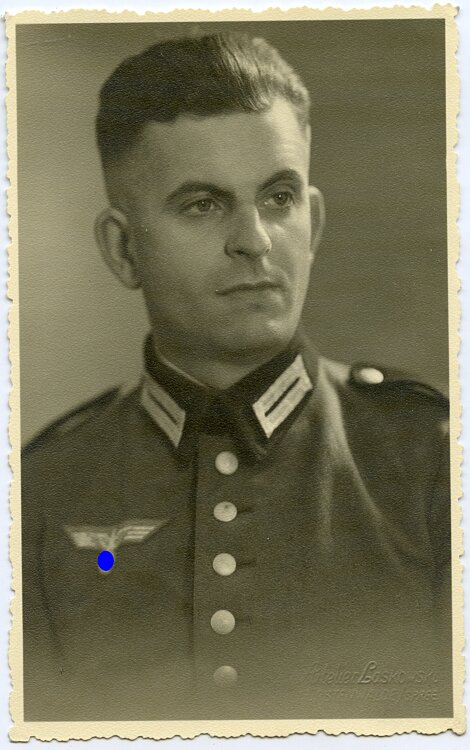
Portrait Photograph, Member of the Wehrmacht
This portrait photograph of a Wehrmacht member in postcard size represents a widespread type of military photography during World War II (1939-1945). Such photographs served both private and military purposes and today constitute an important source category for historical research.
The Wehrmacht, established in 1935 following the official reintroduction of conscription by National Socialist Germany, comprised the armed forces branches of the Army (Heer), Navy (Kriegsmarine), and Air Force (Luftwaffe). Between 1935 and 1945, an estimated 18 million men served in the Wehrmacht. Portrait photographs of these soldiers were produced in large numbers, both in professional photo studios and by regimental photographers.
Function and Use: Military portrait photographs served multiple purposes. They functioned as personal mementos for the soldiers themselves and their families. In postcard size (typically 9 x 14 cm or 10.5 x 14.8 cm), they could be easily mailed or preserved in family albums. Soldiers frequently had themselves photographed in uniform with visible rank insignia, decorations, and branch-of-service emblems. These images documented military status and expressed pride in service rendered.
Photographic Practice: During the war, an extensive network of photo studios specialized in soldier portraits existed. These were located both within Reich territory and in occupied areas, particularly in garrison towns and near military training grounds. The Army Printing Regulation HDv 87 governed various aspects of military photography, with private portrait photographs generally permitted as long as no militarily sensitive information was disclosed.
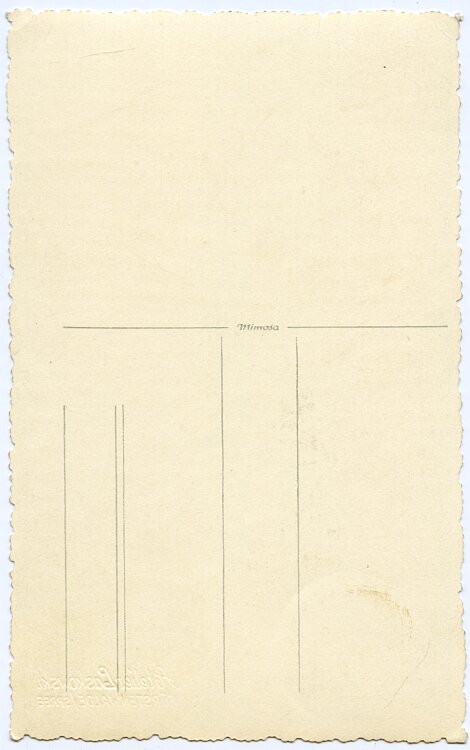
The quality of such photographs varied considerably. Professional studios employed high-quality equipment and techniques, including careful lighting and retouching. Many images were produced on specialized photographic paper with matte or glossy finishes. Frequently, the photographs bore the studio's stamp on the reverse side, indicating location and sometimes the date of creation.
Uniforms and Presentation: The uniforms visible in such photographs followed the detailed regulations of the Wehrmacht. The dress code regulations specified which uniform variants could be worn on which occasions. For portrait photographs, soldiers typically selected the tunic (Waffenrock) or field blouse (Feldbluse) with complete decorations. Rank insignia on shoulder boards and collar patches, branch colors, and service insignia often enable precise identification today of the photographed individual's unit or position.
Historical Context: The mass production of such photographs reflects the militarization of German society during the Nazi era. Photography had become technically mature and relatively affordable. Soldier portraits fit into a long tradition of military commemorative culture dating back to the 19th century, when daguerreotypes and early photographs supplemented paintings and lithographs as means of portrait representation.
Post-War Significance: After 1945, these photographs acquired a complex layer of meaning. For many families, they remained the only remembrance of fallen or missing relatives. Simultaneously, they became documents of a criminal organization, as the Wehrmacht was actively involved in war crimes, as research since the 1990s has clearly established. The Wehrmacht Exhibition (1995-2004) addressed this complicity and triggered intense societal debates.
Collector Value and Preservation: Today, such photographs are preserved by militaria collectors, museums, and archives. The condition rating “2” suggests, according to common collector assessment scales, a good to very good state of preservation with possibly minor signs of use. For historical research, these images are valuable as they can provide information about uniforms, rank structures, and individual military biographies, especially when accompanying documents or inscriptions exist.
Ethical Considerations: Handling such objects requires historical sensitivity. They document participation in a war of aggression and the National Socialist system of injustice. Scientific and museum contextualization is essential to avoid unreflective heroization and instead enable critical historical examination. These photographs serve as reminders of individual involvement in one of history's darkest chapters, demanding careful interpretation that acknowledges both personal stories and larger historical responsibility.