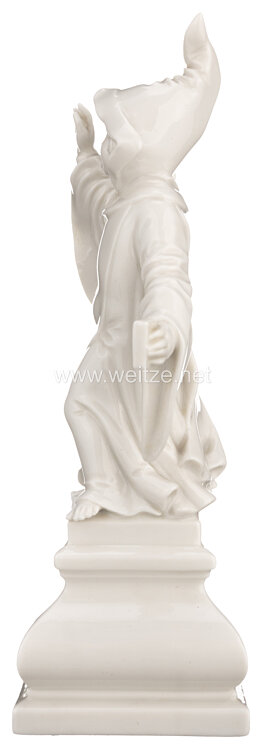
SS-Porzellanmanufaktur Allach - Münchner Kindl
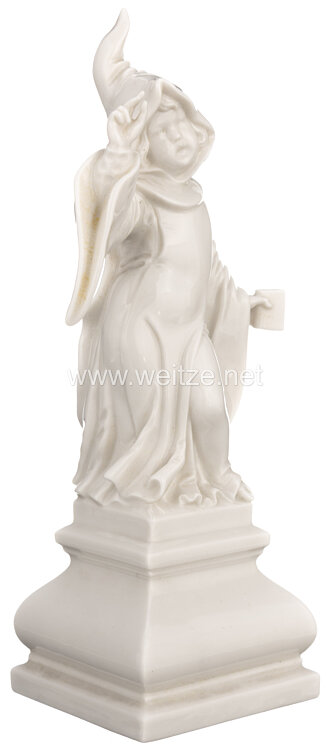
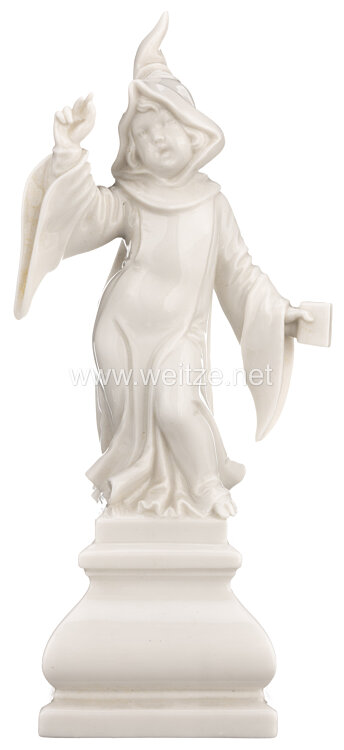
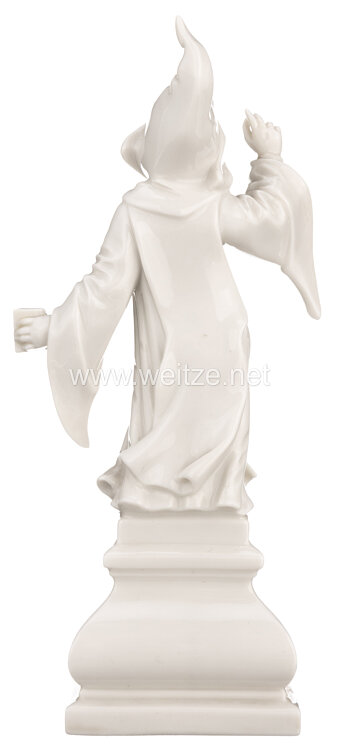
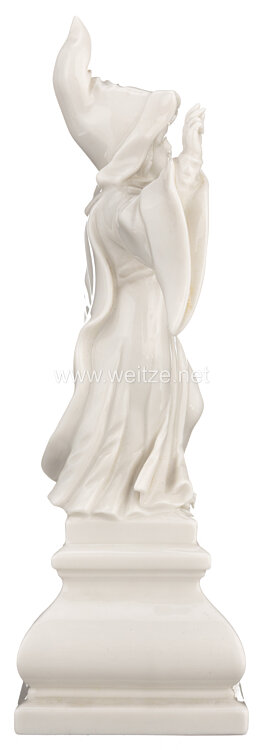
The Münchner Kindl porcelain figurine represents one of the characteristic products of the Porzellan Manufaktur Allach, a ceramics manufactory intimately connected with the SS and National Socialist cultural programs. This model No. 81, designed by Professor Theodor Kärner, embodies Munich's heraldic symbol in idealized form and exemplifies the instrumentalization of regional culture by the Nazi regime.
The Porzellan Manufaktur Allach was established in 1935 in Allach, a suburb of Munich, by Franz Nagy and Karl Diebitsch as a private company. As early as 1936, the SS under Heinrich Himmler acquired control of the manufactory. Himmler, who was obsessed with Aryan mysticism and Germanic culture, made the factory one of his favorite projects. The manufactory was intended to produce decorative ceramics representing idealized Germanic and Bavarian culture. From 1937 onwards, primary production was relocated to facilities adjacent to the SS Training and Education Camp next to Dachau concentration camp. Beginning in 1940, forced laborers from Dachau, including Jewish prisoners, were employed in production.
Theodor Kärner was hired as Artistic Director at Allach and held this position until 1945. He was elevated to the honorary rank of SS-Hauptsturmführer and appointed Professor at the Academy of Fine Arts in Munich on April 20, 1938. His creation, model No. 81, depicts the Münchner Kindl as a child monk dressed in traditional robes, with a book in the lowered left hand and a raised right hand, standing on a pedestal base. The figurine stands approximately 17 cm tall and was executed in white glazed porcelain. The underside bears the green manufacturer's mark “SS-Allach” or “Allach” within an octagon, the artist signature “T. Kärner” or “Th. Kärner,” and the model number 81.
The Münchner Kindl itself is the traditional symbol of Munich, originally depicted as a monk on the city's coat of arms since the 13th century. By the 19th century, the figure evolved into a child-like representation, known as “Münchner Kindl” (Munich Child in Bavarian dialect). The symbol represents Munich, whose name “München” means “of monks.”
The Münchner Kindl figurines produced by Allach served multiple purposes: as decorative porcelain representing Munich civic pride and Germanic culture, as official gifts and prizes, and as collectible items for sale. Documented examples include their use as prizes for the Munich flower decoration competition in 1940. The manufactory's products were intended to promote Nazi ideology through idealized representations of German culture. Heinrich Himmler controlled 45 percent of the factory's output and frequently gifted Allach figures to SS officials and friends. Allach porcelain was intended to support National Socialist cultural education rather than purely commercial purposes.
The manufactory produced over 240 different ceramic and porcelain models between 1935 and 1945. The factory employed approximately 25 to 30 civilian skilled workers and up to 93 prisoners during the war years. Some production records indicate the highest output was for Julleuchter candleholders, with approximately 52,635 units in 1939. Official production lists are not available after 1939. Some examples were produced on special pedestals with dedications, or were sometimes presented in original black presentation cases with the Munich coat of arms and inscription “München Hauptstadt der Bewegung” (Munich Capital of the Movement).
With the fall of Nazi Germany in 1945, Allach Porcelain ceased production. The factory was abandoned, and molds were destroyed or confiscated by Allied forces. Theodor Kärner was interned in Moosbach camp as part of denazification from 1945 to 1947. After his release, Kärner was head of the art department of the Eduard porcelain factory from 1947 to 1953. He died on September 6, 1966 in Munich at age 82. Today, Allach pieces are rare and controversial, debated by collectors and historians regarding their ethical implications. Museums and collectors handle Allach artifacts as historical evidence of Nazi cultural programs and forced labor rather than as glorified memorabilia.