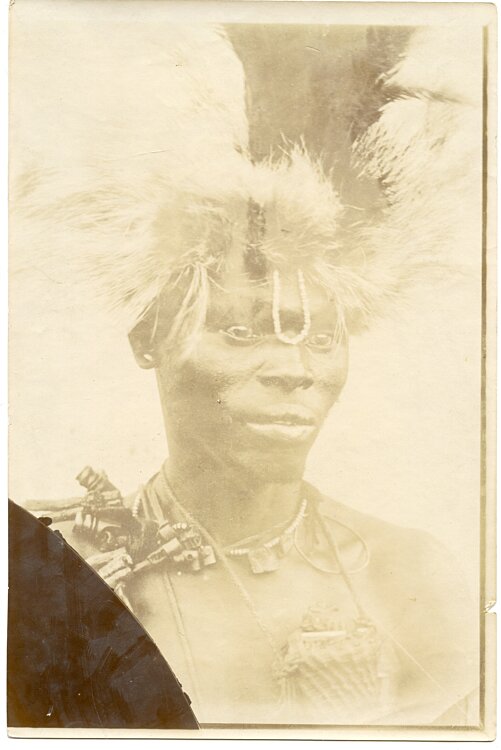
Photograph German South West Africa

18 x 12 cm, Condition 2
150744
20,00

Photograph German South West Africa

This photograph from German South West Africa measuring 18 x 12 cm represents a significant historical document from the era of German colonialism in Africa. Between 1884 and 1915, the territory of present-day Namibia was a German colony and constituted the only German settlement area on the African continent where a substantial number of German civilians and military personnel lived permanently.

Photographic documentation played a particularly important role in German South West Africa. The Schutztruppe für Deutsch-Südwestafrika (Protection Force for German South West Africa), which existed between 1889 and 1915, was regularly photographically documented. This military unit was subordinated to the Imperial Colonial Office and had the task of securing and enforcing German rule in the colony. Photographs served not only as personal memories for soldiers stationed there, but also for propaganda purposes in the German Empire and for documentary recording of colonial expansion.

The standard format of 18 x 12 cm corresponds to a common postcard format of that era, which was particularly suitable for mailing and archiving. Many soldiers and colonists had such photographs made to send to family members back home or to keep as personal mementos. Professional and amateur photographers operated in the German colonies, documenting military life, landscapes, indigenous populations, and colonial infrastructure.

The period between 1904 and 1908 was marked by the Herero and Nama Uprising, one of the bloodiest colonial wars in German history. Under the command of Lieutenant General Lothar von Trotha, the Schutztruppe carried out a brutal suppression that led to the first genocide of the 20th century. Photographs from this period document both the military operations and the devastating consequences for the indigenous population. Many of these images later became important historical documents for processing these crimes.

The photographic equipment of that time required considerable technical skill. Most images were taken with plate cameras, which were both heavy and sensitive to the extreme climatic conditions of South West Africa. The development of photographs often took place under primitive conditions, making the preserved images all the more valuable.

Military photographs from German South West Africa typically show troop formations, officers, field camps, fortifications, railway constructions, and garrisons in places such as Windhoek, Swakopmund, or Lüderitzbucht. The Otavi Railway and other infrastructure projects were extensively documented as they were considered successes of German colonial policy.

After World War I and the defeat of the German Empire, German South West Africa was occupied by South African troops in 1915 and came under South African administration as a League of Nations mandate territory. Many German settlers and soldiers had to leave the colony and took their photographic memories with them. These photographs became important mementos of a lost world and circulated in veteran circles and colonial associations.

Today, such photographs are important sources for historical scholarship, the reappraisal of German colonialism, and memory culture. They document not only the military presence but also the social, cultural, and economic aspects of colonial life. Museums, archives, and research institutions in Germany and Namibia preserve extensive collections of such photographs.

Condition grade 2 indicates a well-preserved photograph, which is remarkable for objects from this period. Many photographs suffered from climatic conditions, improper storage, or the consequences of two world wars. A well-preserved photograph from German South West Africa therefore represents a valuable historical document that provides insights into a controversial epoch of German history.