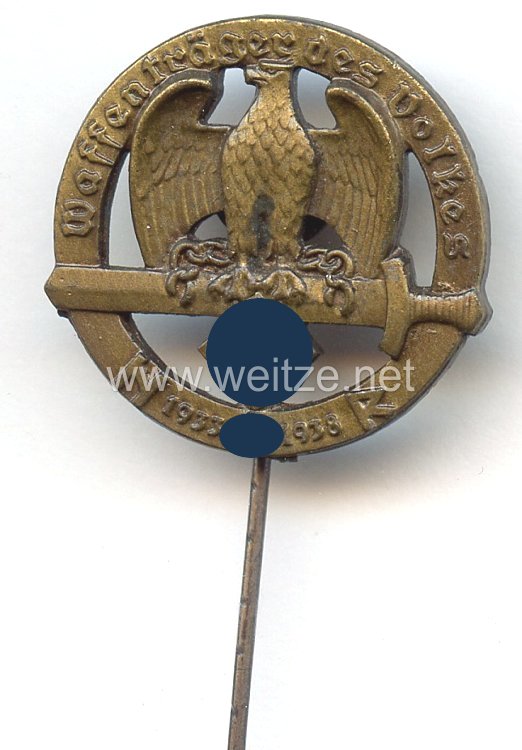
Austria - National Socialist Soldiers' Ring (NSR) "Waffenträger des Volkes 1933-1938"
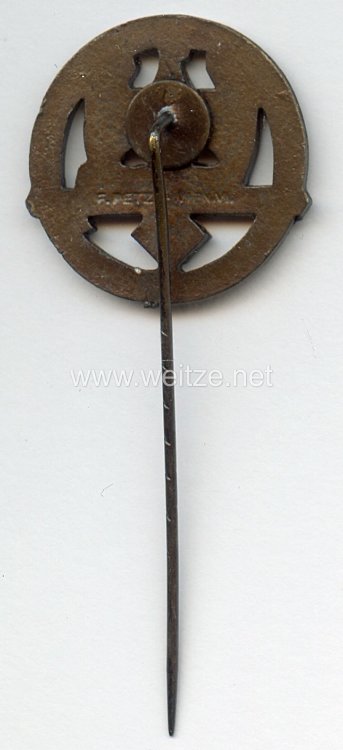
The membership badge of the National Socialist Soldiers' Ring (NSR) bearing the inscription “Waffenträger des Volkes 1933-1938” (Armed Defenders of the People 1933-1938) represents a significant artifact from the illegal National Socialist movement in Austria during the period of the Austrofascist corporate state. Manufactured by F. Petzl Wien VI, this badge was worn on a long pin and symbolized membership in an organization that was banned in the authoritarian Austrian Republic.
The National Socialist Soldiers' Ring was established following the failed July Putsch of 1934 and the subsequent prohibition of the NSDAP in Austria. The organization served as a gathering point for former Austrian soldiers and military personnel who sympathized with National Socialism. Between 1933 and 1938, the NSR operated underground, attempting to spread National Socialist ideology within Austrian military and veteran circles.
The timeframe 1933-1938 marked on the badge represents a decisive period in Austrian history. In 1933, Chancellor Engelbert Dollfuß established the authoritarian corporate state and dissolved parliament. Simultaneously, he banned both the Communist Party and the NSDAP. The National Socialist terror campaign, which culminated in the July Putsch of 1934 in which Dollfuß was assassinated, led to intensive persecution of National Socialist activists in Austria.
Despite the ban, the illegal NSDAP remained active in Austria. The NSR was part of this underground network. The designation “Waffenträger des Volkes” (Armed Defenders of the People) was intended to symbolize military tradition and the claim to represent the Austrian people. This rhetoric stood in direct opposition to the official policy of the corporate state under Kurt Schuschnigg, who sought to preserve Austrian independence.
The manufacturer F. Petzl from Vienna's 6th district (Mariahilf) was one of several Viennese craft businesses producing badges and medals. The production of such illegal badges occurred at great risk, as Austrian authorities actively moved against National Socialist organizations. Wearers of such badges faced arrest and persecution.
The badge's long pin allowed it to be worn on civilian clothing, though members operating illegally usually appeared discreetly. Such badges served for internal identification and strengthened the sense of solidarity within the banned organization. They were often worn at secret meetings or used as recognition symbols among like-minded individuals.
The political situation increasingly intensified due to pressure from the German Reich on Austria. The July Agreement of 1936 between Hitler and Schuschnigg already significantly weakened the Austrian position. The illegal National Socialist organizations, including the NSR, received increased support from Germany and prepared the ground for the Anschluss.
The Anschluss of Austria on March 12, 1938, ended the period of illegality. Members of the NSR and similar organizations emerged from underground, and many were integrated into the German armed forces. The badges that previously had to be worn in secret now became symbols of the “time of struggle” and loyalty during the years of resistance against the corporate state.
From a historical perspective, such badges document the complex political landscape of Austria in the 1930s. They testify to the existence of a significant underground movement that remained active despite state repression. At the same time, they serve as reminders of the tragic consequences of National Socialism and the loss of Austrian independence.
Today, such objects are important historical sources for researching the National Socialist movement in Austria, illegal organizations, and the political conditions of the interwar period. They document the methods of the underground movement and the symbolism with which these organizations sought to bind their members.