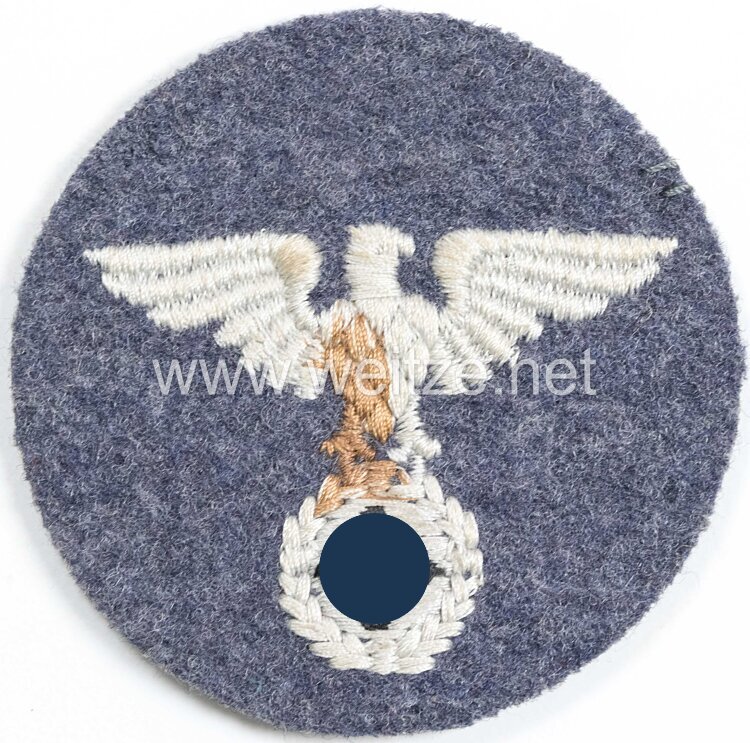
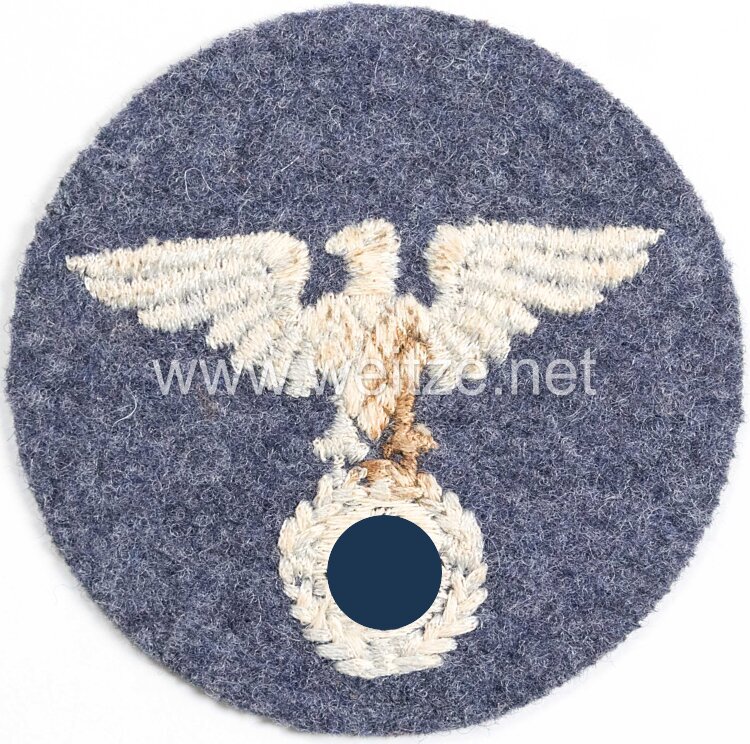
Deutscher Luftsportverband (DLV) Enlisted Ranks Sleeve Eagle

Version on Luftwaffe cloth. Lightly worn, condition 2-.
284540
80,00

Deutscher Luftsportverband (DLV) Enlisted Ranks Sleeve Eagle

The sleeve eagle of the Deutscher Luftsportverband (DLV) for enlisted ranks represents a significant artifact of German aviation history from the early 1930s. This insignia embodies the complex transitional phase between the civil aviation of the Weimar Republic and the remilitarization under the National Socialist regime.

The German Air Sports Association (Deutscher Luftsportverband) was founded on March 25, 1933, and officially served to promote civil aviation sports in Germany. In reality, however, the DLV had a far more significant function: it was the camouflaged precursor to the later Luftwaffe, which would not be officially established until 1935. According to the provisions of the Treaty of Versailles of 1919, Germany was strictly prohibited from maintaining a military air force. The DLV thus provided the opportunity to train pilots and build military aviation structures under the guise of a sports association.

The present specimen is executed as a sleeve eagle for enlisted ranks, which indicates the wearer's rank. The enlisted grades comprised the lowest ranks of the organization and corresponded to the later non-commissioned officer ranks of the Luftwaffe. The execution on Luftwaffe cloth (LW-Tuch) is particularly noteworthy, as it underscores the direct connection to the later military context. The gray or blue-gray base cloth was characteristic of Luftwaffe uniforms and shows that military standards were already being applied in the DLV.

The eagle itself follows traditional German heraldry, with outstretched wings and facing to the right. In DLV insignia, the eagle typically held a swastika in its talons, which unequivocally documented the political orientation of the organization. The embroidery was usually executed in silver or gray thread on the base cloth, with quality varying depending on the manufacturer.

The organizational structure of the DLV was strictly hierarchical and oriented toward military models. Hermann Göring, the later Reich Minister of Aviation and Commander-in-Chief of the Luftwaffe, played a central role in the leadership of the association from the beginning. Under his direction, thousands of young men were trained in gliding, powered flight, and other aeronautical disciplines – training that could later be seamlessly transferred to military service.

The wearing of the sleeve eagle was precisely regulated by internal regulations. It was worn on the left upper arm of the uniform, similar to the later practice in the Luftwaffe. The position and orientation were standardized to ensure a uniform appearance. The “lightly worn” condition of the present piece indicates that it was actually used in service and does not merely represent a warehouse piece.

The DLV existed for only a relatively short period. On April 1, 1935, the Luftwaffe was officially established as an independent branch of service, with which Germany openly violated the provisions of the Treaty of Versailles. The DLV thus became obsolete in its function but formally continued to exist until 1937 before being absorbed into the National Socialist Flying Corps (NSFK). The NSFK took over the tasks of preliminary and basic flight training for the Luftwaffe.

From a collector's and historical perspective, DLV insignia are of particular interest today. They document a brief but decisive phase of German military history. The relatively short existence of the DLV makes originally preserved pieces rarer than comparable Luftwaffe insignia from the later period. The execution on LW cloth and the worn condition enhance the historical authenticity of such objects.

The production of these insignia was carried out by various textile workshops and specialized manufacturers of military accoutrements. Quality could vary, with officially procured pieces generally meeting higher standards than privately purchased examples. The embroidery was executed either by machine or, in higher-quality versions, hand-embroidered.

Today, such objects serve as important study materials for research into the pre-war period and the rearmament of Nazi Germany. They illustrate the systematic circumvention of international treaties and the long-term preparation for war. At the same time, they shed light on the uniforming and insignia practices of the 1930s, which were later standardized in the Wehrmacht.

The historical significance of DLV insignia extends beyond their military function. They represent a deliberate strategy of deception, where ostensibly civilian organizations served as cover for military preparations. This dual nature makes them fascinating objects for understanding the methods by which totalitarian regimes operate and prepare for aggression while maintaining a facade of compliance with international norms.