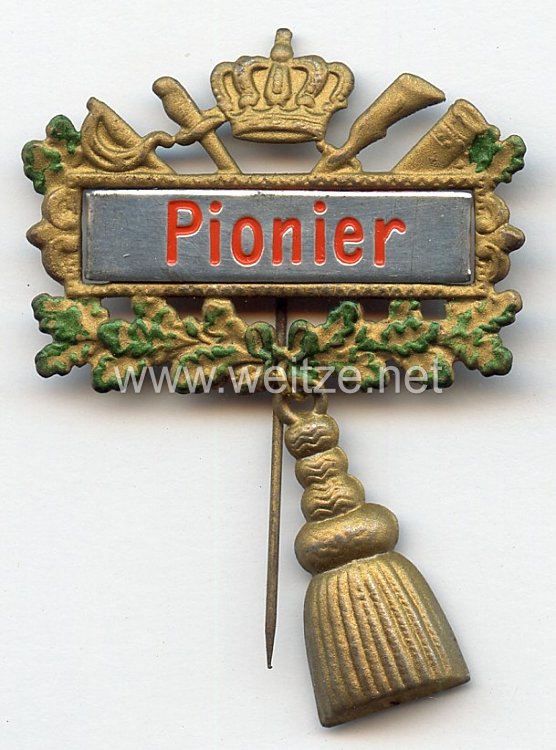
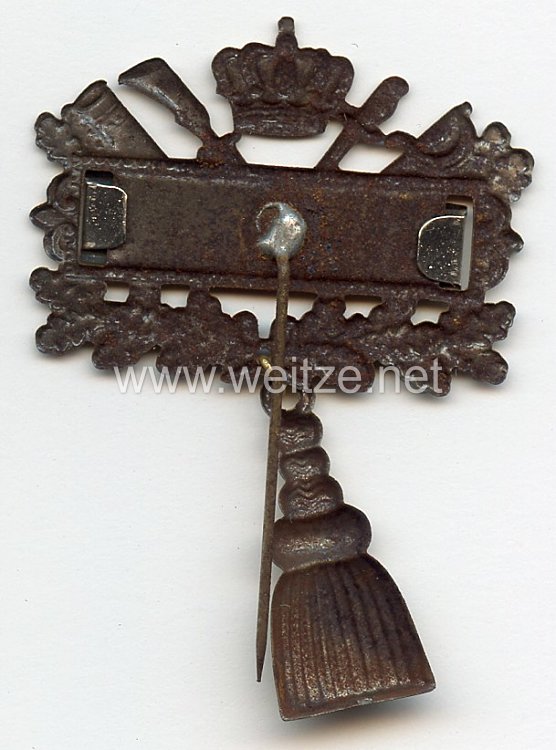
Kingdom of Prussia - Reservist Badge "Pioneer"
The reservist badge of the Prussian pioneers belongs to a fascinating category of military memorabilia from the Kingdom of Prussia, which gained particular significance in German military affairs between the 1870s and the end of World War I in 1918. These badges not only document the military service of their bearers but also reflect important social and cultural aspects of the Wilhelmine era.
Historical Context and Origins
Following the military reforms under Albrecht von Roon in the 1860s, Prussia established a universal conscription system that required two to three years of active service, followed by several years in the reserves. Reservists who had honorably completed their active service formed an important social group in the German Empire. To express their connection to their unit and pride in their completed service, the tradition of reservist badges and reservist steins developed from the 1870s onward.
The Pioneer Corps in Prussia
The Pioneer Corps held a special position in the Prussian army. As a technical branch, pioneers were responsible for military engineering tasks, including bridge construction, entrenchments, fortifications, and demolitions. Prussian pioneer battalions were continuously expanded and modernized throughout the 19th century. Pioneers wore characteristic black shoulder straps and were considered an elite force with high technical requirements for their soldiers.
Materials and Manufacturing
The described badge consists of multi-part sheet iron with a polished metal insert, which was typical for reservist badges of this era. The use of sheet iron was both practical and symbolic: iron was inexpensive, durable, and simultaneously the traditional material of Prussian military decorations, such as the famous Iron Cross, instituted by King Frederick William III in 1813. The multi-part construction allowed for complex designs with various levels and elements joined by rivets or soldering.
The polished surface was achieved through polishing or special lacquering. Such badges were usually manufactured by specialized craftsmen and jewelers who focused on military commemoratives. Important centers of this production were Berlin, Potsdam, and other garrison towns.
Symbolism and Design
Typical pioneer symbols found on such badges included crossed axes or hatchets (sapper axes), anchors, bridges, fortresses, or technical tools. The Prussian eagle, the initials of the Kaiser (Wilhelm I, Friedrich III, or Wilhelm II), as well as the name of the garrison or battalion were frequently incorporated. Many badges bore inscriptions with patriotic sayings or references to the period of service.
Wearing and Social Significance
Reservist badges were typically worn on civilian clothing, especially at veterans' meetings, military celebrations, and patriotic occasions. The long pin, as described in this specimen, enabled fastening to thick fabric such as jacket lapels or vests. Wearing these badges expressed pride and belonging and signaled to observers that the wearer had fulfilled his military duty.
In Wilhelmine society, reservists enjoyed high esteem. Military service was considered the school of the nation and significantly shaped male identity. Reservist associations played an important role in social life and maintained military traditions, comradeship, and monarchist sentiment.
Chronological Context and End of a Tradition
The golden age of reservist badges lay between approximately 1880 and 1914. With the outbreak of World War I in 1914, the meaning of these objects changed. After the German defeat in 1918 and the abdication of Kaiser Wilhelm II, monarchist symbols officially lost their significance. The Weimar Republic largely abolished the old military tradition, although veterans' associations continued to exist.
Collector Value and Historical Significance
Today, reservist badges are important witnesses to Prussian-German military history and are highly sought after by collectors. The stated condition 2 indicates a well-preserved specimen with minimal signs of wear. Such objects provide insights into material culture, military organization, and the social values of the German Empire. They document the connection between military institution and civil society in an era when military values were deeply embedded in German culture.