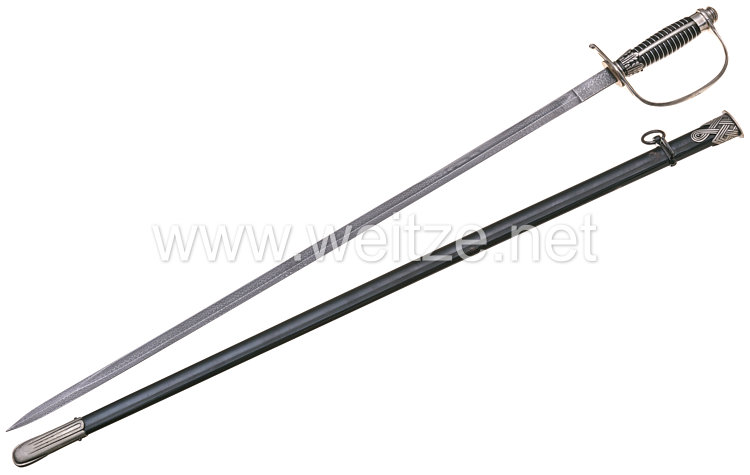
Third Reich Police Leader's Dagger, Luxury Production with Genuine Damascus Blade!

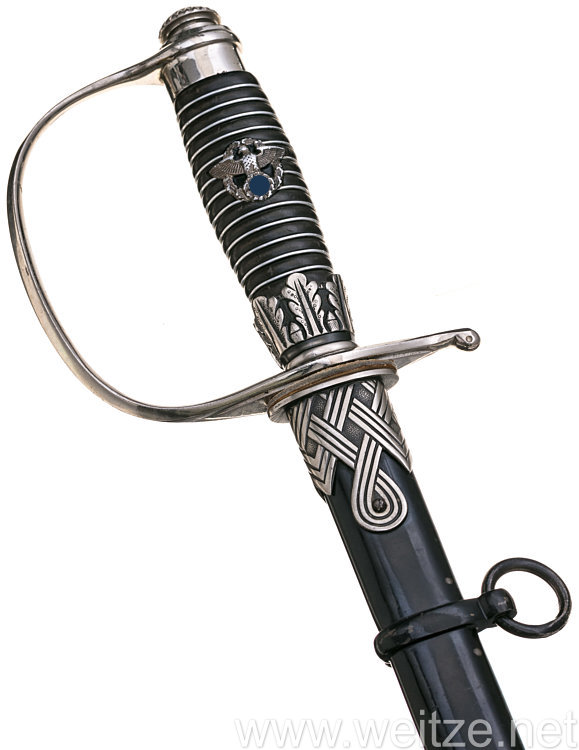
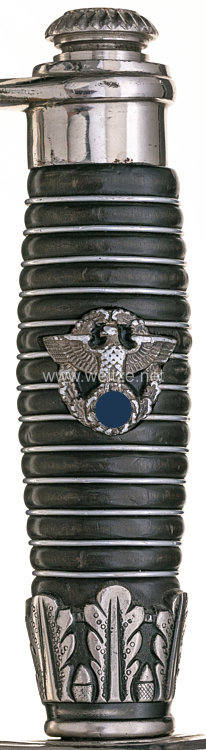
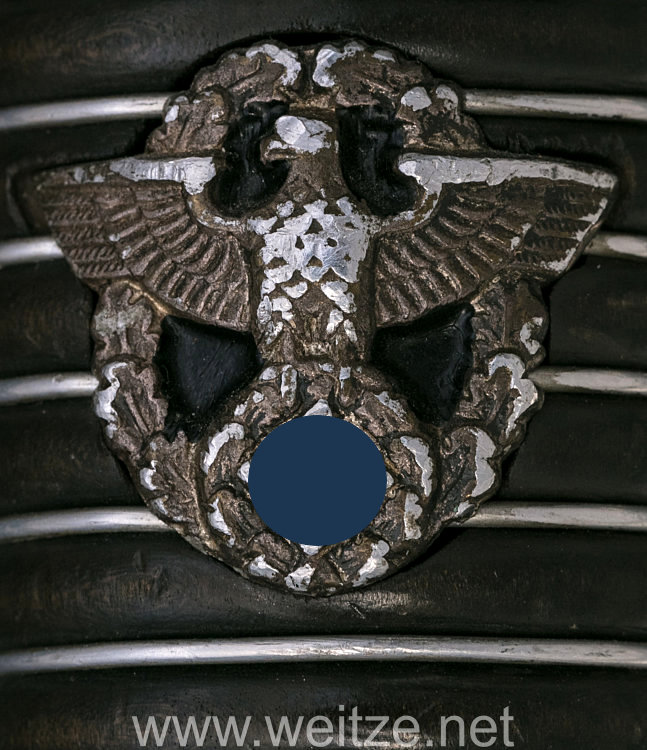
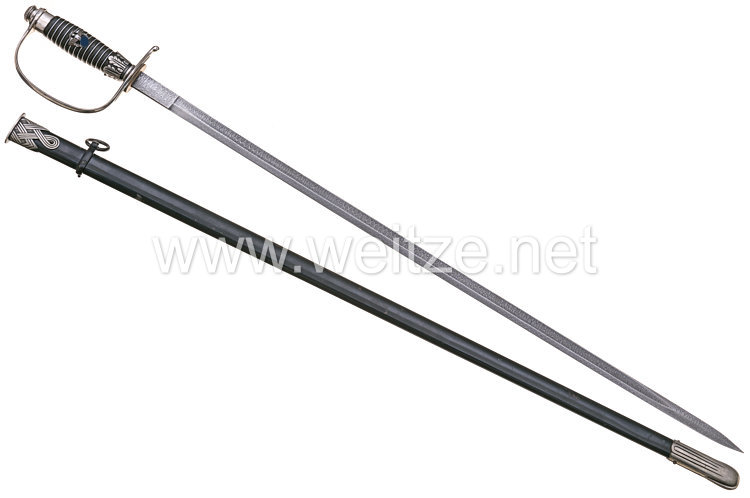
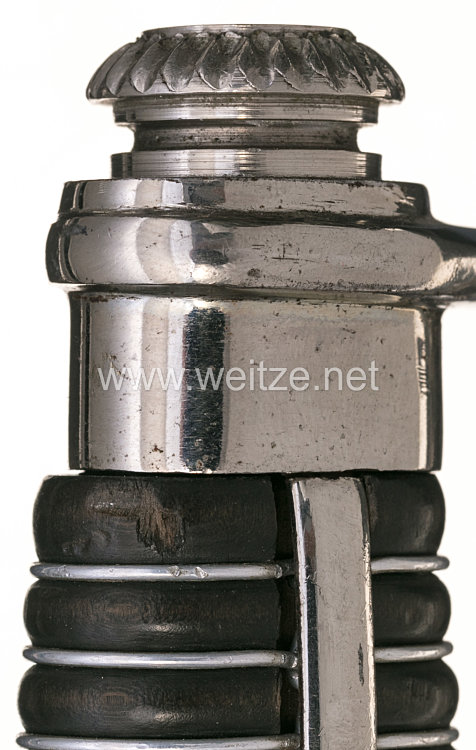
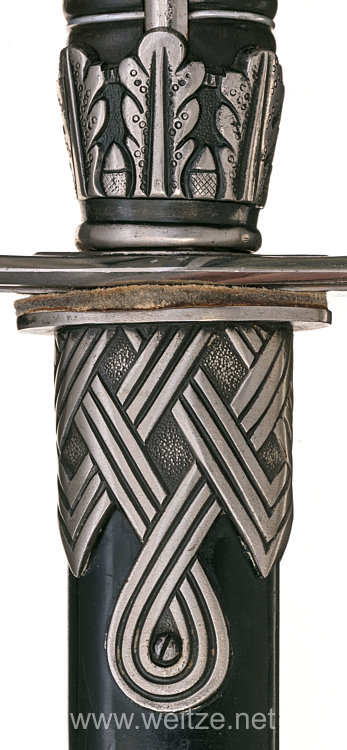
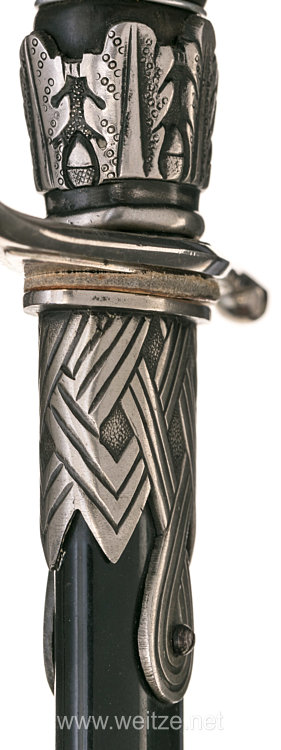
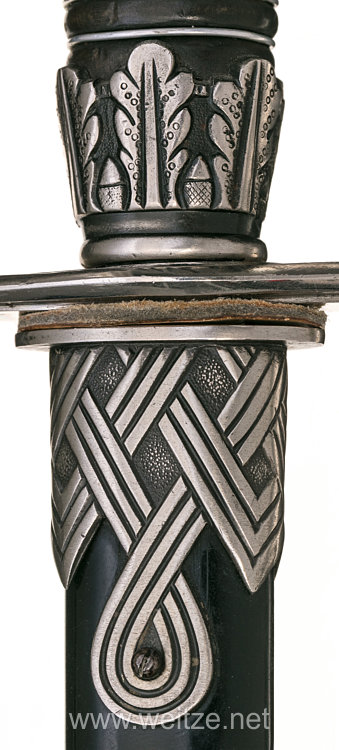
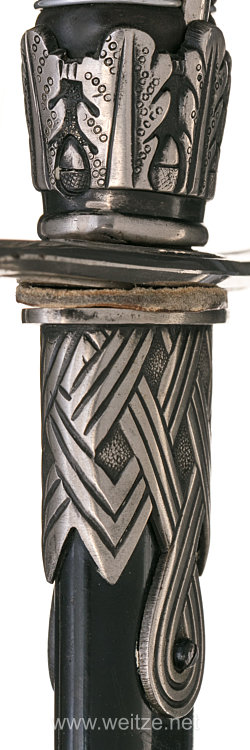
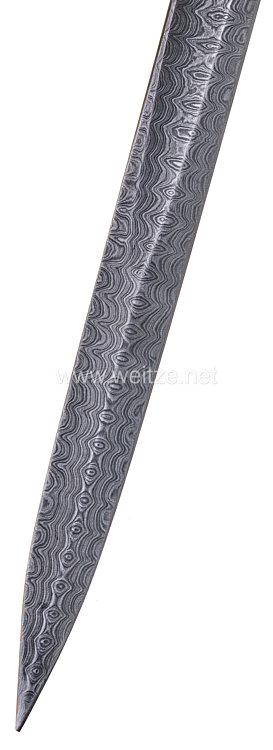
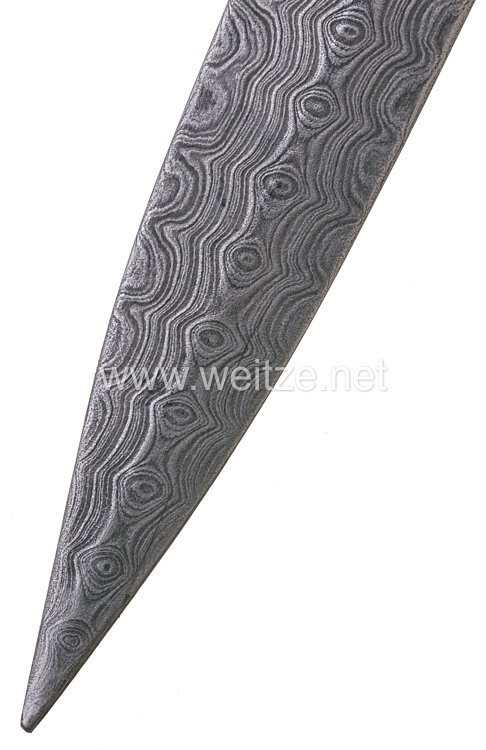
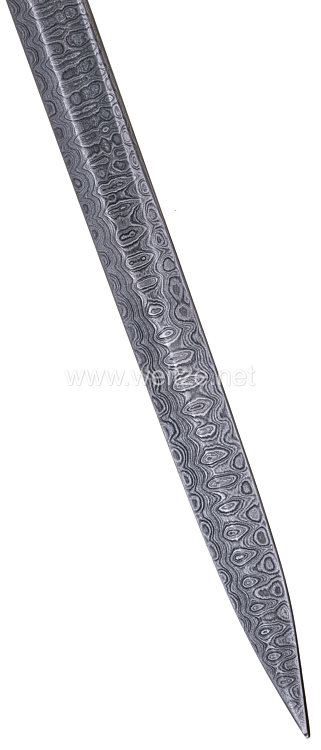
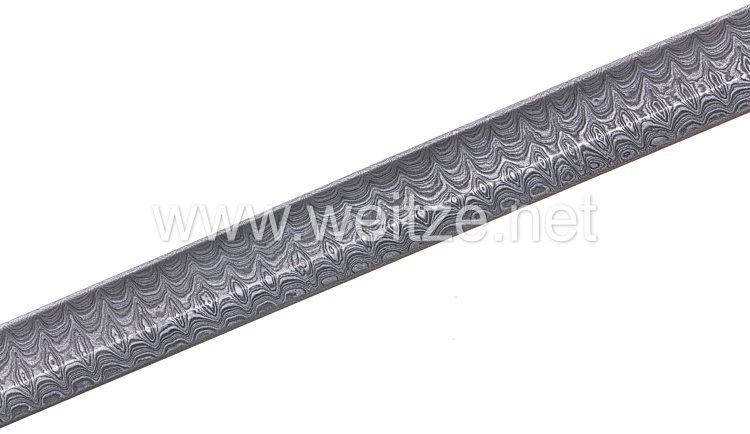
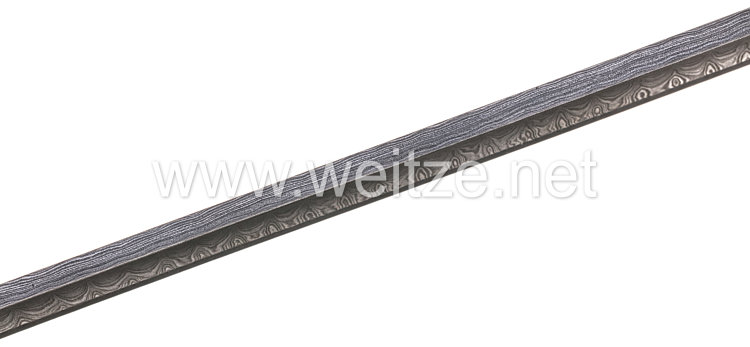
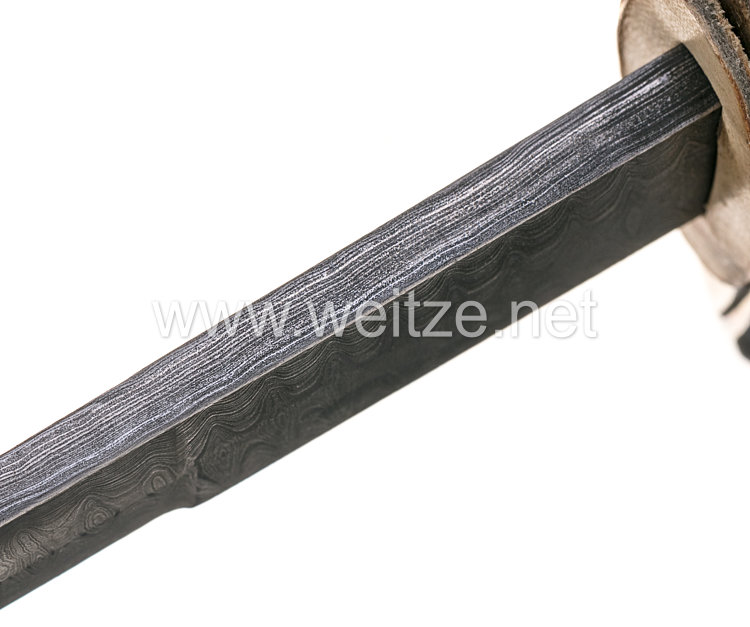
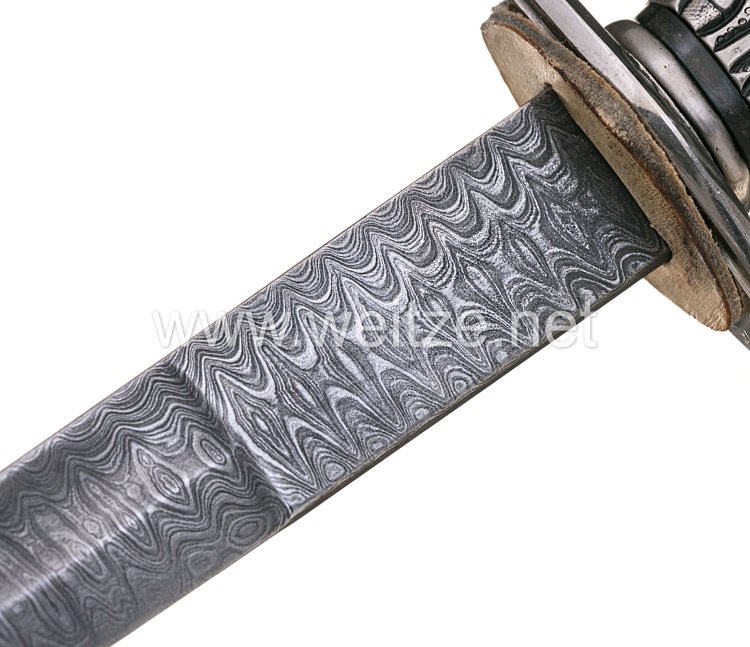
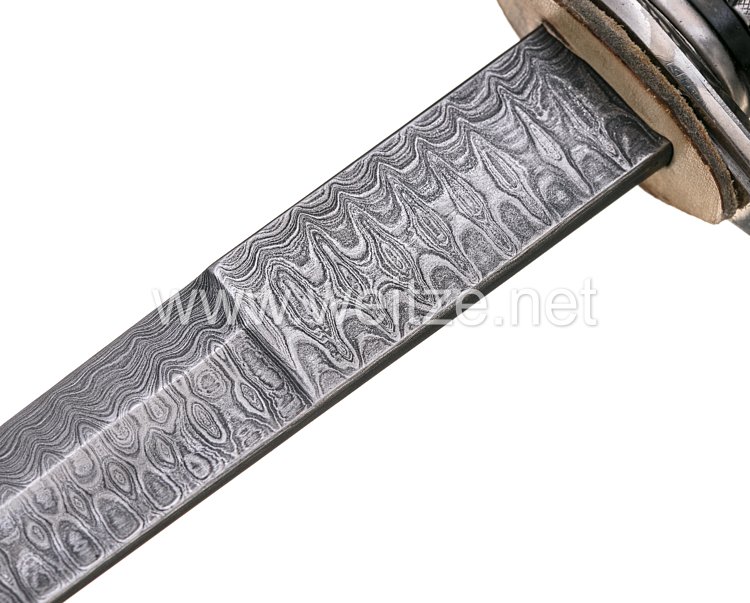
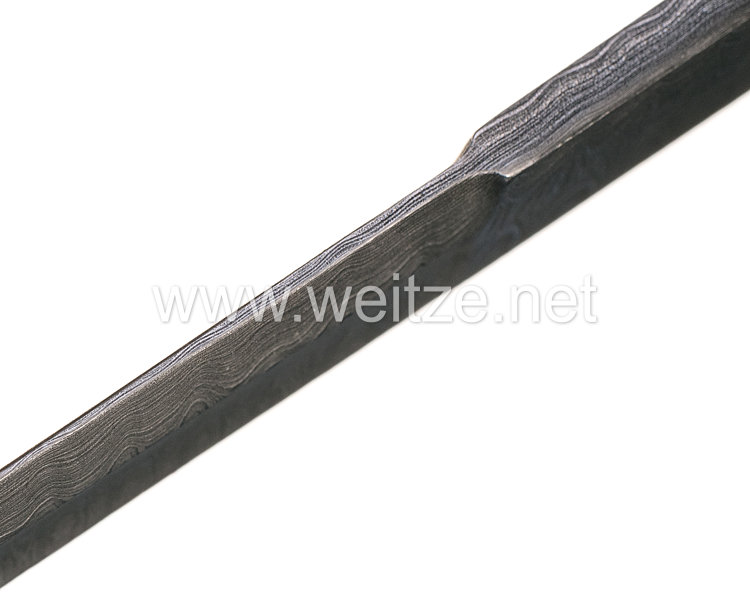
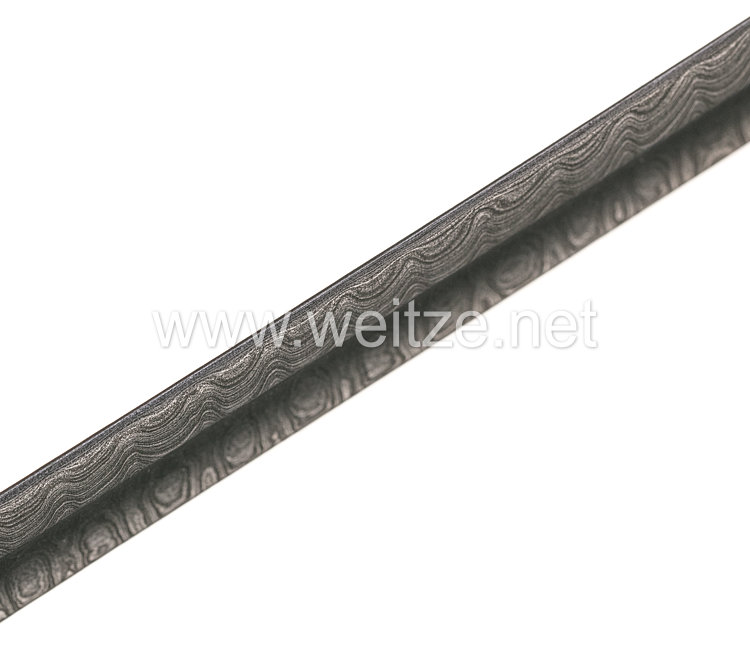
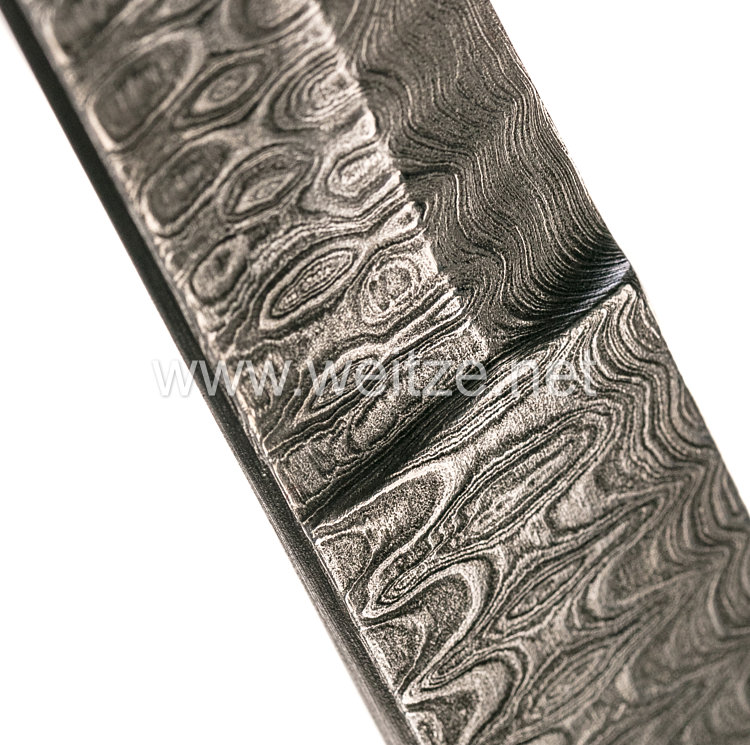
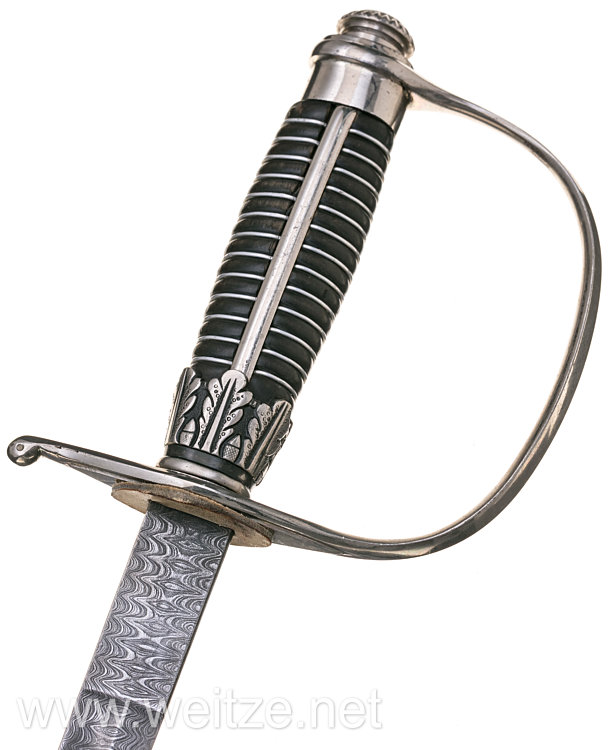
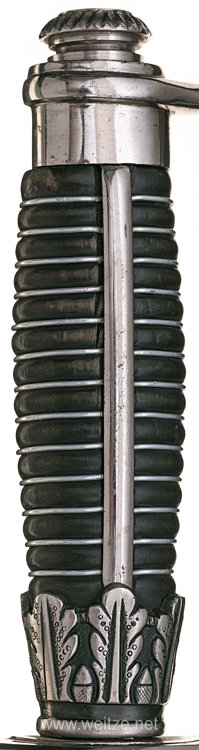
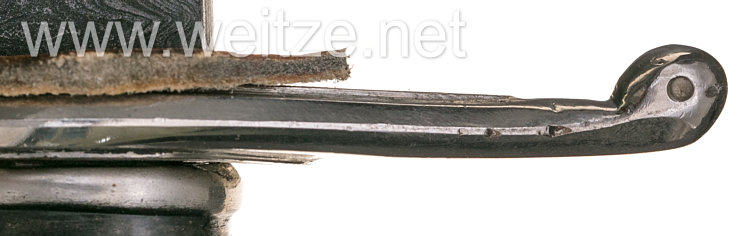
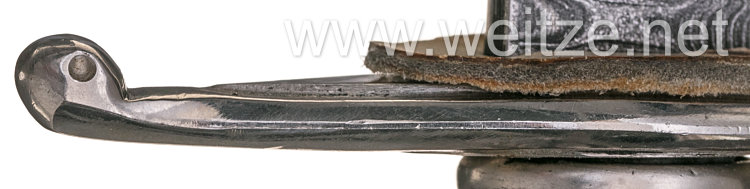
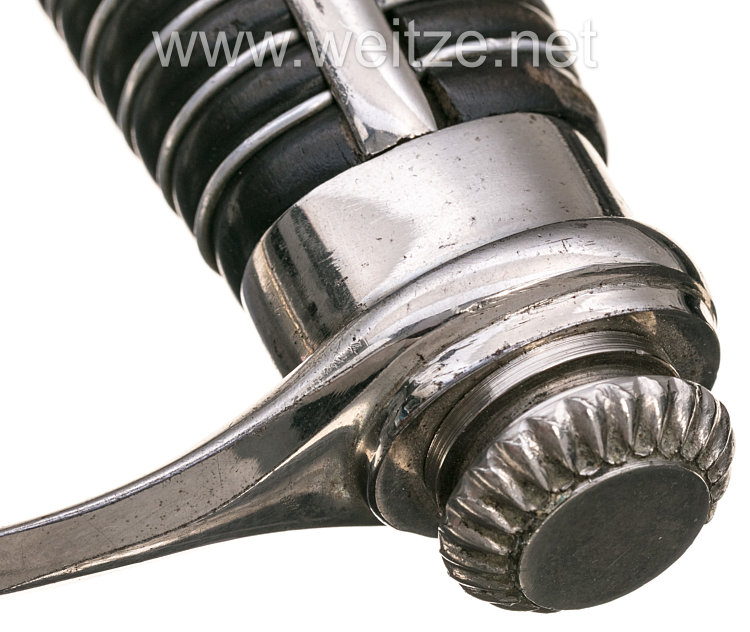
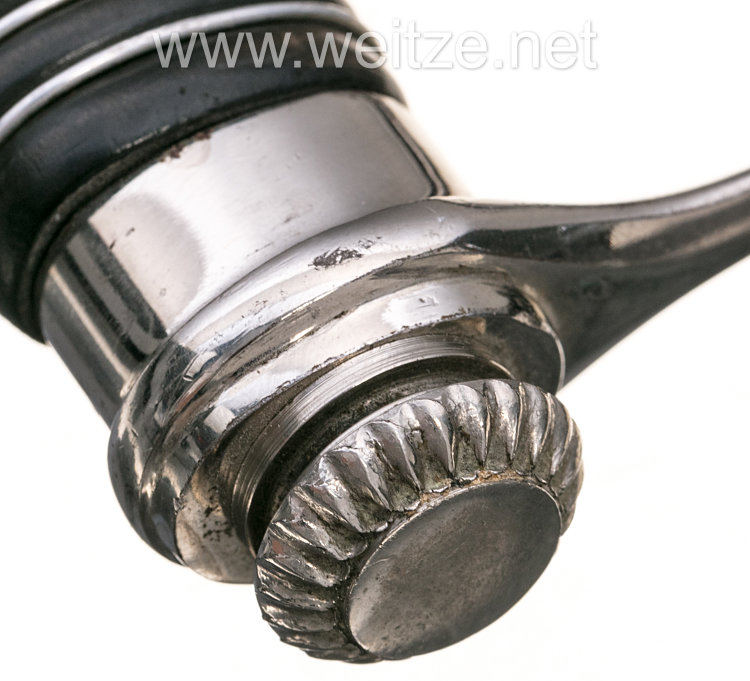
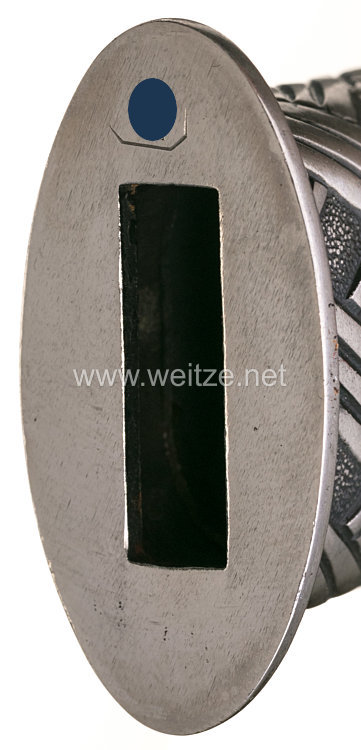
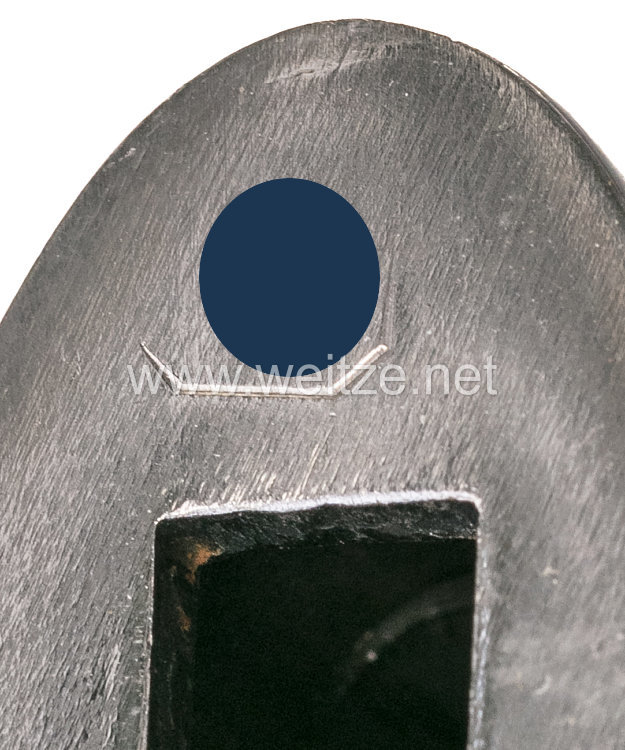
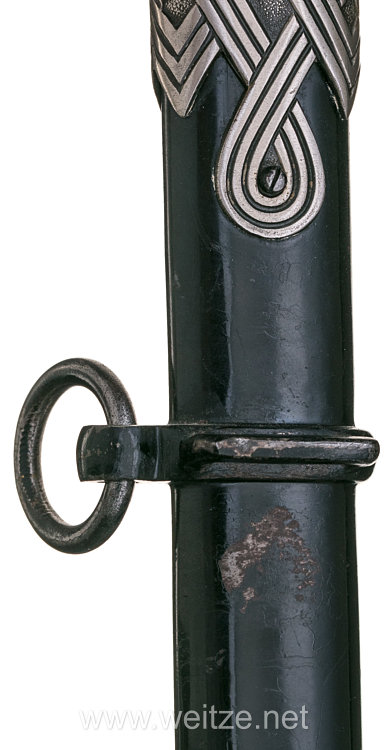
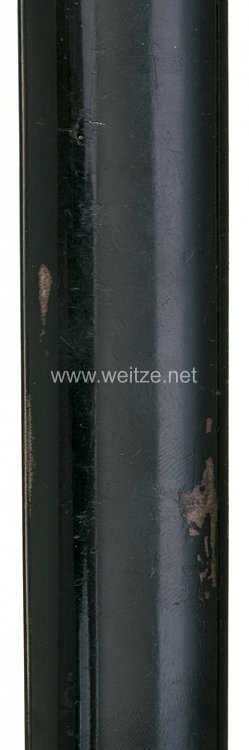
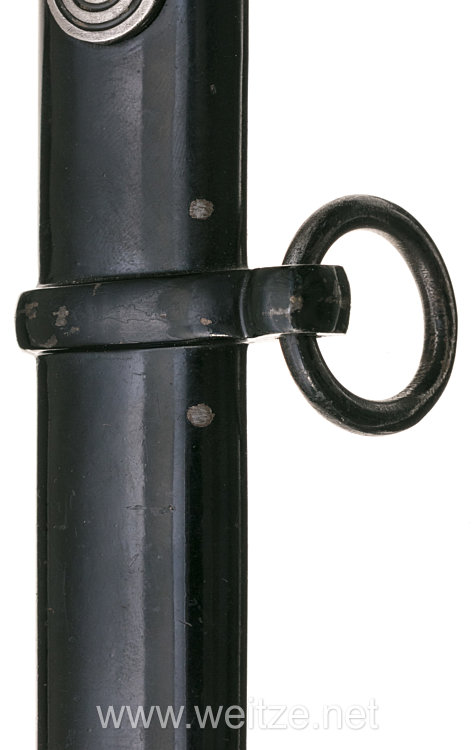
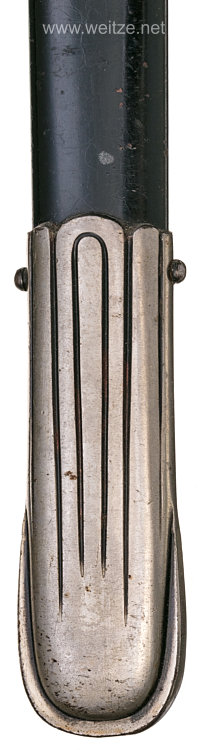
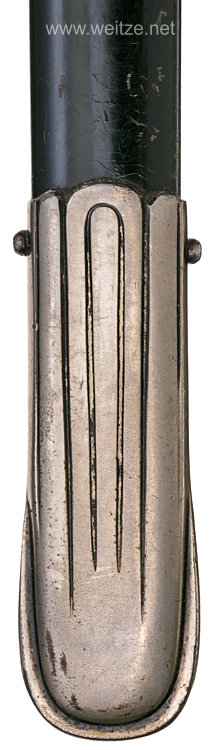
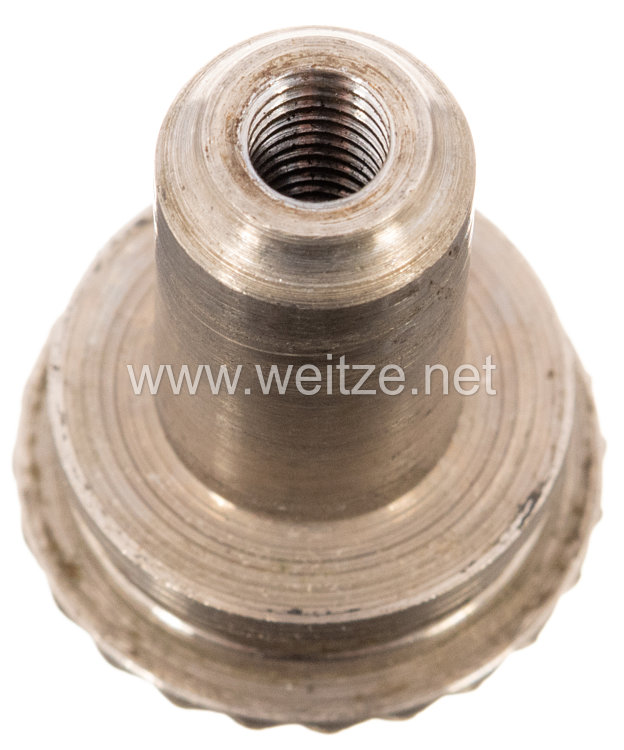
Very fine production circa 1938/39. The hilt with nickel-plated iron fittings. Blackened wooden grip with aluminum wire wrap, the inlaid police eagle also of aluminum, the background lacquered black. On the underside of the crossguard and on the scabbard throat with SS acceptance stamp. The scabbard with nickel-plated fittings, still retaining the original toning. The black original lacquer 95% intact, with typical light wear marks. The blade of finest Damascus steel, stamped “L D” on the tang under the hilt. Lightly worn in very fine condition.
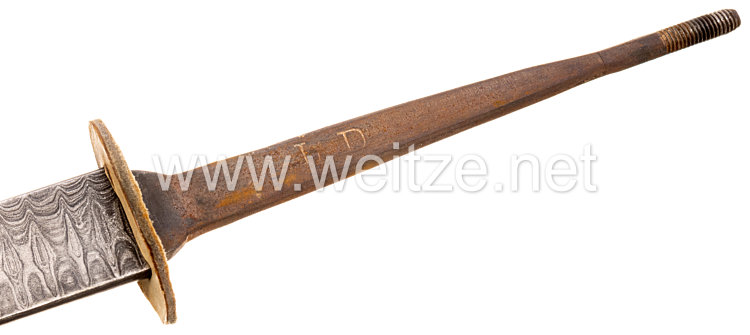
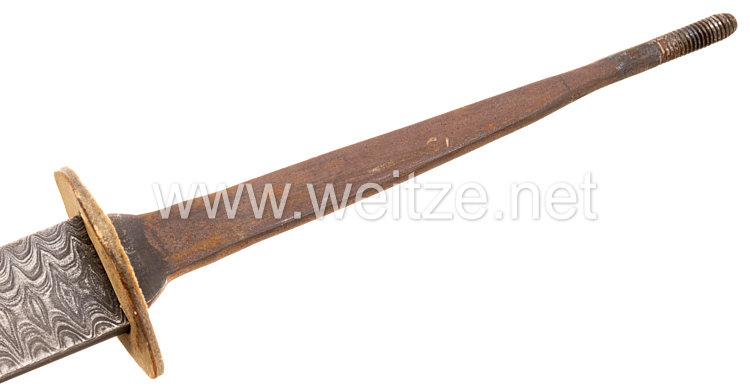
Fundamentally, all edged weapons of the Third Reich with genuine Damascus blades are very rare. A police leader's dagger with Damascus blade is, however, particularly rare, with only very few examples known worldwide.
135938
22.000,00

Third Reich Police Leader's Dagger, Luxury Production with Genuine Damascus Blade!

The Police Leader's Dagger (Polizeiführerdegen) of the Third Reich represents a significant chapter in the history of the German Order Police between 1933 and 1945. These ceremonial edged weapons served not only as rank insignia for senior police officers but also embodied the increasing militarization and ideological penetration of the German police under National Socialist rule.

The introduction of standardized police daggers followed the nationalization of the police in 1936, when police units previously under state control were placed under the central authority of Heinrich Himmler and the SS apparatus. The characteristic police dagger was distinguished by specific features: a blackened wooden grip with aluminum or silver wire wrapping, the inlaid police eagle in the grip, and a black-lacquered scabbard with nickel-plated fittings.

The manufacture of these representative weapons was undertaken by various Solingen blade manufactories, world-renowned for their centuries-old tradition in edged weapon production. Quality and execution varied considerably—from standardized series production to luxurious custom pieces. Particularly noteworthy are examples with Damascus blades, which count among the rarest variants.

Damascus steel, also called Damaststahl, refers to a material created through repeated folding and forge-welding of different steel grades. This elaborate forging technique, originating in the Near East, produces characteristic wave-like patterns on the blade surface and imparts exceptional strength and flexibility to the blade. The production of genuine Damascus blades required the highest level of craftsmanship and was correspondingly expensive. Therefore, such blades were manufactured exclusively for high-ranking officers or as presentation pieces.

The marking “L D” on the blade tang indicates the manufacturer. Various Solingen firms produced police daggers, with each manufactory using its own maker's marks. Quality control was conducted through SS acceptance stamps, which were applied to the crossguard and scabbard fittings. These stamps confirmed that the weapon met prescribed standards and was approved for service.

The typical manufacture around 1938/39 falls within a period of intensive rearmament and expansion of the National Socialist power apparatus. The Order Police under SS-Obergruppenführer Kurt Daluege comprised over 100,000 men at this time and had become an important instrument of maintaining control. Police daggers were worn by officers from the rank of Captain of the Protection Police (Hauptmann der Schutzpolizei) and by higher officials of the administrative police.

Wearing regulations governed the use of the police dagger at parades, official occasions, and ceremonies. The dagger was worn on the left side of the uniform on a black leather hanger. The black lacquering of the scabbard corresponded with the black uniform of the German police, which was introduced in 1936 and replaced the various colored uniforms of the state police forces.

The particular collector value of police daggers with Damascus blades results from their exceptional rarity. While standardized police daggers were produced in larger quantities, genuine Damascus versions are extreme rarities. Only a few documented examples are known worldwide, making them coveted objects for museums and serious collectors of military-historical artifacts.

The historical evaluation of these objects requires differentiated consideration. On one hand, they represent outstanding craftsmanship of German blade smiths and stand in a centuries-old tradition of Solingen weapon production. On the other hand, they are inseparably connected with a criminal regime. The German Order Police was involved not only in maintaining public order but also in war crimes and the Holocaust, particularly through police battalions in the occupied eastern territories.

From a conservation perspective, the described condition with 95% original lacquer preserved and typical slight wear traces shows an example that was properly preserved. The original toning of the nickel-plated fittings and the largely preserved original condition make such pieces important testimonies to the material culture of this era.

For military-historical research, such objects offer valuable insights into manufacturing techniques, quality control procedures, and the material culture of the NS state. They document the connection between traditional craftsmanship and totalitarian rule and are part of the difficult heritage that Germany and international historical scholarship must confront.