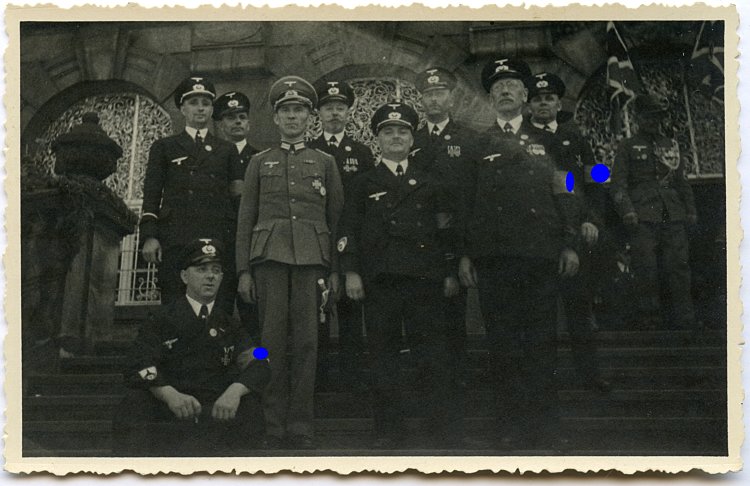
Group Photograph of Members of the NS. Soldatenbund

Postcard size, condition 2
177338
10,00

Group Photograph of Members of the NS. Soldatenbund

Historical Context: Group Photograph of Members of the NS-Soldatenbund

The object in question is a postcard-sized photograph depicting members of the NS-Soldatenbund (National Socialist Soldiers' League), a significant organization within the National Socialist system of the 1930s and 1940s.

The NS-Soldatenbund: Foundation and Development

The National Socialist Soldiers' League was founded in April 1936 and represented the official veterans' organization of the Third Reich. The organization emerged from the merger of various soldiers' associations and was intended to unite all former soldiers of World War I under National Socialist leadership. The NS-Soldatenbund was part of the comprehensive Gleichschaltung (coordination) of all social organizations that the NS regime systematically implemented after seizing power in 1933.

The leadership of the NS-Soldatenbund was initially held by various high-ranking military officers and party functionaries. The organization was closely linked with the NSDAP and other NS organizations such as the SA and later the Wehrmacht. The League was intended not only to serve as a veterans' association but also as an instrument of political mobilization and ideological indoctrination.

Function and Significance

The NS-Soldatenbund fulfilled several important functions within the National Socialist state. First, it served to cultivate the concept of front comradeship and the memory of World War I, whereby this memory was reinterpreted according to NS ideology. The alleged “stab-in-the-back legend” and revanchist thoughts were promoted.

Second, the organization played an important role in the military preparation of German society for the coming war. Through military training exercises, propaganda events, and the glorification of military virtues, the NS-Soldatenbund contributed to the militarization of society.

Third, the League served as a social network for former soldiers and offered various support services. This helped the regime secure the loyalty of this important segment of the population.

Photographic Documentation and Propaganda

Photographs such as the present group image were an essential component of the NS propaganda machinery. Such photographs served several purposes: they documented the activities of the organization, strengthened the sense of community among members, and were distributed for propaganda purposes in newspapers, magazines, and as postcards.

The fact that this photograph exists in postcard size suggests that it may have served as propaganda material or as a personal memento for those depicted. Postcards were a popular medium during the NS era for disseminating political messages and documenting events.

Uniforms and Symbolism

Members of the NS-Soldatenbund typically wore specific uniforms and badges that identified their affiliation with the organization. Uniforming was an important element of NS aesthetics and served the visual representation of order, discipline, and community. Various rank insignia and decorations displayed the hierarchical structure within the organization.

Historical Context and Wartime

With the beginning of World War II in 1939, the NS-Soldatenbund gained additional significance. The organization supported the war effort through collection of donations, organization of home front activities, and care for soldiers' families. Many younger members were conscripted into the Wehrmacht, while older veterans took on various tasks at home.

During the course of the war, the function of the NS-Soldatenbund was partly taken over by other organizations, and its importance decreased. Towards the end of the war in 1945, the organization effectively dissolved.

Post-War Period and Historical Assessment

After the collapse of the Third Reich, the NS-Soldatenbund was banned and dissolved by the Allies along with all other NS organizations. As part of denazification, memberships in such organizations were examined, although simple membership was generally not considered a primary criterion for severe sanctions unless active participation in crimes could be proven.

Today, photographs such as this one are important historical documents that provide insight into the organizational structure and social life in the Third Reich. They are preserved in archives, museums, and private collections and serve historical research and education. Such objects help to understand the mechanisms of NS rule and the integration of broad segments of the population into the system.

r