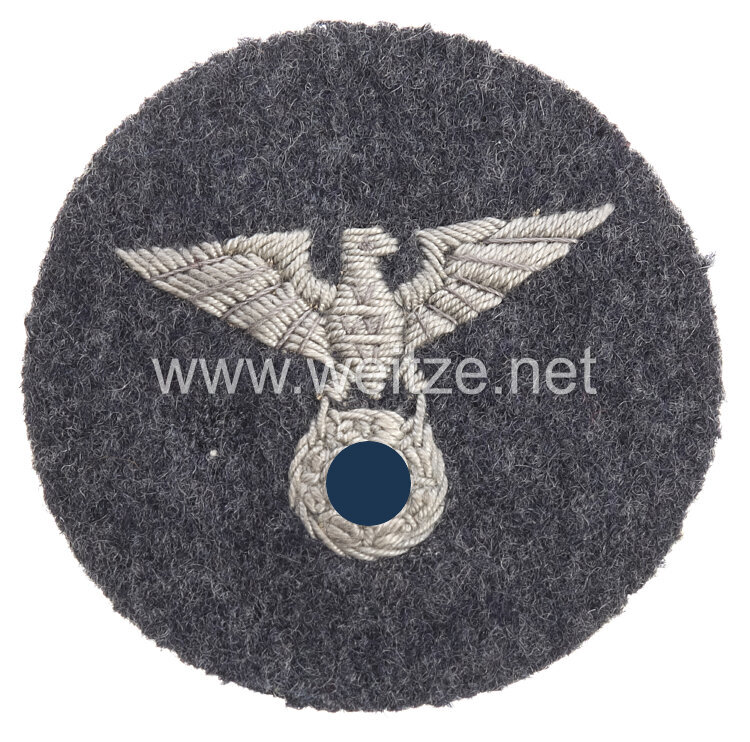
Deutscher Luftsportverband (DLV) Enlisted Ranks Sleeve Eagle

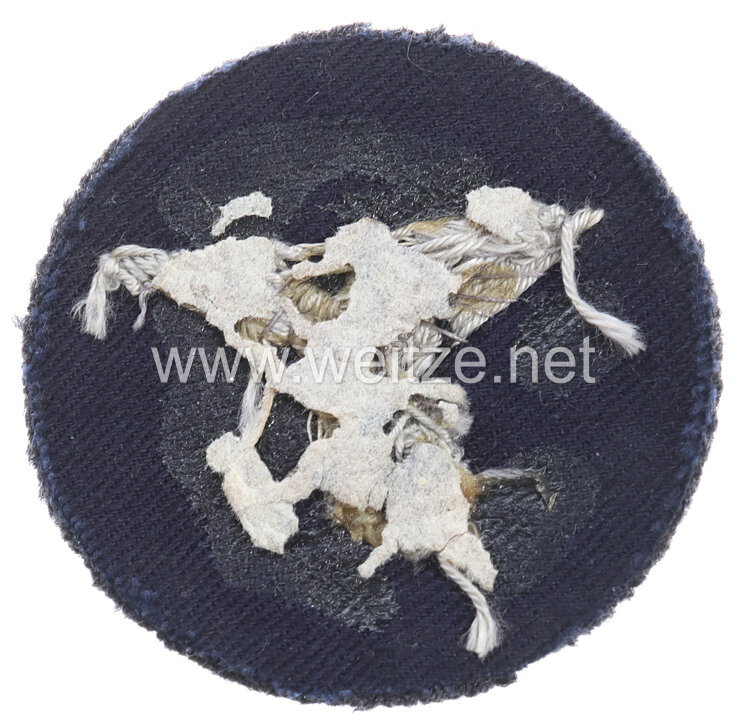
circa 1934. Hand-embroidered version for the tunic. Unissued, with adhesive residue on reverse, condition 2+.
462638
120,00

Deutscher Luftsportverband (DLV) Enlisted Ranks Sleeve Eagle

The Deutscher Luftsportverband (DLV) Sleeve Eagle for Enlisted Ranks from around 1934 represents a significant chapter in German aviation history during the interwar period. This hand-embroidered badge for the service tunic of enlisted personnel embodies the complex development of German air forces during a period shaped by the restrictions of the Treaty of Versailles.

The Deutscher Luftsportverband (German Air Sports Association) was founded on March 25, 1933, and served as a civilian cover organization for training future Luftwaffe personnel. After World War I, the Treaty of Versailles had prohibited Germany from maintaining any military aviation. The Weimar Republic and later the Nazi regime circumvented these provisions by promoting “civilian” air sports. The DLV absorbed the functions of the German Air Sports Association founded in 1920 and other aviation organizations, consolidating them under unified leadership and thereby creating the personnel and organizational foundation for the later Luftwaffe.

The sleeve badge described here was specifically manufactured for enlisted ranks of the DLV. The hand-embroidered execution indicates high-quality manufacture characteristic of uniform pieces from this period. Such badges were typically worn on the left upper arm of the service tunic and displayed the stylized eagle as a symbol of aviation and German sovereignty.

The years 1933-1935 were a transitional phase in German military history. The DLV functioned as a link between officially prohibited military aviation and the officially proclaimed founding of the Luftwaffe on March 1, 1935. During this time, tens of thousands of young men received their basic flight training under the guise of air sports. The organization maintained its own uniform regulations, rank insignia, and such sleeve eagles that clearly indicated its military character despite its civilian façade.

The hand-embroidered execution of this sleeve eagle is noteworthy. While later war years increasingly produced machine-made or woven badges, hand-embroidered examples from the early DLV period were more elaborate and of higher quality. Specialized workshops and military equipment dealers manufactured these badges, often in different quality grades for various clientele. Officers frequently wore individually commissioned badges from private manufacturers, while more standardized versions were designated for enlisted ranks.

The unworn condition with adhesive residue on the reverse provides interesting insights into its history. Possibly this badge was purchased in preparation but never sewn on, perhaps because the wearer was promoted, transferred units, or because the organization was absorbed into the Luftwaffe in 1935. The adhesive residue could stem from provisional attachment or from storage in collectors' albums.

The uniform regulations of the DLV closely followed military standards. The service tunic on which this sleeve eagle was to be worn largely corresponded in cut and execution to military uniforms of the time. The blue color of DLV uniforms already anticipated the later Luftwaffe color scheme.

After the official founding of the Luftwaffe on March 1, 1935, the DLV lost its military function but continued to exist as an organization for pre-military training and air sports. DLV badges were replaced by the new Luftwaffe national emblems, which explains why many of these early badges remained unworn or were withdrawn from circulation.

Today, such early DLV badges are sought-after collectors' items that document a brief but significant transitional phase in German military history. They testify to the circumvention strategies regarding Versailles provisions and the systematic preparation of German rearmament. For military historians and collectors, they offer important insights into organizational structures, uniform studies, and the political-military development of the 1930s.

The technical execution of hand embroidery on felt or wool backing demonstrates the craftsmanship of period military insignia production. These pieces were manufactured with attention to detail and durability, intended to withstand the rigors of military service while maintaining their aesthetic appearance. The fact that this example remains in excellent condition despite being nearly ninety years old attests to both its quality and its preservation history.

r