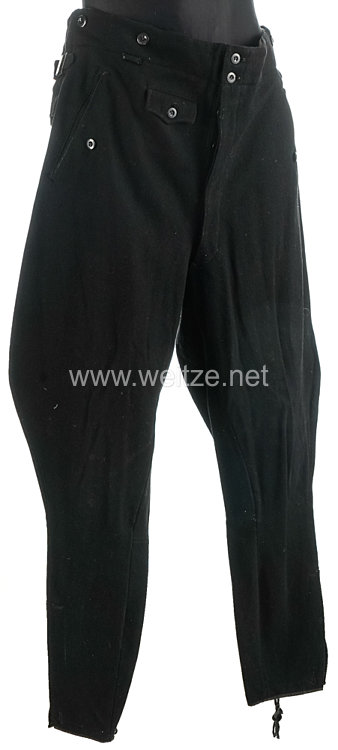
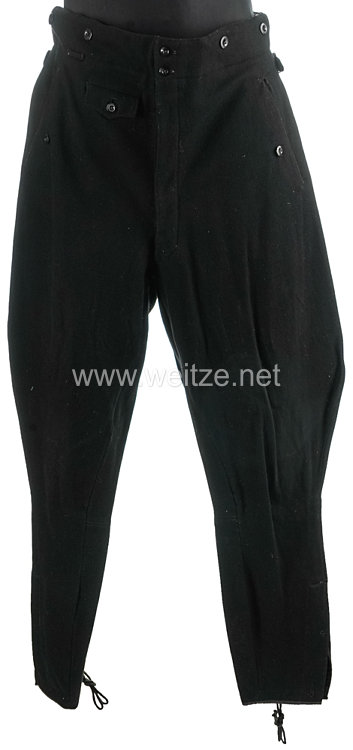
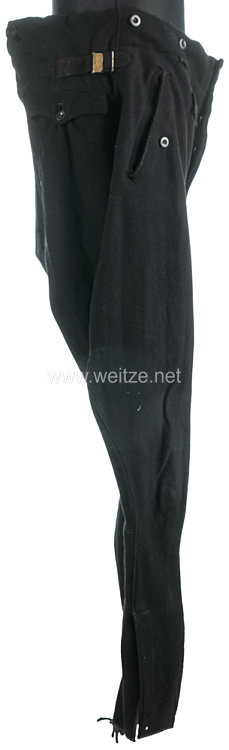
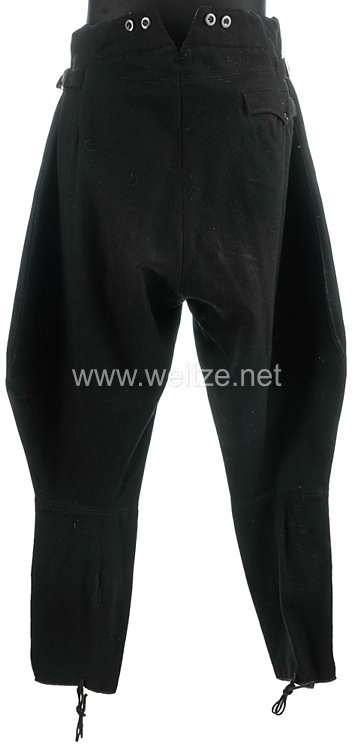
Allgemeine SS or NSKK Black Breeches
The black riding breeches of the Allgemeine SS and the National Socialist Motor Corps (NSKK) represent a characteristic garment of National Socialist organizations during the 1930s. These special uniform trousers were an integral part of the service uniform and symbolized the paramilitary orientation of these formations.
The Allgemeine SS was founded in 1925 as the protection squadron of the NSDAP and developed under Heinrich Himmler from 1929 into one of the most powerful organizations of the Nazi regime. The characteristic black uniform, which earned the SS the nickname “Black Corps,” was standardized and introduced from 1932 onwards. The black riding breeches, together with the black tunic, white shirt, black tie, and high black riding boots, formed the complete service uniform.
The NSKK was founded in 1931 as a motorized formation of the SA and became an independent organization in 1934 after the so-called Röhm Putsch. The NSKK also wore black uniforms, demonstrating the close ideological and organizational connection to the SS. The NSKK's tasks included promoting motor vehicle operations, pre-military training, and supporting the Wehrmacht in case of war.
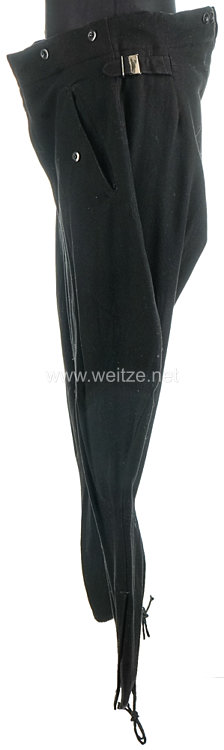
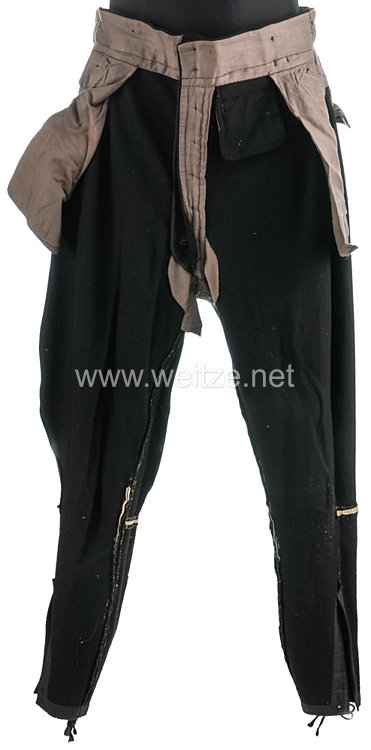
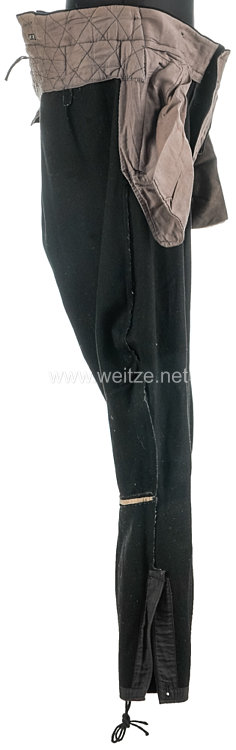
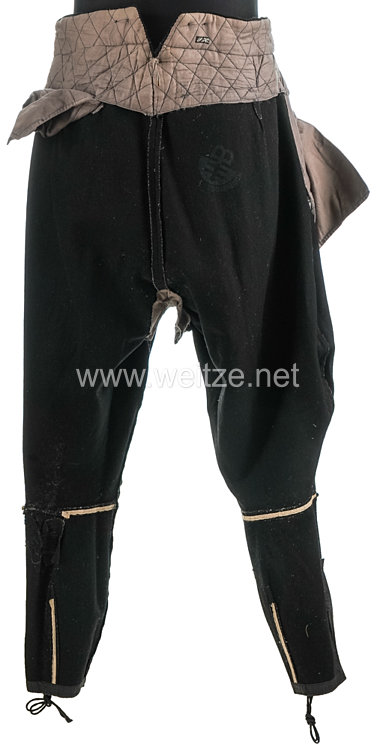
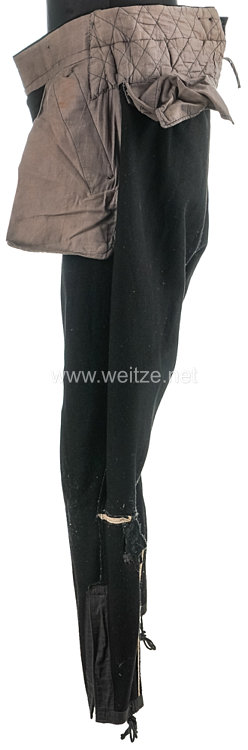
The described trousers from around 1935 correspond to the typical patterns of this era. The design with two diagonal front pockets and one right rear pocket followed the practical requirements of daily service. The leg openings designed with buttons allowed wearing over high shaft boots or lace-up boots, with the trousers fitting tightly against the boot shaft through buttons. This style of wear was characteristic of the military-influenced aesthetics of the time and was intended to convey a tight, disciplined appearance.
The black cloth used was typically made of wool blend fabric, which had to be robust and durable. The quality of uniform fabrics varied depending on the time of manufacture and procurement source. While higher-quality materials were still used in the early 1930s, quality deteriorated significantly with the increasing war economy from the late 1930s onwards.
The measurements of the trousers with a waist circumference of 90 cm and an inseam length of 107 cm correspond to an average size and prove that this was an actually worn service garment. The described signs of wear, including patches on the right calf and on the seat, are typical of intensively used uniform items. In the 1930s, uniforms were costly purchases for many wearers, which were carefully maintained and repaired when necessary.
For members of the SS and NSKK, detailed dress regulations applied, which were laid down in internal service instructions. Uniforms had to be procured at one's own expense, with only certain authorized manufacturers permitted to produce them. This was intended to ensure uniform quality and appearance. The SS clothing offices strictly monitored compliance with regulations.
The black SS uniform was used as the main service dress until approximately 1938/39. With the beginning of World War II and the establishment of the Waffen-SS, field gray uniforms were increasingly adopted, while the black uniform was primarily worn for ceremonial occasions. The NSKK retained its black uniforms longer, as its members were primarily deployed within the Reich territory.
From a historical perspective, such uniform pieces document the organizational structure and appearance of National Socialist formations. They are testimonies of a time when uniforming and paramilitary structures were central elements of exercising power. The SS developed from a small bodyguard into an organization that was significantly involved in the Holocaust and numerous war crimes.
The condition with visible signs of use gives the object authentic character and distinguishes it from later reproductions. The patches demonstrate the long period of use and careful maintenance by the original wearer, which was typical of the economic circumstances of many organization members in the 1930s.