Third Reich Photographs, Reception of a Diplomat

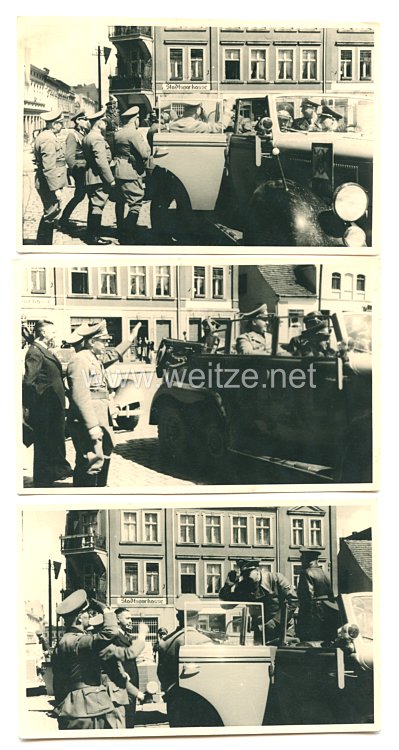
3 photographs, postcard size. Used condition.
343535
35,00

Third Reich Photographs, Reception of a Diplomat

The three photographs in postcard format document the reception of a diplomat during the era of the Third Reich (1933-1945). Such images constitute important historical documents today, providing insights into the protocol customs and self-representation of the National Socialist regime in diplomatic affairs.

Diplomatic ceremony played a significant role in the Third Reich's foreign policy representation. After the NSDAP seized power in January 1933, the regime initially sought international recognition as a legitimate government. Diplomatic receptions and official welcomes of foreign representatives were carefully staged and frequently photographed. The Foreign Office (Auswärtiges Amt) under Foreign Minister Konstantin von Neurath (1932-1938) and later Joachim von Ribbentrop (1938-1945) was responsible for organizing such events.

Photographs of this type were produced for various reasons: they served press reporting domestically and abroad, and internal documentation for archives of the Foreign Office or other government agencies. Many such images were also used as propaganda material to demonstrate international recognition and the regime's supposed normalcy. The Reich Ministry of Public Enlightenment and Propaganda under Joseph Goebbels strictly controlled which images could be published.

The postcard-size format (typically 9 x 14 cm or 10 x 15 cm) was widespread for private and official photographs in the 1930s and 1940s. Such formats were well-suited for albums but could also be stored or distributed individually. Professional photographers working for government agencies often produced prints in this format.

The Third Reich's diplomatic relations passed through various phases. In the early years (1933-1937), the regime attempted to present itself as a predictable partner while simultaneously beginning to undermine the Versailles Treaty system. Important diplomatic events of this period included the German-Polish Non-Aggression Pact (1934), the Anglo-German Naval Agreement (1935), and growing cooperation with Fascist Italy. The 1936 Berlin Olympic Games were staged as the pinnacle of diplomatic self-presentation.

From 1938 onwards, foreign policy intensified with the annexation of Austria (Anschluss), the Sudeten crisis, and the Munich Agreement. Nevertheless, diplomatic forms continued to be observed, and foreign ambassadors and envoys were received according to all rules of diplomatic protocol until the outbreak of war in 1939. After the beginning of World War II, diplomatic relations were mainly limited to allied and neutral states.

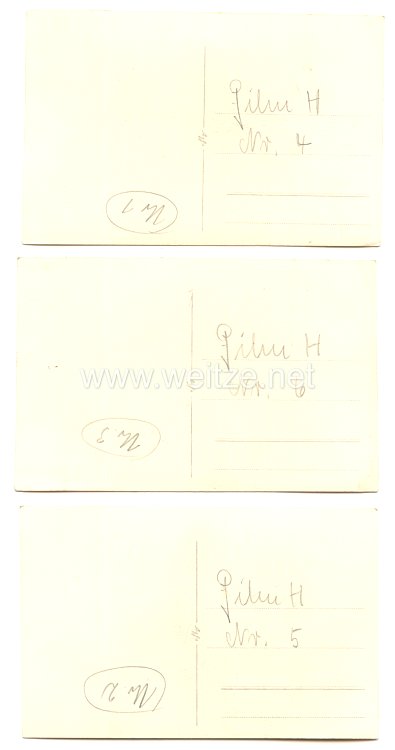
The condition of such historical photographs varies considerably. Photos described as “used condition” may show typical signs of aging such as creases, discoloration, fingerprints, or inscriptions on the reverse. While these traces of use diminish the optical impression, they can be historically valuable, especially when handwritten notes provide information about date, location, or depicted persons.

For collectors and historians, such photographs are significant for several reasons: they document the visual history of the Nazi era, show uniforms, clothing, and architectural backgrounds, and can help identify persons or events. At the same time, they require critical engagement, as they were often created for propaganda purposes and intended to embellish the regime's reality.

Preservation in collections, museums, or archives serves historical research and educational work. Institutions such as the German Federal Archives (Bundesarchiv), the Institute for Contemporary History, or various state archives maintain extensive photograph collections from the Nazi period. Responsible handling of such material is essential to document history without glorifying the regime.