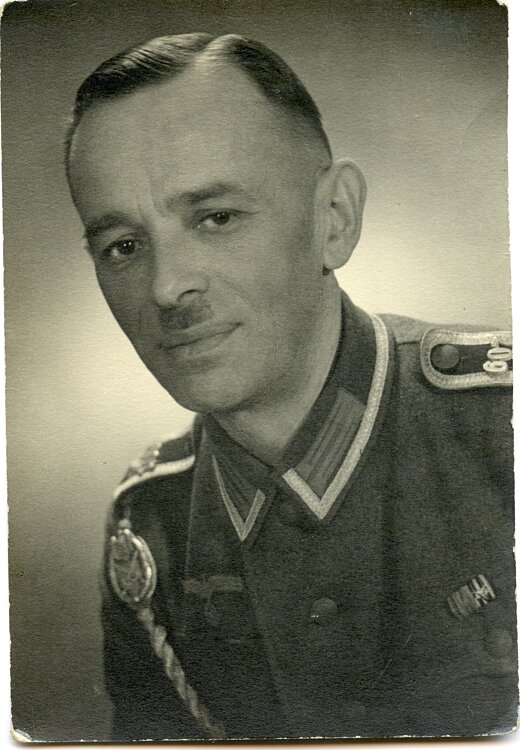
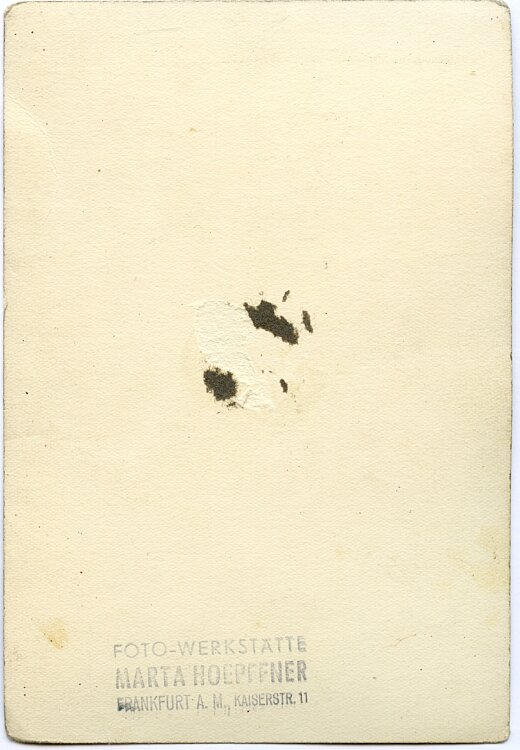
Portrait Photograph of a Non-Commissioned Officer with Marksmanship Lanyard and Regimental Numbers "607" on Shoulder Straps
Historical Context: Portrait Photograph of a Non-Commissioned Officer with Marksmanship Lanyard and Regimental Numbers "607"
This portrait photograph depicts a non-commissioned officer of the German armed forces, whose uniform displays the characteristic marksmanship lanyard (Schützenschnur) as well as the regimental numbers "607" on the shoulder straps. This photographic documentation in postcard format provides valuable insight into the military culture and hierarchy of the German Empire during the Wilhelmine era.
The regimental number 607 refers to a specific regiment of the Prussian or German Army. The numbering system for military units in the German Empire followed a systematic scheme, whereby higher numbers typically indicated later-established units or reserve formations. The 600-series suggests formations that were possibly established in the context of army expansions in the early 20th century or during World War I (1914-1918).
The Schützenschnur (marksmanship lanyard) was a significant military decoration in the German Army that denoted exceptional shooting proficiency. This award was granted in various grades, distinguishable by the color and design of the braided cord. The marksmanship lanyard was typically worn over the right shoulder and fastened to a uniform button. Its award was based on results achieved during military shooting exercises, with strict standards that had to be met.
The system of marksmanship lanyards was regulated by various army regulations. The first grade was usually a simple braided cord, while higher performance classes were marked by additional decorations, badges, or color variations. This decoration held not only symbolic value but also represented concrete recognition of military competence that elevated the wearer's status within the military hierarchy.
The non-commissioned officer rank formed the backbone of the German armed forces. Non-commissioned officers were responsible for the direct leadership and training of enlisted men and formed the crucial link between common soldiers and the officer corps. Their experience, discipline, and professional competence were fundamental to the operational capability of military units.
The shoulder straps with regimental numbers served for immediate identification of unit affiliation. According to the uniform regulations of the German Army, these numbers had to be clearly visible on both shoulder straps. The design and color of shoulder straps varied according to branch of service – infantry, cavalry, artillery, or technical troops each had their own distinctive markings.
Military portrait photographs in postcard format were extremely popular during the Imperial period and especially during World War I. Soldiers had themselves photographed in professional studio ateliers to send these images to family members and friends. These photographs served not only for personal remembrance but also for self-representation and documentation of military affiliation and achievements.
The photographic practice for military portraits followed certain conventions. Soldiers were typically depicted in full uniform with all decorations and rank insignia. Studio photographers understood how to present military details precisely and clearly recognizable, as these were of great significance to the wearers and their families.
The historical value of such photographs lies not only in their documentation of individual military careers but also in their contribution to understanding military social history. They show uniform details, decoration systems, and the visual culture of the military establishment of that era. For military historians and collectors, they provide authentic primary sources for researching uniforming, rank structures, and military traditions.
The preservation of such photographs in good condition enables subsequent generations to gain direct visual access to the military past and to comprehend the lived reality of soldiers of that time.