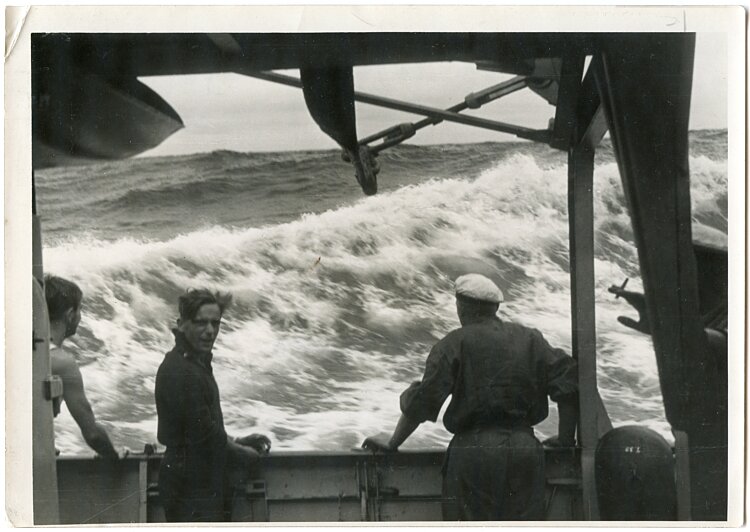
Kriegsmarine Press Photograph, Minesweeper at Hela

18 x 13 cm, condition 2
183634
10,00

Kriegsmarine Press Photograph, Minesweeper at Hela

This Kriegsmarine press photograph depicting a minesweeper near Hela represents a significant historical document from the World War II era. With dimensions of 18 x 13 cm, it corresponds to the typical format of German naval propaganda photography of that period.

Hela, located on the peninsula of the same name in the Bay of Danzig (today Hel, Poland), played a strategically important role for the Kriegsmarine. The peninsula housed a significant naval base and served as a center for training, testing, and operations. Minesweeper flotillas in particular made intensive use of this base for their vital missions in the Baltic Sea.

The minesweepers of the Kriegsmarine were among the most heavily tasked and endangered units of the German Navy. Their primary mission was to keep shipping lanes clear of mines – both enemy mines and Germany's own defensive minefields, through which safe passages had to be created. In the Baltic Sea, this task was of existential importance, as Germany depended on maritime routes for transporting ore from Sweden, for military operations, and later for evacuations.

The Kriegsmarine deployed various types of minesweepers. The most commonly used were the Minensuchboote 1935 (also known as M-boats of the 1935 series) and the larger Minensuchboote 1940. These vessels typically ranged between 40 and 60 meters in length and were equipped with specialized gear for clearing different types of mines, including sweeping equipment for moored mines, as well as acoustic and magnetic minesweeping apparatus.

Press photographs of the Kriegsmarine were produced and distributed by the Propagandakompanie der Marine (Navy Propaganda Company) or by offices of the Oberkommando der Wehrmacht (OKW - High Command of the Armed Forces). These images served multiple purposes: to inform the public about the Navy's activities, to boost morale on the home front, and to promote the image of the Kriegsmarine as a modern, efficient fighting force. The photographs were distributed to newspapers, magazines, and for exhibitions.

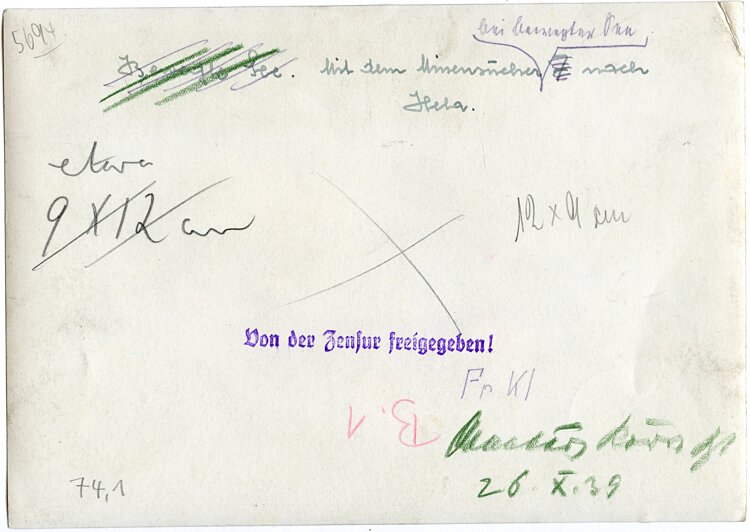
The reverse side of such press photos typically bore stamps with information about the issuing office, image numbers, dates, and sometimes brief captions. Censorship ensured that no strategically sensitive information was disclosed. The professional quality of these photographs and their standardized formats make them valuable historical sources.

The situation at Hela became dramatically more severe toward the end of the war. In spring 1945, the peninsula became one of the last defensive positions in the East. Minesweepers played a crucial role in Operation Hannibal, the largest maritime evacuation in history, during which an estimated two million people were evacuated from East Prussia, Pomerania, and the Baltic region across the Baltic Sea between January and May 1945. The boats had to operate under extreme conditions: constant air attacks, artillery fire, freezing temperatures, and the permanent risk of mines – both old and newly laid.

Hela did not capitulate until May 9, 1945, one day after Germany's unconditional surrender, making it one of the last German bases to be abandoned. The minesweepers stationed there continued their dangerous service until the very end.

From today's perspective, such press photographs are important documents of military and naval history. They document not only the technical aspects of naval warfare but also the way the Nazi regime presented military realities for propagandistic purposes. For collectors and historians, they offer insights into the daily life of the Kriegsmarine, the ship types deployed, and the geographical focal points of naval operations.

The photograph's condition rating of 2 indicates good preservation, which is not self-evident for photographs from this period. Many such documents were lost in the chaos of the war's end or damaged through improper storage.

Today, these photographs serve as sobering reminders of a dark chapter in history while simultaneously providing invaluable documentation for understanding naval operations during World War II in the Baltic theater.