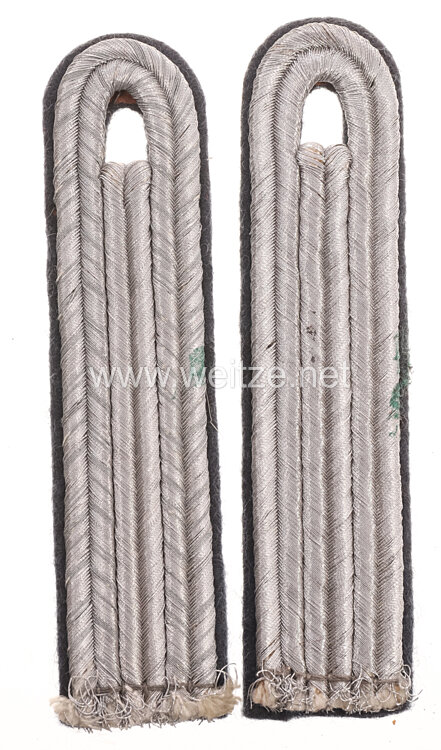
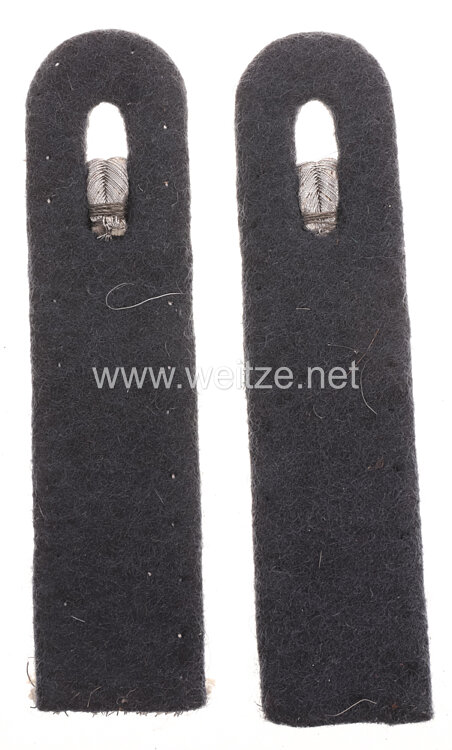
German Red Cross DRK Pair of Shoulder Straps for a Wachtführer

for sewing in, condition 2.
459534
50,00

German Red Cross DRK Pair of Shoulder Straps for a Wachtführer

German Red Cross (DRK) Shoulder Boards for a Wachtführer: Historical Context and Significance

The shoulder boards for a Wachtführer (Watch Leader) of the German Red Cross (Deutsches Rotes Kreuz - DRK) represent an important testimony to the paramilitary organization and rank structure of this humanitarian institution during the National Socialist period. These sew-on rank insignia illustrate the increasing militarization of the DRK from 1937 onwards.

The German Red Cross in the Third Reich

Following the Nazi seizure of power in 1933, the German Red Cross was gradually brought into line with the regime. In December 1937, the Law on the German Red Cross completed its full integration into the Nazi state. The DRK was declared the only recognized Red Cross organization in the German Reich and placed directly under the Reich Ministry of the Interior. Duke Carl Eduard of Saxe-Coburg and Gotha, a convinced National Socialist, led the DRK from 1933 to 1945.

With this coordination, the DRK received a strictly hierarchical, military-like structure with corresponding uniforms and rank insignia. This development contradicted the actual humanitarian principles of the international Red Cross movement, which emphasize neutrality and impartiality.

Rank Structure and the Wachtführer

The rank of Wachtführer was positioned in the lower leadership level of the DRK hierarchy. The designation “Wacht” (watch or guard) drew on military traditions and illustrated the paramilitary orientation of the organization. A Wachtführer was typically responsible for leading a small unit and functioned as a link between ordinary DRK helpers and higher ranks.

DRK rank insignia were manufactured in various designs. Sew-on shoulder boards, like those described here, were attached to service clothing and clearly identified the wearer as a member of a specific rank. This was particularly significant during World War II, when the DRK undertook extensive tasks in medical services, wounded care, and support services.

Duties and Areas of Deployment

During the war, the DRK was active in diverse areas. The organization provided medical personnel for the Wehrmacht, operated hospitals and hospital trains, organized blood donation services, and cared for wounded soldiers and prisoners of war. Wachtführer and other DRK members were deployed both on the home front and in occupied territories.

The DRK nursing sisterhoods played a particularly important role. More than 40,000 sisters served during the war, many under extreme conditions on the Eastern Front and in other war zones. Male DRK helpers, including Wachtführer, were frequently involved in wounded transports, medical units, and care services.

Uniforms and Insignia

DRK uniforms followed military models but were distinguished by characteristic elements. The basic color was usually dark blue or gray. The Red Cross as an international protective symbol was prominently displayed on armbands, caps, and other uniform parts. The shoulder boards indicated the respective rank through their design, color, and possible additions such as stars or braids.

Sew-on shoulder boards were sewn directly onto the uniform jacket, in contrast to slip-on forms that could be slid onto corresponding shoulder straps. The sewn variant was more stable and intended for permanent use.

Historical Classification and Post-War Period

The role of the DRK during National Socialism remains historically controversial. While the organization undoubtedly performed life-saving humanitarian work, it was simultaneously firmly embedded in Nazi structures. The DRK participated in the discrimination against Jewish members, supported racial ideology, and was integrated into the regime's war machinery.

After 1945, the DRK had to reorganize and return to its original humanitarian principles. In the Federal Republic of Germany, the German Red Cross (Deutsches Rotes Kreuz e.V.) was founded in 1950 as an independent organization that recommitted itself to the Geneva Conventions and the principles of the international Red Cross and Red Crescent Movement.

Collector Value and Historical Significance

Today, uniform parts and rank insignia of the DRK from the Nazi period are sought-after collectibles that represent important sources for military historical research. They document organizational structure, material quality, and the craftsmanship of contemporary production. Such objects are witnesses to a complex historical period and provide insights into the everyday reality of DRK members during World War II.