German Luftwaffe (WL) - Civilian Badge for Luftwaffenhelfer

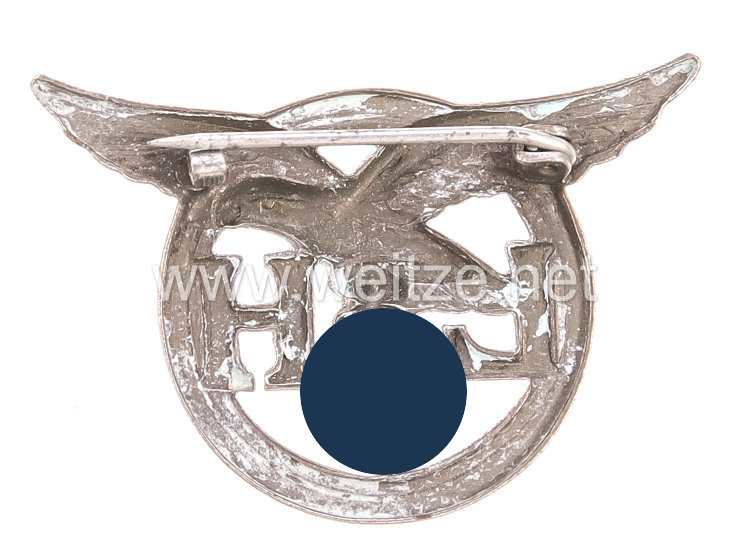
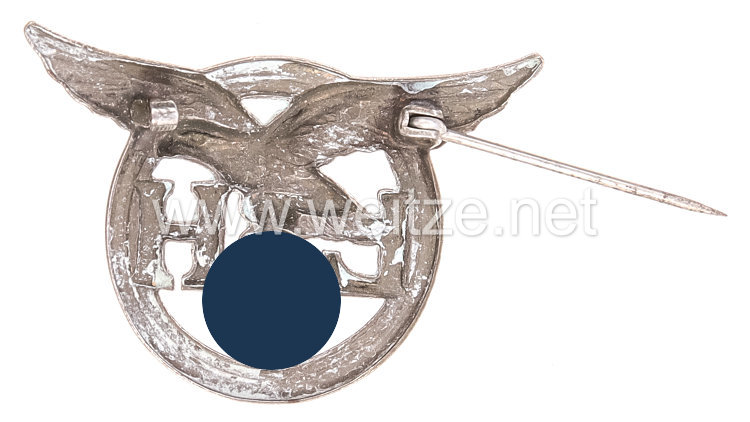
Hollow-stamped iron, on pin, condition 2.
429433
220,00

German Luftwaffe (WL) - Civilian Badge for Luftwaffenhelfer

The Civil Badge of the Luftwaffe Auxiliaries represents a remarkable testimony to the desperate measures taken by Nazi Germany in the final years of World War II. This badge documents the tragic involvement of adolescents in the military air defense of the German Reich between 1943 and 1945.

In January 1943, the German Luftwaffe introduced the Luftwaffenhelfer (Air Force Auxiliaries) program to address the acute personnel shortage in anti-aircraft batteries and air defense positions. Through the War Auxiliary Service Decree of January 26, 1943, students born in 1926 and 1927, who were at least 15 years old, were recruited for service in air defense. These youths were intended to replace regular soldiers who were needed at the front.

The present badge is made of hollow-stamped iron and was worn on a pin. This manufacturing technique was typical of the later war years, when material shortages determined the production of military decorations and badges. Hollow stamping allowed for material savings while maintaining the external appearance.

Despite their young age, the Luftwaffenhelfer were deployed in dangerous positions. They operated anti-aircraft guns, searchlights, and sound detection equipment, worked in communications units, and assisted in airspace surveillance. Service usually took place near their hometowns, and the youths were theoretically supposed to continue attending school. In practice, however, this was hardly possible, as military service occupied most of their time.

In February 1945, the Civil Badge of the Luftwaffe Auxiliaries was officially instituted. The introduction occurred at a time when the German Reich was already on the brink of defeat. The badge was intended to recognize the service of these youths and symbolize their affiliation with the Luftwaffe, although they were formally not soldiers. This legal distinction had significant consequences: as civilians, the Luftwaffe auxiliaries would not have been protected under the Geneva Conventions if captured.

The badge was typically worn on the left breast of the uniform. The design followed the typical conventions of National Socialist sovereignty insignia, with the specific designation as a “civil badge” emphasizing the special status of these young helpers. Awards were made after a certain period of service or for special merit.

Historically, this badge documents one of the darkest aspects of Nazi warfare: the systematic militarization of youth. By the end of the war, an estimated 200,000 youths had been deployed as Luftwaffe auxiliaries. Many of them experienced traumatic situations, were wounded, or killed. Casualty rates were considerable, especially during the intensive Allied air raids on German cities in 1944 and 1945.

After the war, the role of the Luftwaffe auxiliaries was controversially discussed. While some viewed their service as forced participation in an unlawful system, others saw it as a tragic exploitation of children and adolescents. Legal recognition of their service in the Federal Republic of Germany remained disputed for a long time.

From a collector's perspective, authentic Civil Badges of the Luftwaffe Auxiliaries are relatively rare today. The short period between their institution in February 1945 and the end of the war in May 1945 meant that comparatively few examples were produced and awarded. The stated condition 2 indicates a well-preserved piece showing typical signs of wear from its era.

The marking WL (Wehrmacht Luftwaffe) on the badge emphasizes the military assignment, while the designation as a “civil badge” reflects the hybrid status of the wearers. This ambivalence mirrors the desperate situation of the German Reich, which on one hand wanted to mobilize every available person for the war, but on the other hand shied away from the implications under international law of openly recruiting child soldiers.

The present object serves today as a sobering testimony to a time when an entire generation of youths was robbed of their childhood and drawn into a criminal war. It reminds us of the responsibility to protect future generations from similar abuse.

r