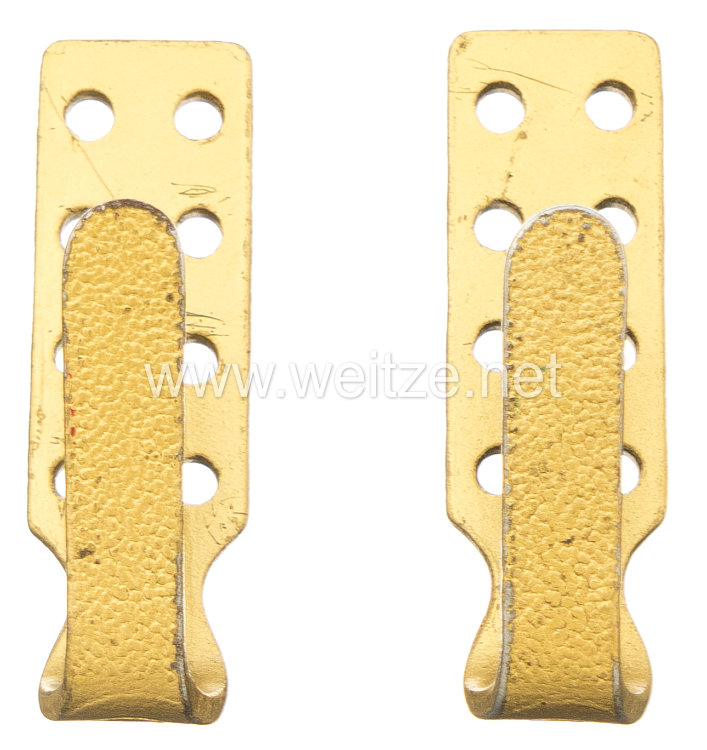
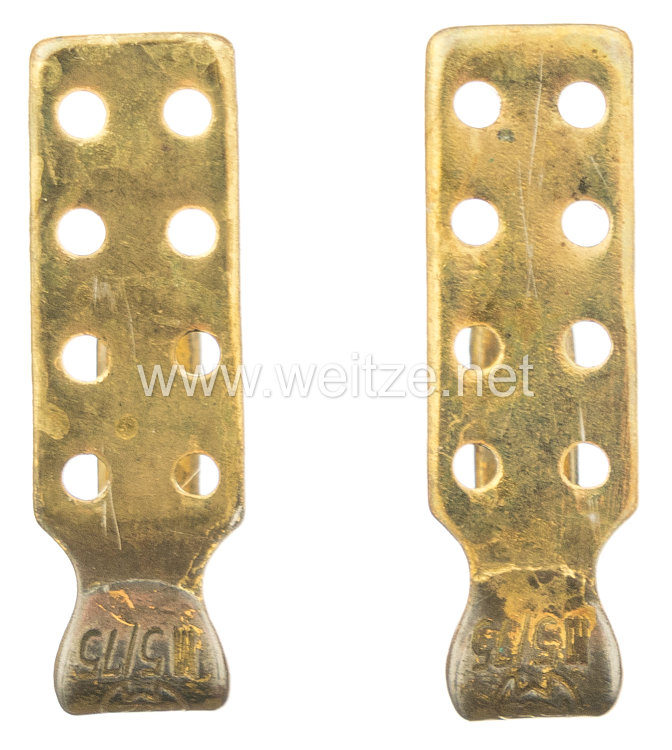
Third Reich NSDAP Pair of RZM Shoelace Tips
NSDAP Tunic Buttons with RZM Marking: Uniform Components of the National Socialist Party Uniform
The present tunic buttons represent typical uniform components of the National Socialist German Workers' Party (NSDAP) from the Third Reich era. They bear the manufacturer's marking RZM M5/75, which indicates licensed production through the Reichszeugmeisterei system.
The RZM System and Its Significance
The Reichszeugmeisterei (RZM) was established in 1929 as the central procurement office of the NSDAP. Following the seizure of power in 1933, the RZM developed into an enormous bureaucracy that controlled and certified all uniforms, insignia, and equipment items of the Party. Its primary goal was to ensure uniform quality standards while restricting production to licensed manufacturers.
The designation M5 refers to the main category of manufacturers producing effects and metal goods. The subsequent number 75 identifies the specific manufacturing company within this category. This systematic marking system enabled complete control over production and prevented the manufacture of unauthorized uniform parts.
Uniform Regulations and Wearing
The NSDAP uniform regulations were first comprehensively established in 1932 and revised several times in subsequent years. The brown shirts of party members and the uniforms of various organizations such as SA, SS, HJ, and other formations were minutely prescribed. Tunic buttons belonged to the standard equipment of uniform jackets and served both functional and decorative purposes.
The buttons were typically attached to the tails of uniform jackets and frequently bore the Party eagle symbol or the swastika. They were manufactured from various materials, with metal, often bronzed or silver-plated, being most common. Size and design were precisely specified to ensure uniformity within Party organizations.
Manufacturing and Economic Aspects
The production of RZM-certified uniform parts developed into a significant economic sector in National Socialist Germany. Numerous companies received licenses and profited from extensive orders. The RZM not only supervised quality but also set prices and controlled distribution channels.
After 1933, when the NSDAP became the state party and its membership numbers increased dramatically, demand for uniform parts reached its peak. Millions of Germans became members of the Party or its organizations, creating an enormous need for uniforms and insignia.
Collector Value and Historical Documentation
Today, such objects represent important historical documents that provide insights into the organization, bureaucracy, and material culture of the National Socialist regime. The RZM marking system enables historians and collectors to date objects precisely and trace their origins.
The condition designation “Condition 2” indicates used but well-preserved pieces that may show typical signs of wear. Such authentic traces of use lend the objects additional historical authenticity and document their actual use during the period.
Legal and Ethical Considerations
In the Federal Republic of Germany and other countries, trade in Nazi memorabilia is subject to strict legal regulations. As long as objects do not display unconstitutional symbols in a manner violating criminal law and serve a scientific, documentary, or educational purpose, their trade is generally legal. Historical research and museum documentation are expressly exempted from prohibitions.
Conclusion
These tunic buttons with RZM marking represent more than mere uniform components. They are testimonies to a totalitarian system that attempted to control and uniformize every aspect of public life. The meticulous bureaucracy of the RZM system reflects the organizational structure of the National Socialist regime and documents the material culture of this dark epoch in German history.