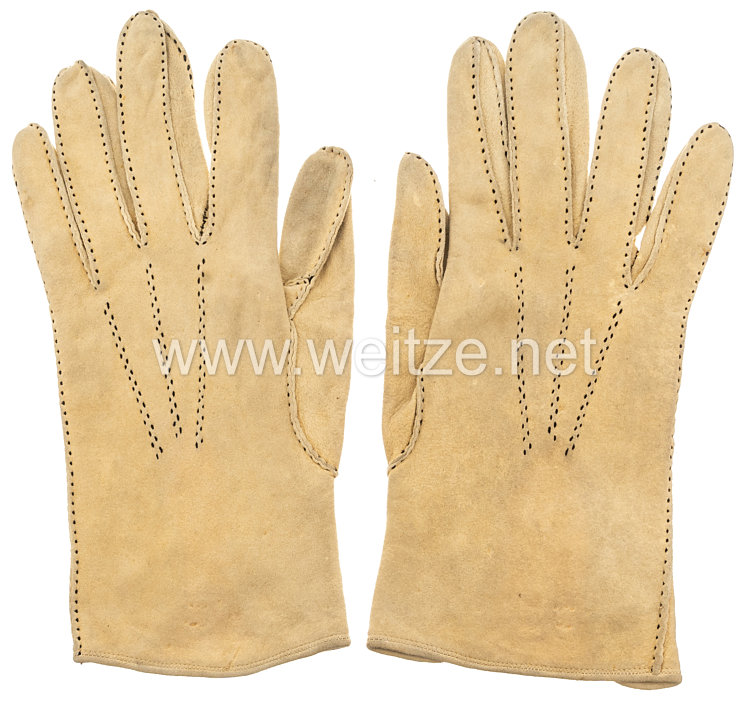
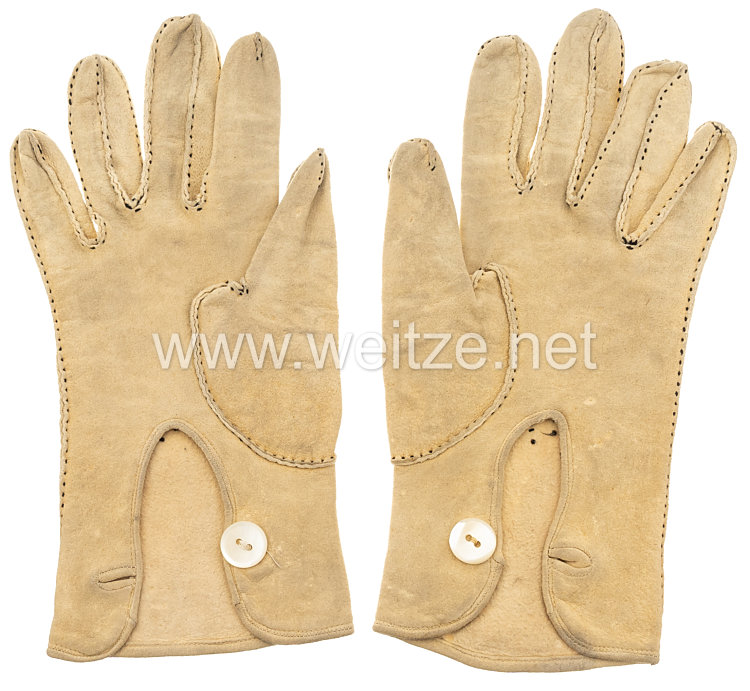
Army Pair of Officer's Gloves
White officer's gloves of the German Wehrmacht represent a characteristic element of military uniform that possessed symbolic significance far beyond their practical function. These elegant leather gloves were an integral part of the dress uniform and parade uniform of Heer (Army) officers during the National Socialist period from 1935 to 1945.
The tradition of white gloves in German military history extends far back and finds its roots in the Prussian armed forces of the 18th and 19th centuries. Already in the Imperial Army, white gloves were a sign of officer status and expressed the social position and military dignity of their wearer. After World War I, the newly founded Reichswehr continued this tradition, which was then adopted by the Wehrmacht.
According to the Heeresdienstvorschrift (HDv) and uniform regulations, white leather gloves were prescribed for officers on certain occasions. They were worn primarily with dress uniforms, at parades, official receptions, and ceremonial occasions. The gloves were made from fine, soft leather, usually goatskin or deerskin, which offered a particularly supple feel and noble appearance.
The manufacture of these gloves was carried out by specialized craft businesses and military suppliers. Among the best-known manufacturers were firms such as Robert Lubstein in Berlin, Roeckl in Munich, and various other glove manufacturers who had perfected their craft over generations. The production of a pair of high-quality officer's gloves required considerable manual skill, as each finger had to be cut and sewn individually.
The gloves were typically cut just above the wrist and were often closed there by a snap button or a small button strip. The seams were particularly carefully executed, often visible as topstitching on the fingers, serving both functional and decorative purposes. The inside was usually unlined or provided with a thin silk layer to facilitate donning.
In military hierarchy and etiquette, these gloves played an important role. An officer had to keep his white gloves immaculately clean at all times, which required regular care and often several pairs as replacements. Soiled or worn gloves were considered a sign of lack of discipline and were critically noted by superiors. The uniform and dress regulations made precise specifications about when white gloves and when gray or black gloves were to be worn.
During inspections and special occasions, the gloves were frequently held in the left hand while the right hand remained free for saluting. This practice was part of military ceremonial and was taught in officer training. The gloves also served as part of military body language – an officer removing his gloves signaled, for example, a transition to a more informal situation.
The procurement of gloves was partly through military channels, but officers had to finance a significant portion of their uniform and equipment themselves. This applied particularly to high-quality articles such as white leather gloves, which were considered part of personal equipment. The cost of a pair of quality officer's gloves was considerable and corresponded to several days' pay for a lieutenant.
After the end of World War II in 1945, these gloves initially disappeared from military daily life. In the newly founded Bundeswehr from 1955 onward, the tradition of white gloves was resumed on certain ceremonial occasions, albeit in modified form and with changed symbolic significance. Today they are part of the full dress uniform on special occasions.
For collectors of military-historical objects, originally preserved officer's gloves from the Wehrmacht period represent interesting objects of study. They document not only the craftsmanship quality of that time but also the military culture and the importance of tradition and ceremonial. The condition of such leather articles varies greatly, as the material reacts sensitively to storage conditions and tends toward drying out, discoloration, or brittleness over the decades.
The white color itself held deep symbolic meaning in military tradition. White represented purity, honor, and the officer's obligation to maintain the highest standards of conduct and appearance. The requirement to keep these gloves spotless was therefore not merely an aesthetic concern but a reflection of the officer's duty to uphold military values and traditions.