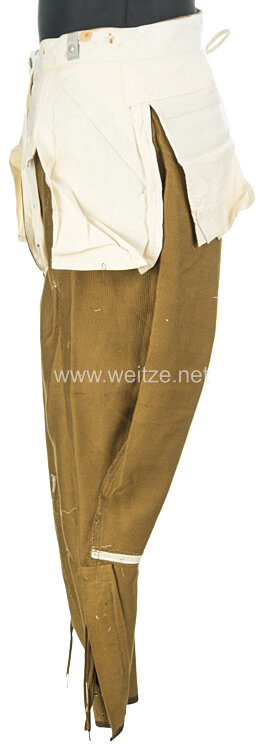
Sturmabteilung (SA) Breeches
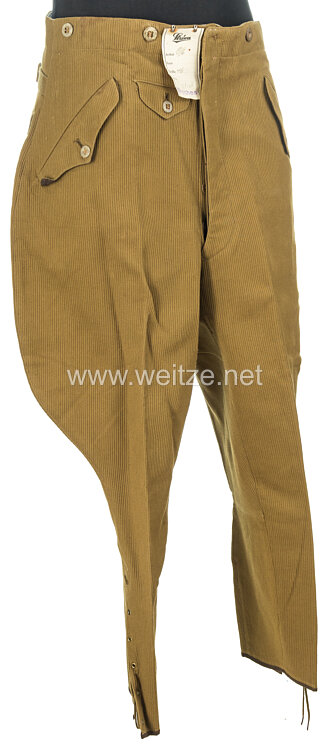
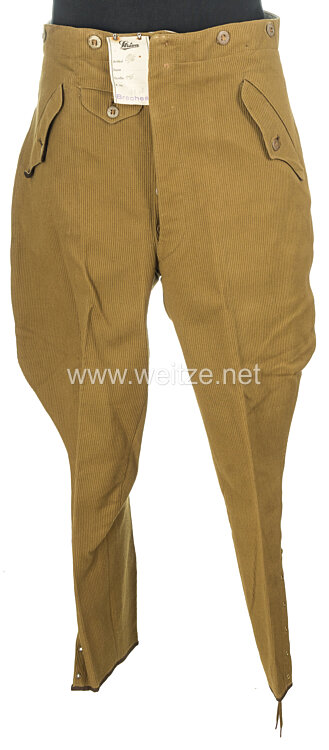
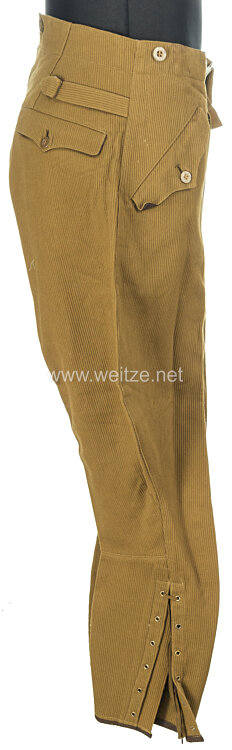
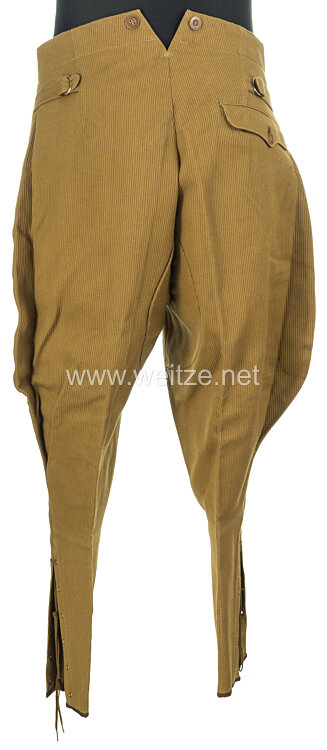
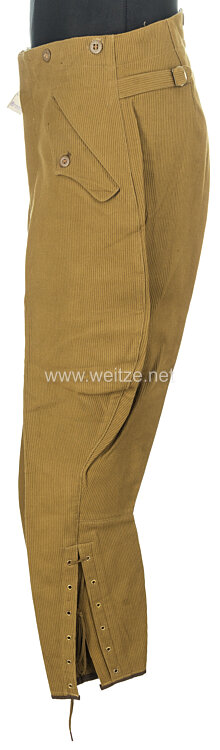
This SA riding breeches (Stiefelhose) in corduroy represents a characteristic garment of the paramilitary organization Sturmabteilung (SA) during the National Socialist era. This special form of riding breeches was an essential component of the brown uniform that became the identifying mark of SA members.
The Sturmabteilung was founded in 1920/21 as a protection and propaganda force for the NSDAP and developed into a mass organization with several million members by 1934. The characteristic brown uniform of the SA, which included these riding breeches, originated from practical considerations: large quantities of brown uniform shirts from former colonial stocks were cheaply available and became the foundation of SA clothing.
This specimen bears the RZM label, indicating production under the supervision of the Reichszeugmeisterei (Reich Equipment Administration). This central procurement office of the NSDAP, founded in 1929, controlled the production and distribution of party and SA uniforms as well as equipment. The RZM licensed private manufacturers and guaranteed through its label the authenticity and quality standards of products. The marking “SA Stiefelhose BW” indicates specific use for the Sturmabteilung and possibly cotton (Baumwolle) as the material.
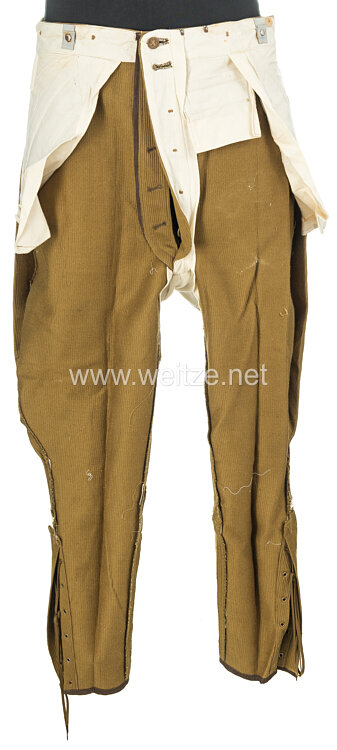
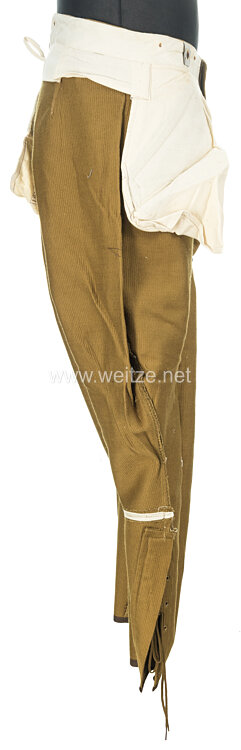
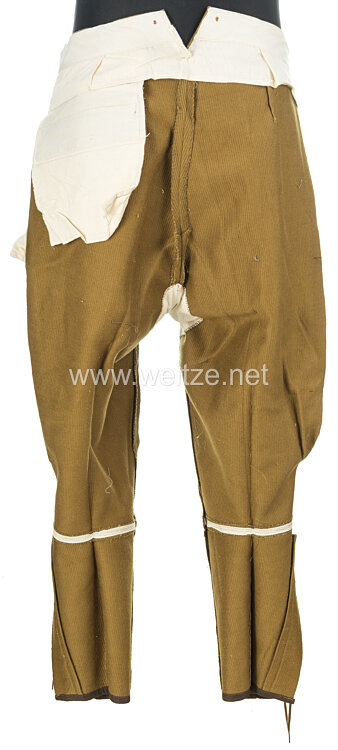
The construction of the riding breeches follows the classic equestrian design: the characteristic wide form in the thigh area tapers toward the knees and ends in laced leg closures that allowed wearing over high shaft boots. This boot combination was part of the paramilitary appearance of the SA. The two diagonal front pockets, small watch pocket, and back pocket corresponded to functional requirements and uniform regulations.
The use of corduroy as material indicates a higher-quality version. While simple SA uniform trousers were often made of robust cotton fabric, corduroy offered additional durability and a certain representative character. The light blue inner lining demonstrates careful workmanship and wearing comfort. The manufacturer “Striva Breeches” was one of numerous supplier companies that produced under RZM license for party organizations.
The measurements (waist circumference approximately 84 cm, total length approximately 96 cm) correspond to a medium size and document the standardized production processes of RZM-licensed manufacturers. The condition as a depot find in unworn state is remarkable and suggests that these breeches either remained as warehouse stock or as never-issued reserve uniform.
The historical context of these uniform pieces is inseparably linked to the violent history of the SA. After the seizure of power in 1933, the SA reached its peak with over four million members. Uniformization played a central role in creating a unified, intimidating appearance. After the “Röhm Affair” in June 1934, when the SA leadership was eliminated, the organization lost its political significance considerably but remained in existence until 1945.
From today's perspective, such uniform pieces are important historical documents that remind us of a dark period in German history. They serve in museums and collections for education and scholarly research on the mechanisms of totalitarian rule, the role of symbols and uniforms in mass mobilization, and the organization of paramilitary formations. The material-cultural analysis of such objects contributes to understanding the everyday aspects of National Socialism.