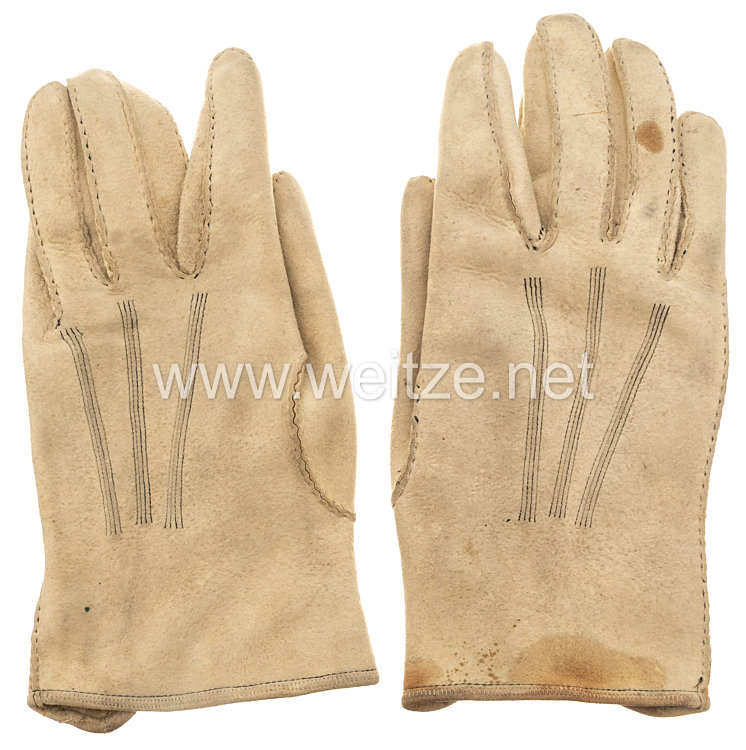
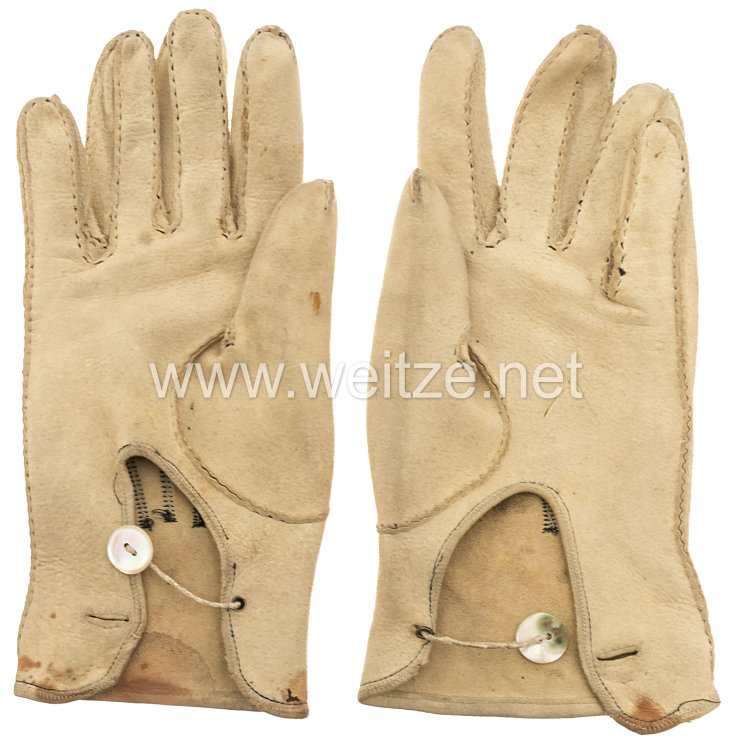
Army Pair of Officer's Gloves
The white officer gloves of the Heer (German Army) represented an important component of the traditional wardrobe of German military officers and formed an essential part of ceremonial and social uniforms. These elegant leather gloves symbolized not only the rank and status of an officer but also embodied the centuries-old military tradition and code of honor of the German officer corps.
Historical Background and Tradition
The use of white gloves in military contexts dates back to the 18th century. In the Prussian Army and later in the German Reichswehr, white gloves became established as an indispensable element of dress uniforms and parade uniforms. The color white symbolized purity, discipline, and the impeccable bearing expected of an officer.
These traditions were continued in the Wehrmacht. The Heeresdienstvorschrift (Army Service Regulation) precisely regulated when and how officer gloves were to be worn. White leather gloves were particularly prescribed for social occasions, parades, honor formations, and official receptions. They were worn with dress uniforms, social dress, and during special military ceremonies.
Manufacturing and Materials
The gloves were made from the finest white leather, usually goat or lambskin. The quality of the material and craftsmanship were decisive factors, as the gloves had to be both functional and representative. Renowned glove makers and military suppliers produced these items according to strict quality standards.
Size designations, such as the number “65” on the label, corresponded to the European glove sizing system based on hand circumference in millimeters. This standardization enabled a precise fit, which was essential for correct military appearance.
Wearing Regulations and Protocols
Regulations for wearing officer gloves were strictly defined. Different uniform types required different glove types: white leather gloves for dress uniforms, brown or black leather gloves for field uniforms. White gloves emphasized the formality of an occasion and were a visible sign of military etiquette.
Officers were required to maintain their gloves in immaculate condition. Soiled or damaged gloves were considered a violation of military discipline and could lead to reprimands. The care of white leather gloves required special attention, as the material was delicate and needed regular cleaning.
Symbolism and Social Significance
Beyond their practical function, white officer gloves possessed deep symbolic meaning. They were part of the “officer's bearing” that embodied honor, loyalty, and professionalism. Wearing gloves prevented direct skin contact during handshakes and military salutes, which was interpreted as a sign of respect and social distance.
In the military culture of the early 20th century, gloves were also a means of distinguishing between social classes within the military. While enlisted men and non-commissioned officers wore functional work gloves, the fine white leather gloves were reserved for the officer corps.
Procurement and Supply
Officer gloves were generally not equipment items issued by the Wehrmacht. Officers had to procure and finance most of their uniforms and equipment themselves. This led to a diversity of manufacturers and quality levels. Established military outfitters and tailors in Berlin, Munich, and other German cities specialized in producing high-quality officer equipment.
Preservation and Collector Value
Today, original officer gloves from the Wehrmacht era are sought-after collectibles of military-historical artifacts. Their condition varies considerably, as leather is an organic material susceptible to aging, drying, and damage. Gloves in condition 3, meaning with visible signs of use but still intact structure, are frequently found in collections and document the everyday military reality of that era.
Label information and manufacturer marks are of particular interest to collectors and historians, as they allow conclusions about production locations, time periods, and quality standards. These details contribute to understanding the material culture of the German military and illustrate the importance that uniform and appearance played in military daily life.