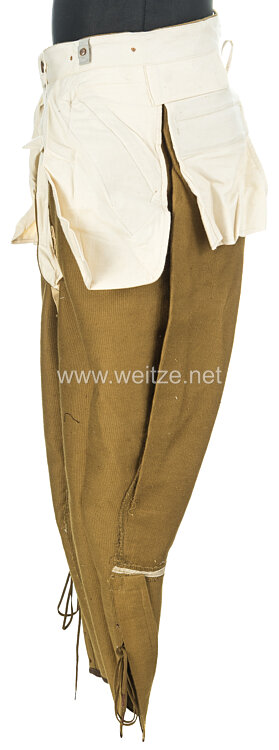
Sturmabteilung (SA) Breeches
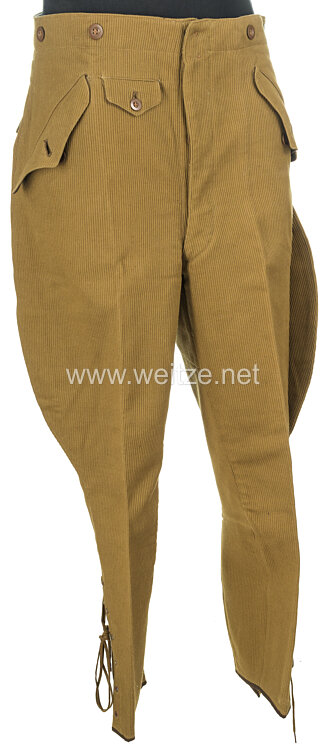
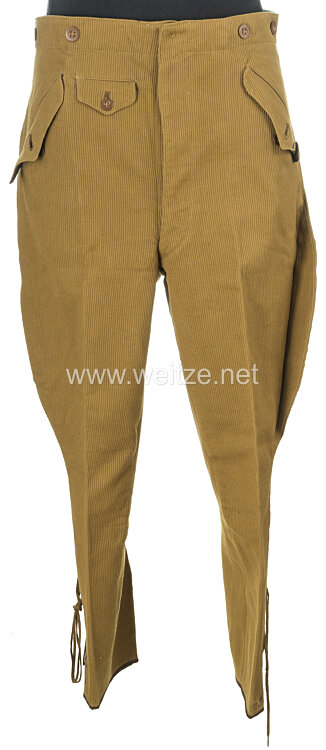
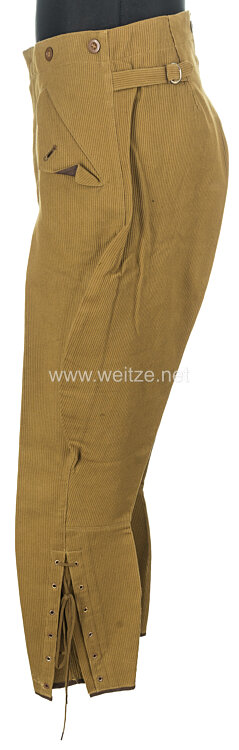
The SA boots pants (Stiefelhose) was a characteristic garment of the Sturmabteilung (SA), the paramilitary organization of the Nazi Party during the Weimar Republic and the Third Reich. This particular corduroy version represents the standardized uniform that was regulated and issued by the Reichszeugmeisterei (RZM) from the early 1930s onward.
The Sturmabteilung was founded in 1920/21 as a protection squad for Nazi Party meetings and developed under the leadership of Ernst Röhm into a mass organization with several million members by 1934. Uniformity played a central role in the SA's self-presentation, with the brown uniform becoming a symbol of the National Socialist movement. The boots pants were an essential component of the service dress.
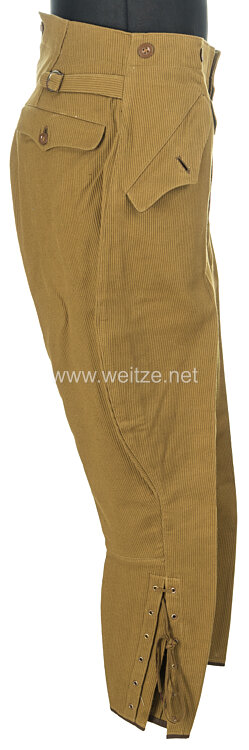
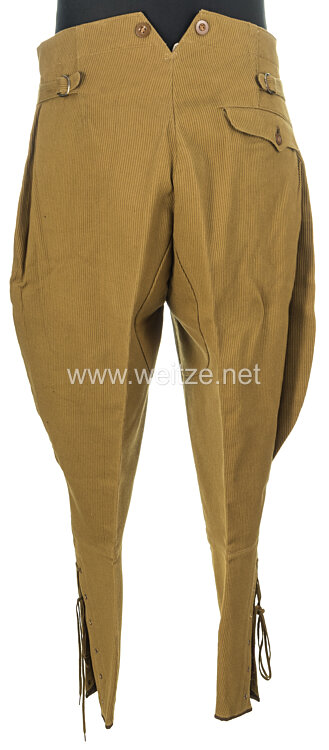
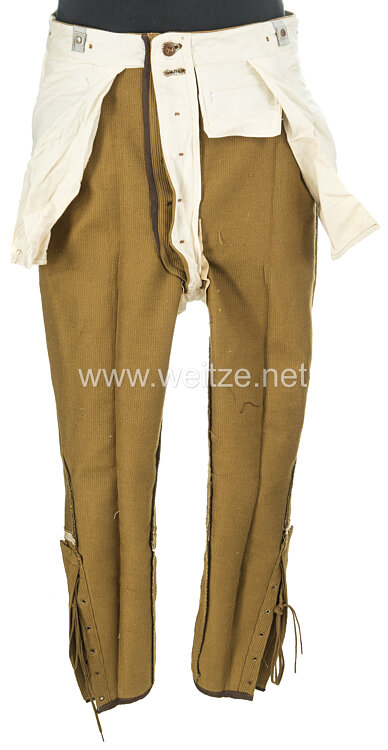
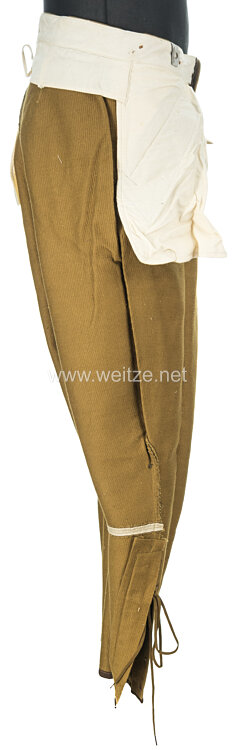
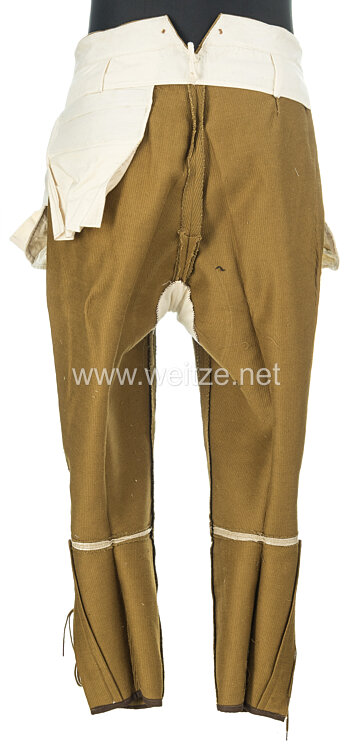
The pants described here display typical features of official SA clothing: The corduroy construction was a common material choice that combined durability with practical properties. The functional design with two diagonal front pockets, a watch pocket, and a back pocket corresponded to military standards of the time. Particularly characteristic are the lace-up trouser legs, which allowed wearing with the namesake high boots – a military style element that gave the SA its martial appearance.
The RZM label (Reichszeugmeisterei) is of particular historical significance. The RZM was founded in 1929 and from 1930 became the central procurement and control agency for all uniforms and equipment of the NSDAP and its formations. The designation “SA Stiefelhose BW” indicates official authorization and standardization. The abbreviation “BW” likely refers to the manufacturer or production facility, as the RZM maintained a system of licensed manufacturers identified by specific codes.
The light blue lining was a typical feature of SA clothing from this period and served not only practical but also representative purposes. The careful workmanship reflects the organization's claim to military-style equipment that was meant to demonstrate discipline and uniformity.
The pants measurements (waist circumference approximately 84 cm, total length approximately 96 cm) correspond to a medium size and were part of a standardized sizing system that the RZM developed for mass production of uniform items. The condition as an “unworn depot find” is remarkable and suggests that this piece comes from warehouse stock, possibly from the period after 1934.
Following the events of the so-called “Röhm Affair” or “Night of the Long Knives” from June 30 to July 2, 1934, when Hitler eliminated the SA leadership, the Sturmabteilung drastically lost significance. The SA was disempowered and relegated to a mere auxiliary organization. Large quantities of uniform parts and equipment were stored or redistributed, which explains why unworn pieces from depot stocks still surface today.
The SA uniform and its components are today important historical artifacts for research into the National Socialist era. They document organizational structures, production methods, and the visual propaganda of the Nazi movement. At the same time, they are testimonies to one of the darkest periods in German history.
From a military-historical perspective, the SA boots pants are an example of the paramilitarization of political culture in the Weimar Republic and early Third Reich. The deliberate imitation of military aesthetics by a party organization was part of the NSDAP's strategy to present itself as a state-supporting force and to exercise intimidation. The SA played a central role in enforcing National Socialist rule through street terror and political violence.
Collectors and museums today preserve such objects as historical sources that provide insight into manufacturing techniques, organizational structures, and the material culture of National Socialism. The scientific and educational value lies in the possibility of conveying the history of this era through concrete objects and understanding the mechanisms of totalitarian systems.
These artifacts serve as tangible reminders of how political movements utilized uniform symbolism to create identity, enforce conformity, and project power. The standardization evident in the RZM system reflects the Nazi regime's obsession with control and organization, extending even to the minutest details of dress and appearance. For historians and educators, such items are invaluable tools for teaching about the visual and material dimensions of totalitarianism and the importance of remaining vigilant against authoritarian movements.