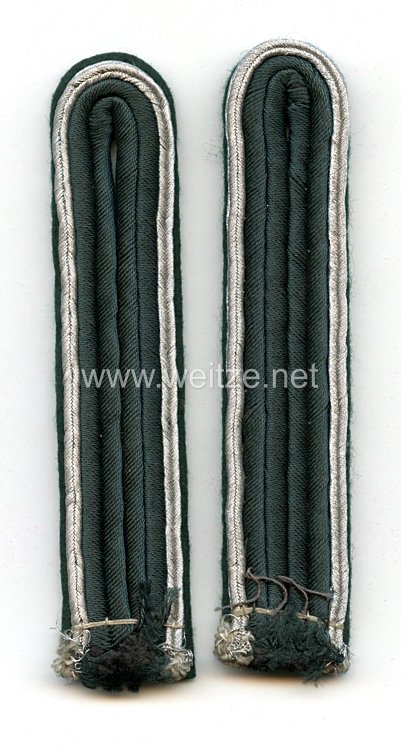
SHD Sicherheits- und Hilfsdienst Pair of Shoulder Boards for an Internal Service Director

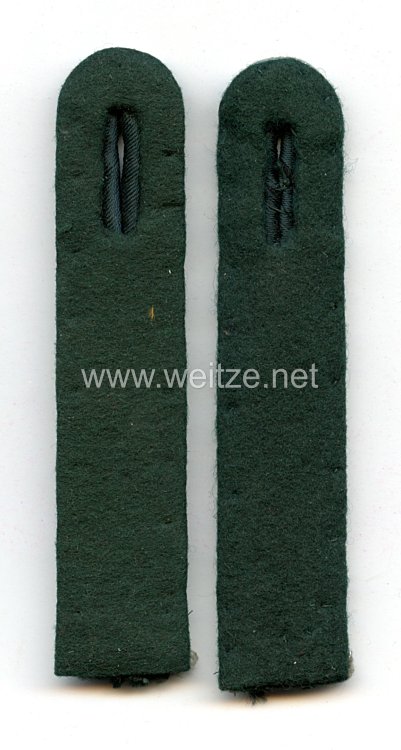
for sewing in, on dark green cloth backing. Worn, condition 2.
421327
80,00

SHD Sicherheits- und Hilfsdienst Pair of Shoulder Boards for an Internal Service Director

These shoulder boards belonged to the uniform of the Sicherheits- und Hilfsdienst (SHD), or Security and Auxiliary Service, a paramilitary organization that played an important role in civil defense in the Federal Republic of Germany during the Cold War. These specific shoulder boards were designated for an Innendienstleiter (Internal Service Leader) and represent the complex organizational structure developed to protect the civilian population in case of emergency.

The SHD was established as part of the reorganization of civil defense in the Federal Republic of Germany during the 1950s. Following the devastating experiences of World War II and given the growing tensions between East and West, the federal government recognized the necessity of establishing comprehensive protective measures for the civilian population. The SHD was intended to complement existing aid organizations such as the Technisches Hilfswerk (THW) and the Federal Air Raid Protection Association.

The SHD's uniforming followed military traditions, though careful attention was paid to distinguishing it from Wehrmacht uniforms. The characteristic dark green cloth base of the shoulder boards was part of this color scheme and was meant to emphasize the civilian character of the organization while simultaneously making the hierarchical structure clear through appropriate rank insignia.

The position of Innendienstleiter was of particular significance within the SHD organizational structure. This function encompassed administrative and coordinating duties within a local office. The Internal Service Leader was responsible for organizing daily service operations, managing materials and equipment, and coordinating between different departments. This position required both organizational skills and thorough knowledge of administrative procedures.

The shoulder boards themselves were designed as sew-in variants, meaning they were permanently integrated into the uniform. This distinguished them from slip-on shoulder boards that were common in some other organizations. The permanent integration into the uniform emphasized the official character and the permanent assignment of the wearer to his position.

The execution on dark green cloth base corresponded to the uniform regulations of the SHD, which provided for clear identification of ranks and functions. The material and workmanship had to meet certain standards to ensure durability and uniform appearance. Rank insignia were typically displayed through specific symbols, stripes, or other markings that clarified the wearer's position within the organizational hierarchy.

The historical context of the SHD is inseparable from the threat situation of the Cold War. In the 1950s and 1960s, there was great concern in the Federal Republic about the possibility of a conventional or even nuclear conflict. The establishment of comprehensive civil defense structures was viewed as a state task of highest priority. In case of defense, the SHD was to undertake tasks such as air raid protection, medical services, fire protection, and technical assistance.

The organization had a sophisticated training structure in which volunteers were trained in various areas. Holders of leadership positions such as the Internal Service Leaders underwent special courses that prepared them for their duties. This training included both theoretical knowledge in administration and organization as well as practical exercises for emergency situations.

Over the years, civil defense in the Federal Republic underwent several reorganizations. The structures were adapted to changing threat situations and political realities. With the end of the Cold War and German reunification, many of these organizations lost their original significance. The SHD was eventually dissolved, and its tasks were taken over by other institutions or restructured.

Today, uniform items such as these shoulder boards are important historical documents that bear witness to an era when civil defense held a central position in German society. They remind us of the efforts to prepare the civilian population for possible crisis scenarios and of the thousands of volunteers who were engaged in these organizations.

For collectors and historians, such objects are of particular interest as they document the organizational history and uniform studies of the postwar period. The condition of such pieces varies greatly, with worn examples often showing authentic signs of use that attest to their actual deployment.

The SHD represents a significant chapter in the history of German civil defense, reflecting the anxieties and preparedness measures of the Cold War era. These shoulder boards, with their specific designation for an Internal Service Leader, provide tangible evidence of the detailed organizational structure and the commitment to maintaining a trained and identifiable civil defense force.

r