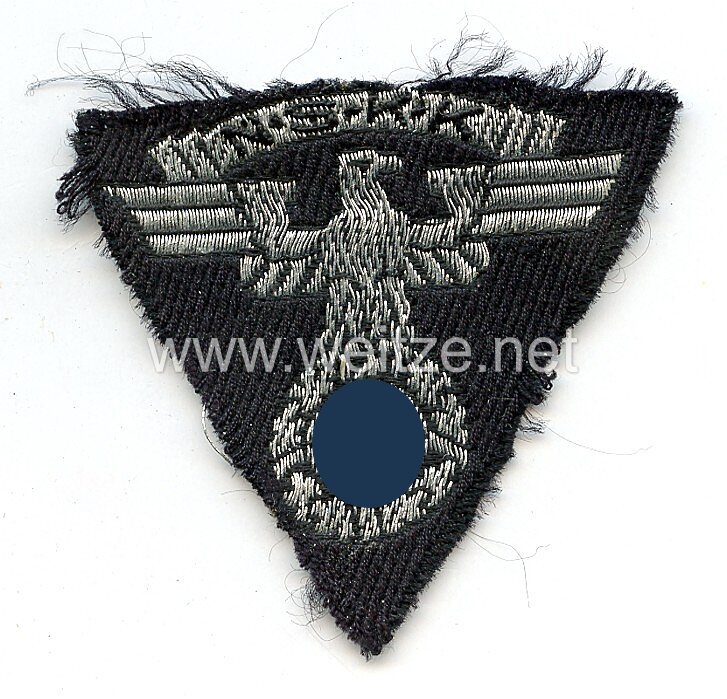
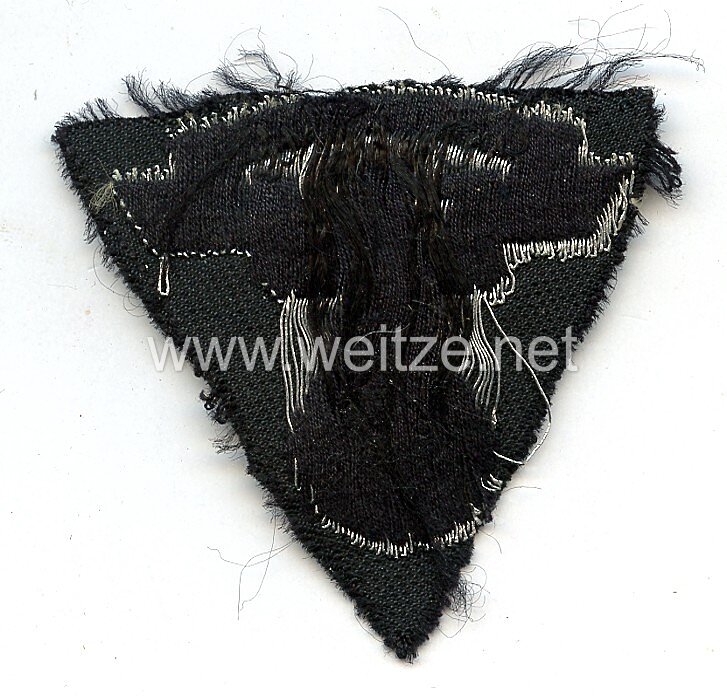
NSKK Overseas Cap Eagle for Members of Motorgruppe Berlin or Niederrhein
The NSKK cap eagle for members of Motor Group Berlin or Niederrhein represents a significant uniform insignia of the National Socialist Motor Corps (NSKK). This special emblem was worn on the side cap (Schiffchen), a characteristic military headgear, and indicated the wearer's regional affiliation with one of the most important motor groups of the NSKK.
The NSKK was founded on April 1, 1930, as a motor-technical organization of the NSDAP and developed into a paramilitary formation with over 500,000 members. After the seizure of power in 1933, the NSKK was considerably expanded and divided into various regional Motor Groups (Motorgruppen). Motor Groups Berlin and Niederrhein belonged to the most significant and largest units of the organization.
The Motor Group Berlin held special significance as the unit stationed in the Reich capital. It was not only responsible for the training of drivers but also played an important role in representative duties and parades. The Motor Group Niederrhein covered the industrially important area in the west of the German Reich and was responsible for motorized training in this economically significant region.
The present emblem is manufactured using Bevo weaving technique, a special machine weaving process developed by the company Bevo (Bandfabrik Ewald Vorsteher) in Wuppertal. This technique enabled the production of finely detailed insignia with high precision and became the standard for many textile uniform badges of NS organizations from the 1930s onwards. The Bevo weaving technique is characterized by its durability and the ability to create complex designs with multiple colors in a single weaving process.
The eagle itself follows the National Socialist national emblem, whereby the specific design for the NSKK exhibits characteristic features. The emblem was woven on black base fabric, which corresponded to the color of the NSKK uniform. The black uniform was an essential distinguishing feature of the organization and differentiated it from other NS formations.
The side cap (Schiffchenmütze or Schiffchen) was a flat, elongated headgear without a visor, used in various military and paramilitary organizations. It was worn with both service uniform and walking-out uniform and was more practical than the rigid peaked cap, especially for drivers in enclosed vehicles.
The uniform and insignia regulations of the NSKK were revised and refined multiple times. The most important regulations were found in the NSKK Uniform Regulations, which specified the exact wearing and positioning of all insignia. These regulations were strict and intended to ensure a uniform appearance of the organization.
The described specimen shows typical signs of wear and was obviously worn. The cut-off fabric border indicates that the insignia was removed from a uniform, which frequently occurred after the end of the war. Many uniform wearers removed NS symbols from their clothing after 1945 in order to continue using them or to no longer identify themselves with the symbols of the fallen regime.
The regional differentiation through different eagle designs or markings made it possible to recognize affiliation with specific motor groups. This was important for the organizational structure of the NSKK, which was hierarchically organized according to the Führer principle. The clear marking of regional affiliation facilitated identification and strengthened the sense of belonging within the respective motor group.
Today, such insignia are important historical documents that provide insight into the structure, organization, and material culture of the NS period. They are preserved by museums, research institutions, and collectors to document and research the history of this era. The scholarly examination of such objects helps to understand the mechanisms of totalitarian systems and their symbolic language.