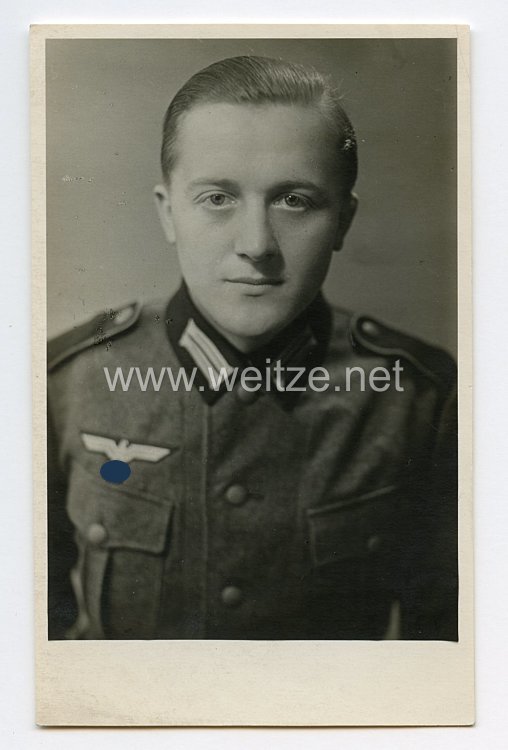
Wehrmacht Portrait Photograph, Soldier

Approximately postcard size, condition 2.
400525
10,00

Wehrmacht Portrait Photograph, Soldier

The Wehrmacht portrait photograph represents a significant aspect of military documentation and personal commemorative culture during World War II. These photographs, typically in postcard size (approximately 9 x 14 cm or 10 x 15 cm), were a widespread phenomenon among German soldiers between 1935 and 1945.

The practice of military portrait photography had a long tradition in Germany, dating back to the 19th century. With the introduction of universal conscription and the establishment of the Wehrmacht in 1935, the creation of uniform portraits became an integral part of soldier culture. These photographs served multiple purposes: they were personal mementos, sent to family members and friends, and documented the military status of the depicted soldier.

Most of these photographs were taken in professional photo studios, frequently located near barracks, training facilities, and garrisons. Photographers quickly recognized the commercial potential of this demand and specialized in military portrait photography. Studios often featured standardized backgrounds, professional lighting, and props to optimally showcase the soldiers' uniforms and decorations.

The uniform presentation in these photographs usually followed military conventions. Soldiers posed in their walking-out uniform or service uniform, with particular emphasis placed on the correct presentation of rank insignia, shoulder boards, collar tabs, and any awards. While the Army Service Regulation (Heeresdienstvorschrift) regulated the correct wearing of uniforms on duty, there was some freedom in presentation for private photographs.

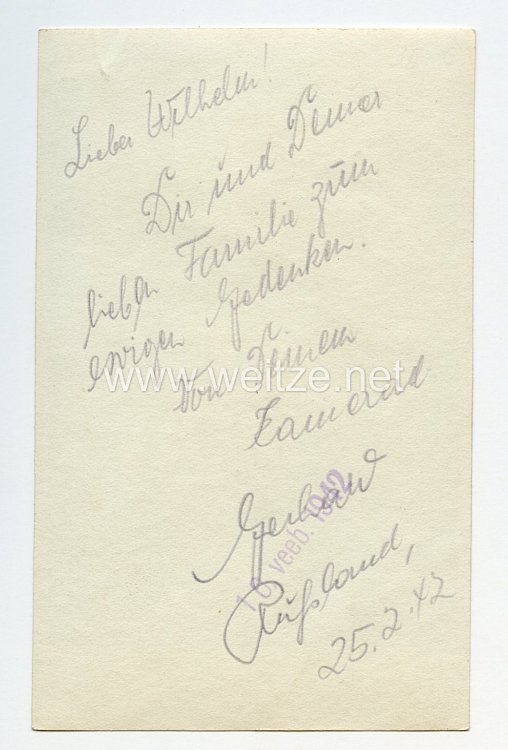
The postcard-size format was chosen for practical reasons: this size was standardized, cost-effective to produce, and could easily be mailed or kept in photo albums. Many soldiers had multiple prints made to send to different recipients. The reverse side could be inscribed, similar to a postcard, with dates, locations, and personal dedications.

The social significance of these photographs was considerable. For families at home, these images were often the only visual connection to their conscripted relatives. In an era before digital photography and telecommunications, these portraits held high emotional value. They were displayed in homes, carried in wallets, or kept as keepsakes.

The photographic quality varied depending on the studio and timing of the photograph. Early photographs from the 1930s often show high-quality technical execution with careful lighting and retouching. As the war progressed, especially from 1943 onwards, quality frequently suffered due to material shortages and limited technical capabilities. Nevertheless, demand for such photographs remained until the end of the war.

From a historical perspective, these photographs today offer valuable insights into various aspects of military history: they document the development of uniforms and equipment, show the demographic composition of the Wehrmacht, and reflect contemporary aesthetics and self-presentation. At the same time, they are testimonies to individual fates and everyday culture in a totalitarian regime.

The preservation of such photographs over more than seven decades is remarkable. Condition depends on various factors: storage conditions, paper quality, chemicals used in development, and frequency of handling. Typical signs of aging include yellowing, discoloration, creases, or edge damage.

Today, such photographs are subjects of military-historical research and collecting activity. They are regarded as historical documents that, when properly contextualized, can contribute to understanding this historical epoch. Museums and archives preserve such collections to make them accessible for future generations and scholarly research.

These portrait photographs thus represent more than mere images; they are complex historical artifacts that illuminate the intersection of personal experience, military culture, and the broader historical context of the Second World War era.