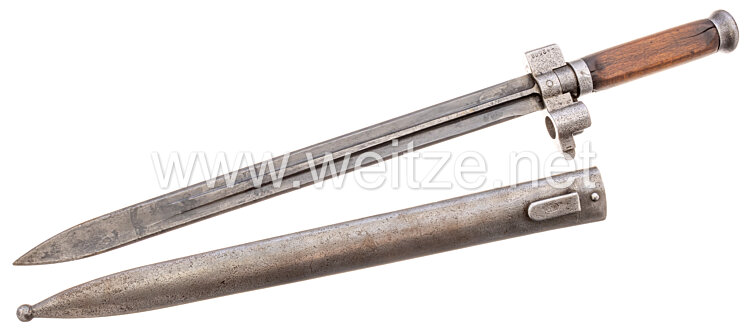
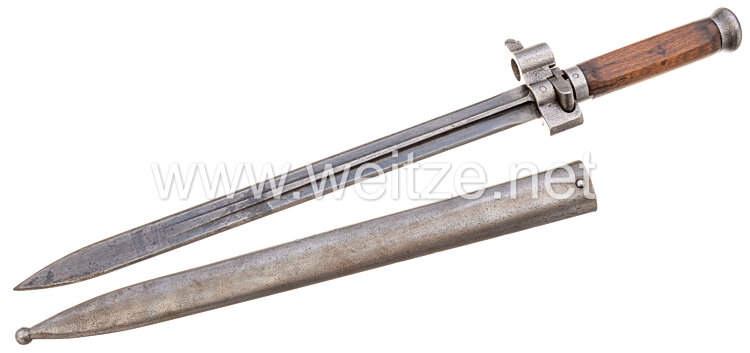
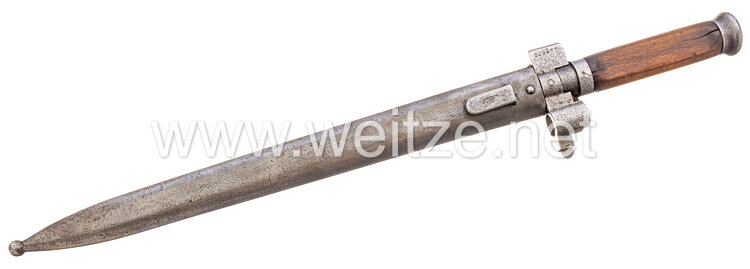
Hungarian Knife Bayonet M35
The Hungarian M35 knife bayonet represents a fascinating example of Central European weapons development during the interwar period. Following World War I and the Treaty of Trianon in 1920, Hungary was forced to significantly reduce and reorganize its armed forces. The development of new armaments was part of the gradual modernization of the Royal Hungarian Honvéd, which was pursued throughout the 1930s.
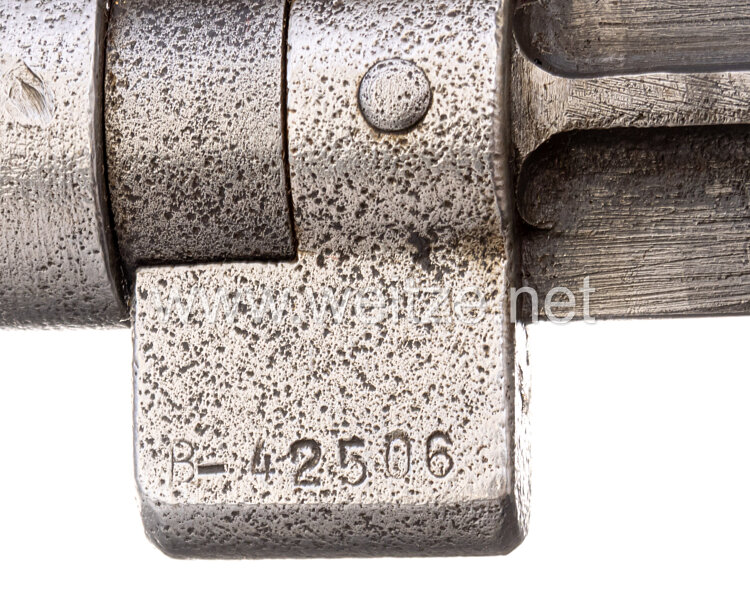
The Model 35 was specifically designed for Hungarian carbines and displays interesting technical features reflecting various European influences. The double-edged blade with central ridge follows a proven design that ensured both stability and penetrating power. Particularly noteworthy is the auxiliary sight on the bayonet mount, a practical solution that allowed for precise aiming even with the bayonet fixed.
The construction of the release mechanism shows clear parallels to the French Lebel system, indicating significant French influence on Hungarian weapons development after 1918. France was one of Hungary's most important military partners during the interwar period within the Little Entente region. The flattened wooden grip was typical of cost-effective mass production of this era while still providing adequate hold.
During the 1930s, Hungary gradually rearmed its military, initially secretly circumventing the Versailles restrictions, later more openly in the context of general European rearmament. The M35 bayonet was manufactured in several Hungarian weapons factories, though exact production numbers are difficult to determine today. It served as standard infantry equipment throughout World War II.
The carbine version of the bayonet was particularly common among cavalry, artillery, and special units equipped with shorter carbines rather than longer infantry rifles. Hungarian forces fought on various fronts during World War II, particularly on the Eastern Front from 1941 onwards, where this equipment saw intensive use.
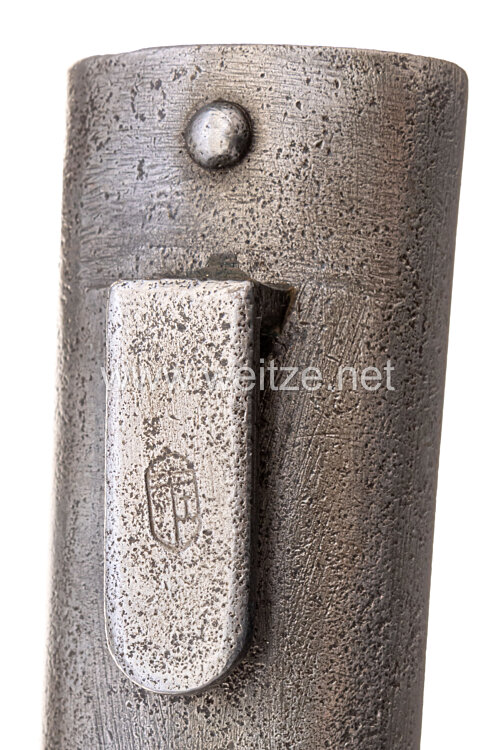
The accompanying scabbard was typically made of metal and fitted with leather suspension attachments. The described specimen shows the typical signs of use for military equipment: cleaning marks and a finely pitted surface indicating decades of storage and possibly active service. The condition rating of 2- corresponds to a well-preserved piece with normal aging characteristics.
Today, M35 bayonets are sought-after collector's items representing an important part of Hungarian military history. They document a turbulent period of European history and the technical development of edged weapons during their final flourishing before such weapons gradually lost significance in modern warfare.