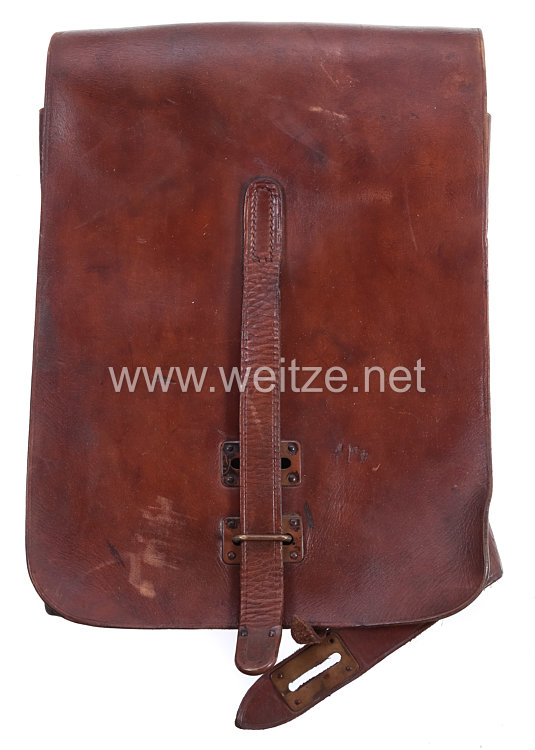
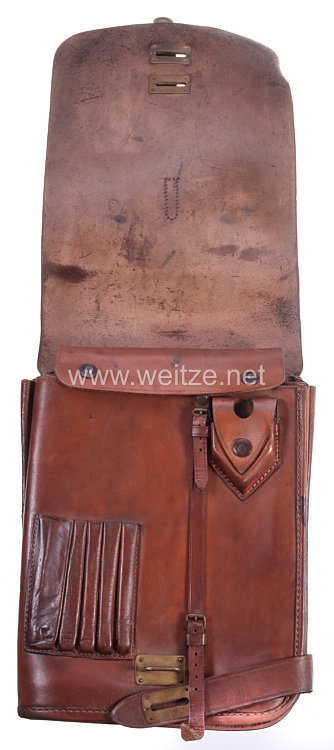
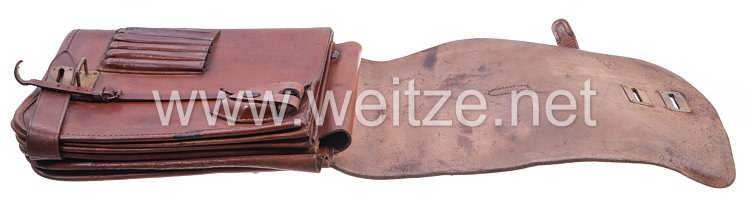
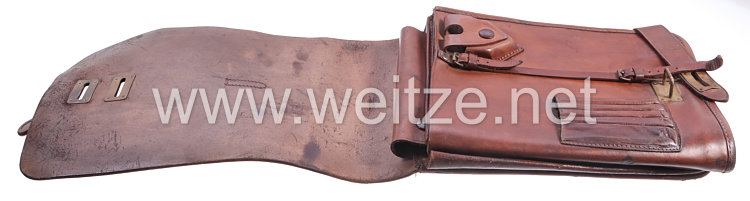
Reichsarbeitsdienst (RAD) Brown Map Case of Unit 5/235

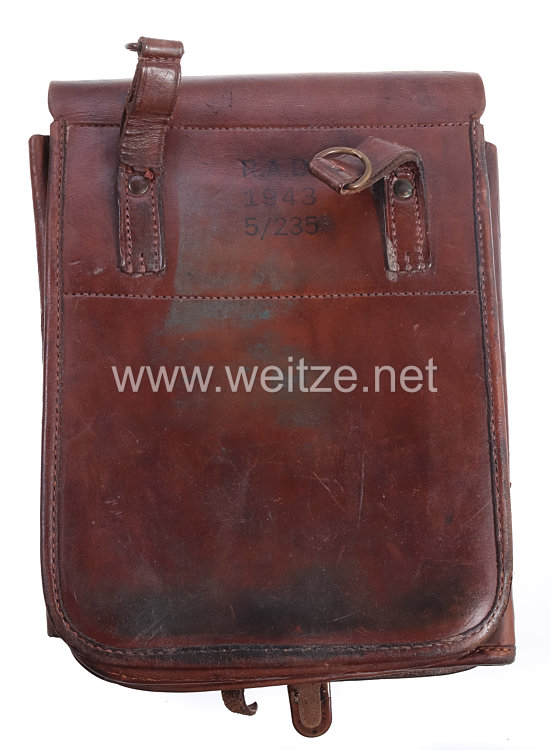
inspected item, brown smooth leather, no maker marking present, reverse stamped “RAD 1943 5/235”, belt loops show signs of wear, condition 3.
391025
175,00

Reichsarbeitsdienst (RAD) Brown Map Case of Unit 5/235

This map case from the Reichsarbeitsdienst (RAD) made of brown leather represents an authentic piece of equipment from Department 5/235 dating from 1943. Such map cases were part of the standard equipment of RAD units and served the practical purpose of transporting and protecting maps, documents, and other important materials during service.

The Reichsarbeitsdienst (Reich Labor Service) was initially founded in 1931 as a voluntary organization, but received its definitive form as compulsory service through the Reich Labor Service Law of 1935. From this point forward, all young Germans of both sexes were required to serve. All men between 18 and 25 years of age had to complete six months of labor service before they could be drafted into military service. The RAD saw itself as a “school of the nation” and was intended not only to provide work education but also to contribute to the ideological formation of youth.

The organizational structure of the RAD was strictly hierarchical. The Reich was divided into various Arbeitsgaue (labor districts), which were further subdivided into groups, departments, and troops. The designation 5/235 on this map case provides information about its exact assignment: it belonged to the 5th company of Department 235. Each department typically comprised between 150 and 200 men and was divided into several companies.

The year 1943 is of particular historical significance. At this time, the German Reich was in the fourth year of World War II, and the tasks of the RAD had changed considerably. While civilian projects such as land reclamation, road construction, and agricultural work were the main focus in peacetime, RAD units were increasingly deployed for war-essential tasks from 1939 onward. These included the construction of fortifications, support with harvest work to secure food supplies, and from 1943 increasingly also cleanup operations after bombing raids.

The equipment and uniforms of the RAD were precisely regulated. The brown color of the map case corresponded with the brown uniform of the RAD, which was clearly distinguished from the field-gray Wehrmacht uniform. The use of smooth brown leather corresponded to the material regulations of the time and was intended to ensure robustness and durability. The belt loops served to attach the case to the belt, which was also part of the standard equipment.

The stamped RAD marking with year and unit designation was a typical identification method for equipment items. This served inventory purposes and was intended to prevent confusion or loss. The absence of a manufacturer's mark is not unusual, as many pieces of equipment were produced by various suppliers and not all marked their products, especially in the later war years when production was under increasing pressure.

The map case was mainly used by leaders and non-commissioned officers of the RAD who were responsible for planning and executing work assignments. Topographic maps, work plans, orders, and administrative documents were kept in it. The necessity of keeping such documents dry and protected made a robust leather case essential, especially during outdoor assignments under various weather conditions.

The condition of this piece with signs of wear on the belt loops testifies to actual use during service. This gives the object historical authenticity and makes it a tangible testimony of the period. Such signs of use are typical for equipment items that were deployed under the harsh conditions of labor service and the war years.

After 1945, the Reichsarbeitsdienst was dissolved with the end of the Nazi regime. Equipment items such as this map case were partly destroyed, partly taken as souvenirs, or later became collector's items. Today, such objects represent important contemporary historical sources that provide insight into the organization, daily life, and material culture of the RAD. They serve historical research and museum documentation of an era whose critical examination remains indispensable for historical consciousness.