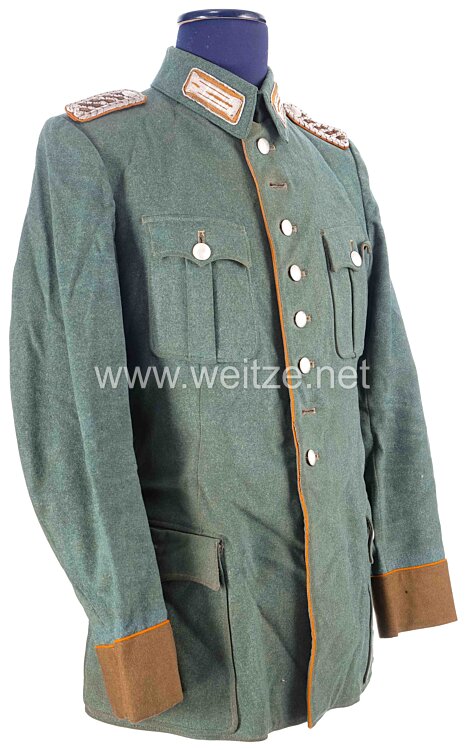
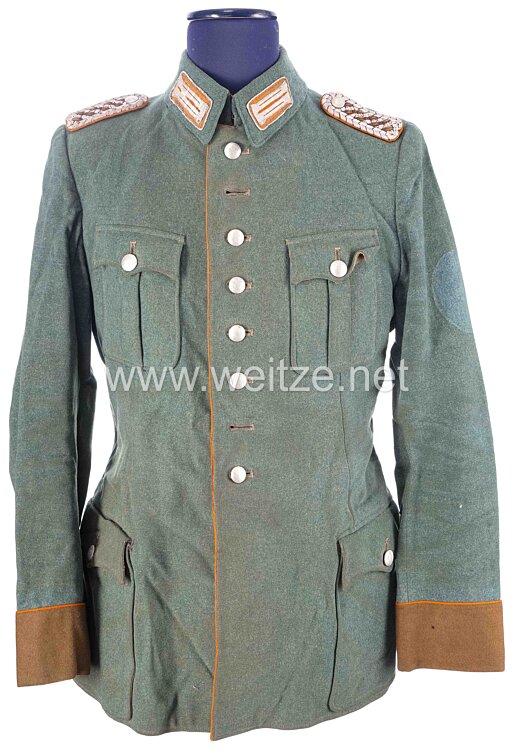
Police Service Tunic for a Gendarmerie Master Sergeant
This Police Service Tunic for a Gendarmerie Master from around 1939 represents a significant artifact of German police history during the late Weimar Republic and early Nazi period. This uniform piece documents not only the hierarchical structures within the Gendarmerie but also the modifications made during World War II.
The Gendarmerie traditionally formed Germany's rural police force, responsible for maintaining order and security outside urban areas. Unlike the urban Schutzpolizei (Protection Police), the Gendarmerie answered to respective state authorities and maintained a military-style organizational structure. The rank of Meister (Master) designated a non-commissioned officer roughly equivalent to a sergeant in the Wehrmacht, holding an important leadership position at the local level.
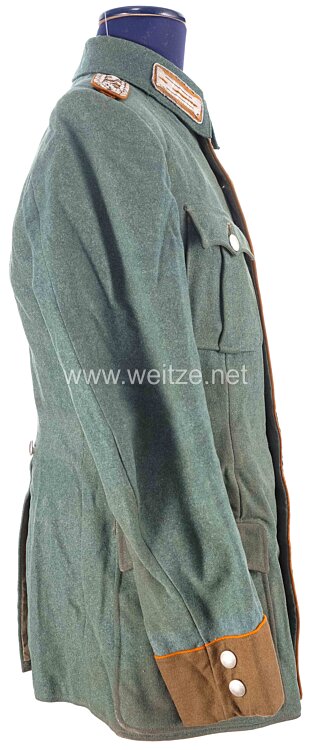
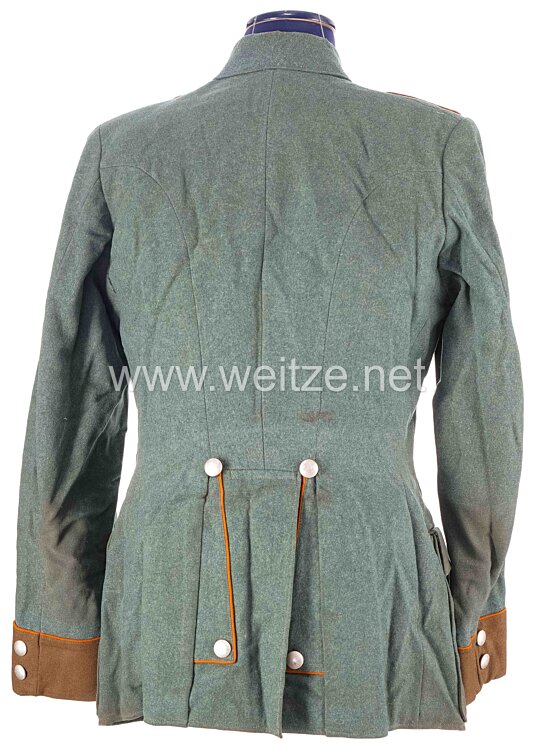
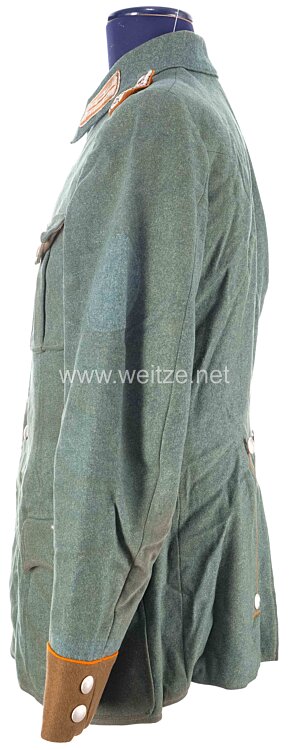
The heavy police cloth used was characteristic of uniforms from the Weimar period and the 1930s. This robust fabric quality was designed to meet the demands of daily service and was typically produced in a greenish or gray tone. The orange piping on the sleeve cuffs served as the branch color (Waffenfarbe) of the Gendarmerie, enabling quick identification of unit affiliation. This color coding was an essential element of the German uniform system and was systematically applied across all police units.
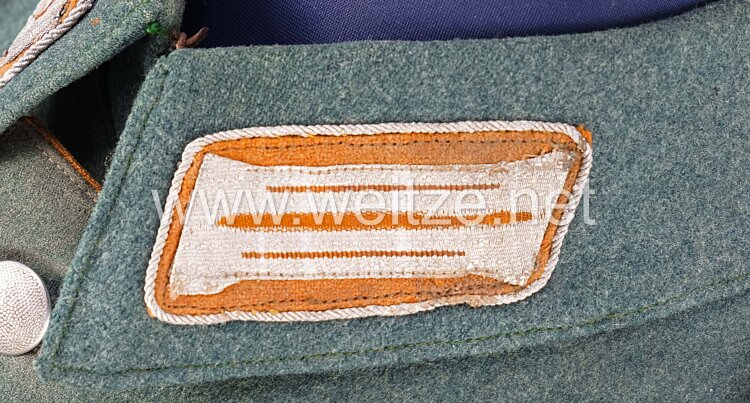
Particularly noteworthy is the light brown collar that was replaced during the war. This modification reflects the material shortages and simplifications implemented in uniform production from 1939 onwards. The transition to simpler manufacturing processes and the use of available materials was a direct consequence of the war economy. Such alterations were common for uniform pieces worn over extended periods.
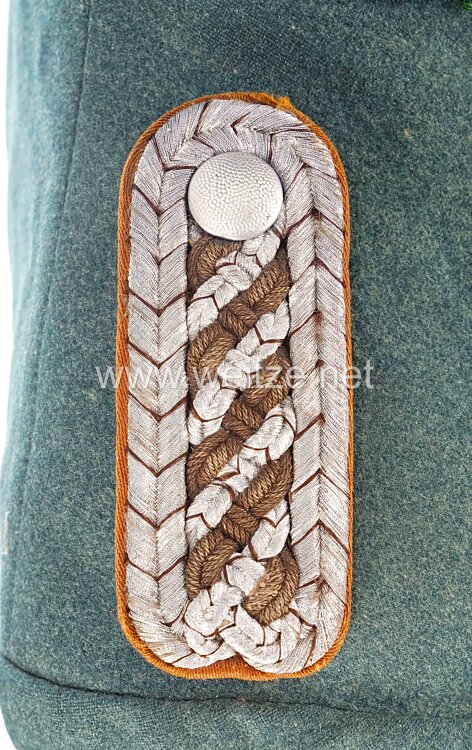
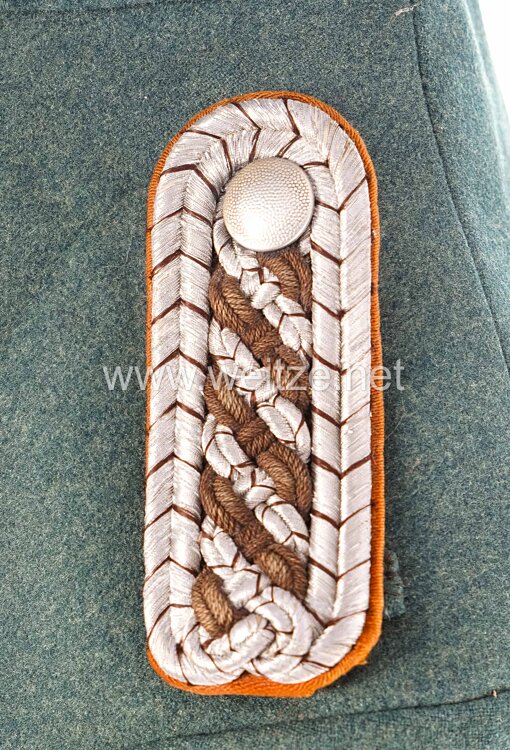
The shoulder boards with loops served to attach rank insignia and were standard features on service tunics. The removed sleeve eagle is a common phenomenon among preserved uniforms from this era. After the war's end, Nazi symbols were systematically removed from uniforms, either by the wearers themselves or by subsequent owners. The national eagle with swastika had been mandatory on the left upper arm since 1936.
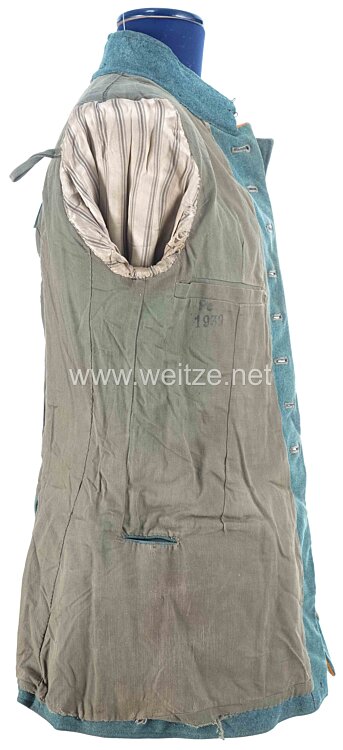
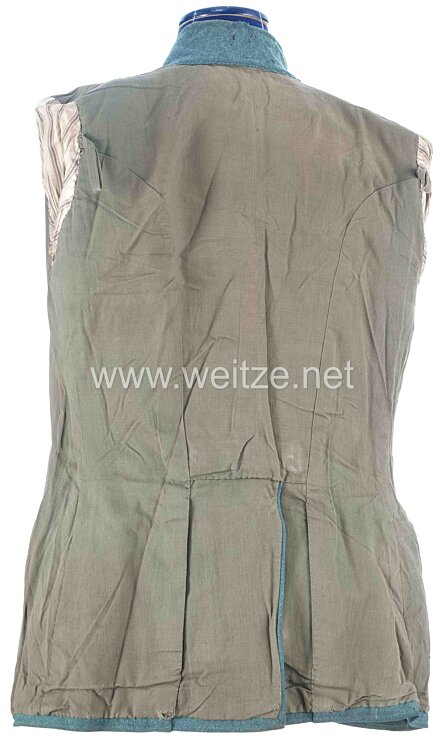
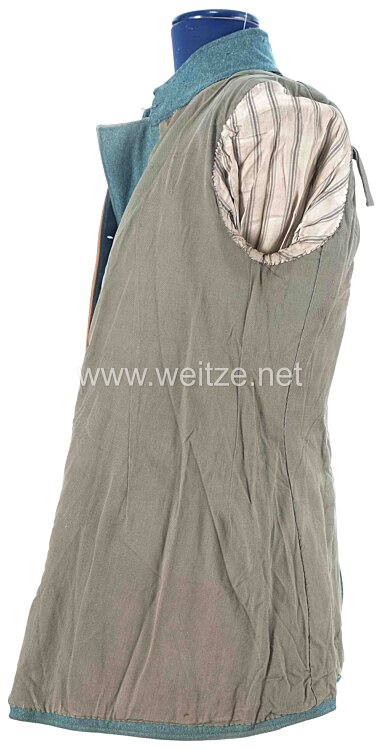
The cloth lining inside and the slit for wearing the saber are important functional details. The saber was part of the equipment for Gendarmerie non-commissioned officers and was worn during service duties and ceremonial occasions. The specially incorporated slit in the tunic enabled proper wearing of the edged weapon without damaging the uniform or restricting freedom of movement.
The tunic's measurements - sleeve length 65 cm, chest circumference 80 cm, back length 70 cm - correspond to the tailoring standards of the time and indicate a wearer of average stature. The designation as a Kammerstück (chamber piece) suggests this was a high-quality, possibly privately procured or particularly carefully crafted uniform item.
The condition with one missing button and moth damage on the collar is quite typical for a textile over 80 years old. These signs of wear lend the piece authenticity and document its actual use in service.
German police uniforms from this period are today important historical sources for research into police history and social development in Germany between 1933 and 1945. They document the increasing coordination and militarization of the police under National Socialist rule, as well as the transformation of a traditional state institution.