Sturmabteilung (SA) Breeches
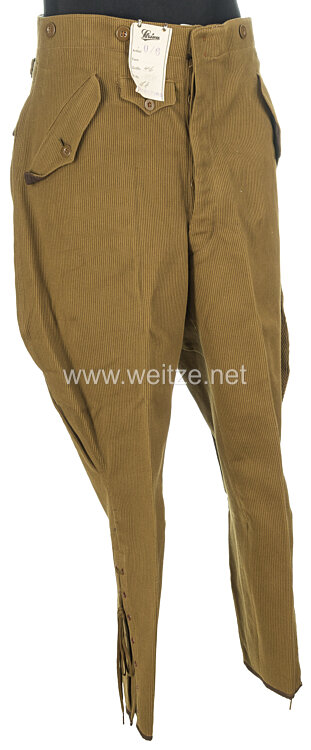
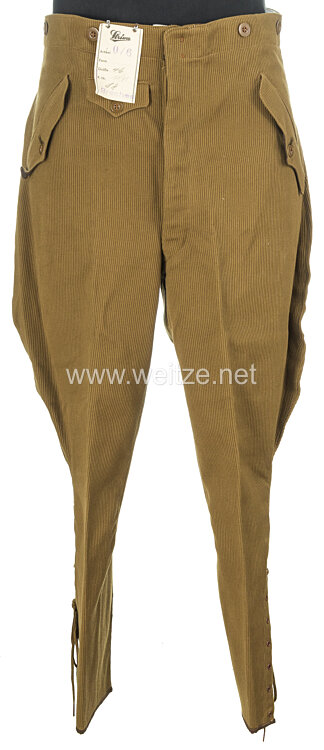
The SA riding breeches described here in corduroy execution represents a characteristic garment of the paramilitary organization Sturmabteilung (SA) during the National Socialist period in Germany. This special type of trousers was an integral part of the SA uniform and reflects the military aesthetics and organizational structure of this organization.
The Sturmabteilung was founded in 1920/21 as a security force for the NSDAP and developed under the leadership of Ernst Röhm into a massive paramilitary formation. At the height of its power in 1933, the SA counted several million members. The uniform clothing served not only for identification but also for demonstrating power and unity during public marches and events.
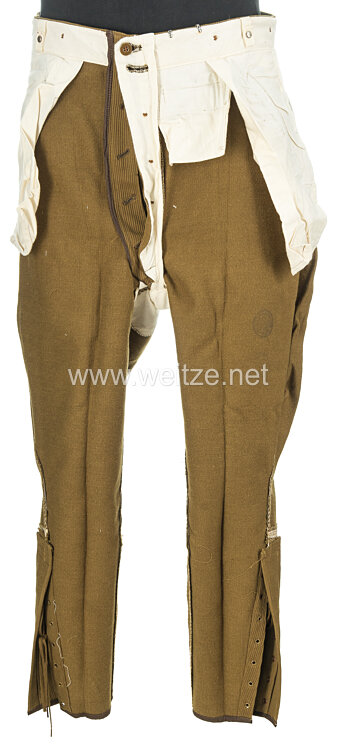
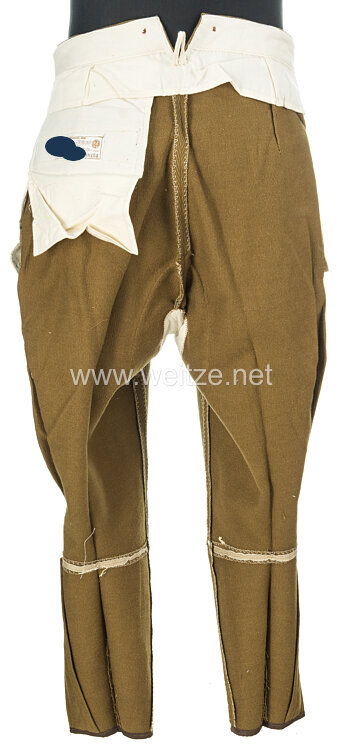
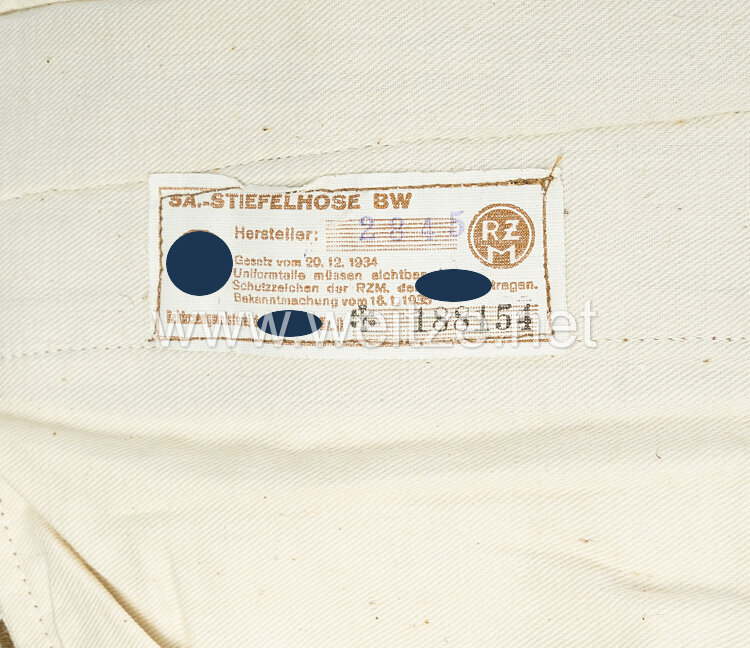
The present riding breeches display typical features of the official SA clothing regulations. The RZM label (Reichszeugmeisterei) identifies it as an officially approved piece of equipment. The Reichszeugmeisterei was established in 1929 as the central procurement and inspection office for NSDAP uniforms and equipment and strictly controlled the production and quality of all uniform items. Only manufacturers with RZM licenses were permitted to produce official uniform pieces.
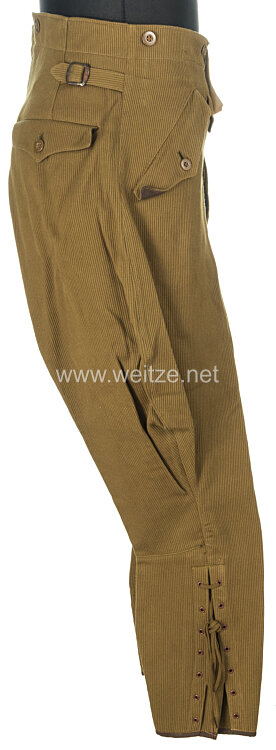
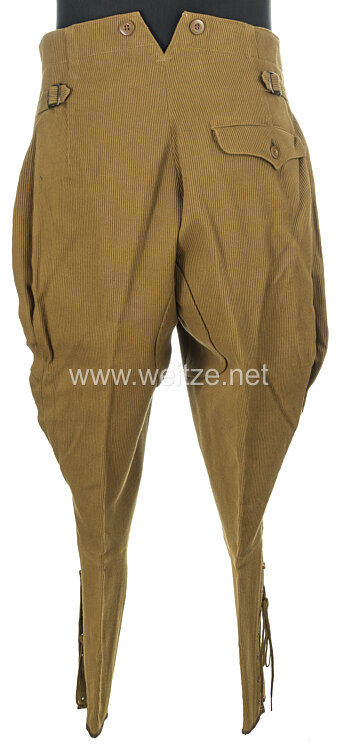
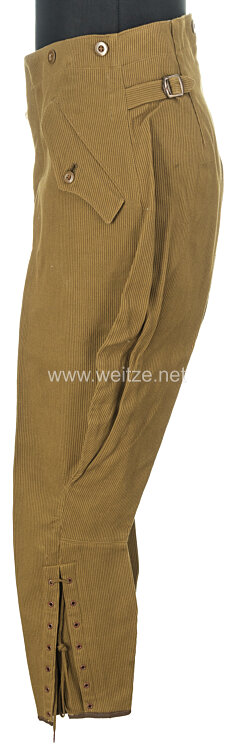
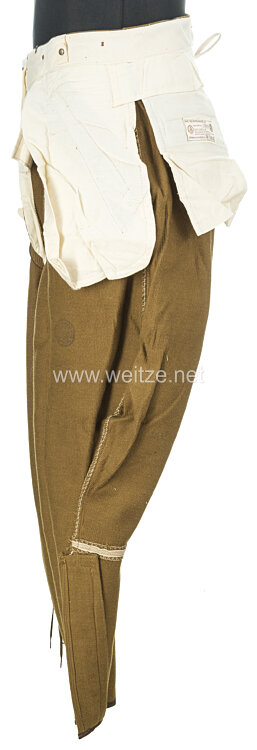
The corduroy execution of these trousers was a practical and robust variant of SA clothing. Corduroy was a durable material well-suited for frequent marches and parades. The characteristic construction with two diagonal pockets in front, a small watch pocket, and a rear pocket corresponded to the military clothing standards of that time and was modeled after the Reichswehr examples.
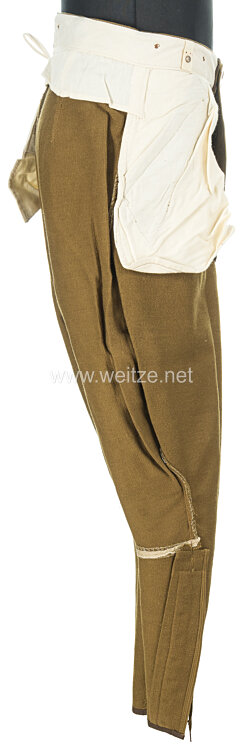
Particularly characteristic of the riding breeches are the laced trouser legs. This construction allowed the trouser legs to be tightly laced around the calves and tucked into the high boots that were part of the SA uniform. This wearing style was directly adopted from military models and was intended to ensure a tight, military appearance.
The light blue inner lining was a quality feature indicating a higher-grade execution. The marking "SA Stiefelhose BW" presumably designates the execution in cotton (Baumwolle), indicating the material composition.
The manufacturer "Striva Breeches" was one of many textile producers who manufactured SA uniforms under contract with the RZM. After the seizure of power in 1933, uniform production experienced an enormous upswing as the SA expanded massively and millions of members needed to be clothed.
The described condition as a "depot find, never worn" is of historical significance. Such pieces often survived in military or administrative storage facilities and were never issued after the war. The specified measurements (waist circumference approximately 80 cm, total length approximately 95 cm) correspond to a medium size.
After the "Night of the Long Knives" in June 1934, during which the SA leadership including Ernst Röhm was murdered, the organization lost massive significance. Power shifted to the SS, and the SA henceforth played only a subordinate role. Nevertheless, the organization remained in existence until 1945, albeit with greatly reduced influence.
From a historical perspective, such uniform pieces document the organizational structure and visual staging of the Nazi regime. They are testimonies of a dark epoch in German history and today serve exclusively for historical research and education. Trade and public display of such objects are subject to strict legal regulations in Germany and other countries.