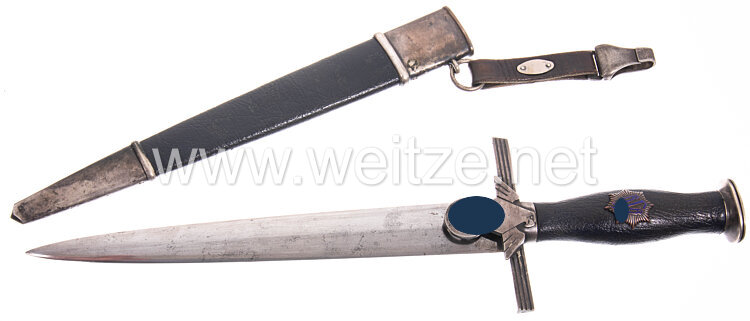
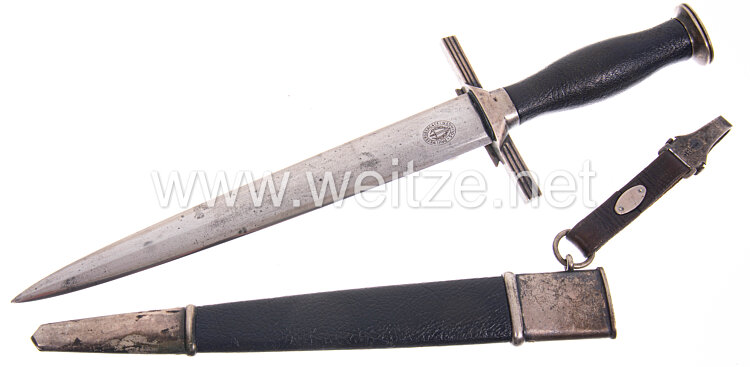
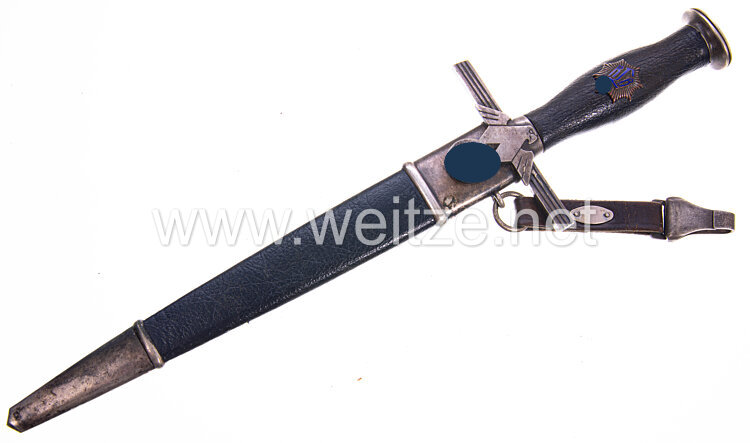
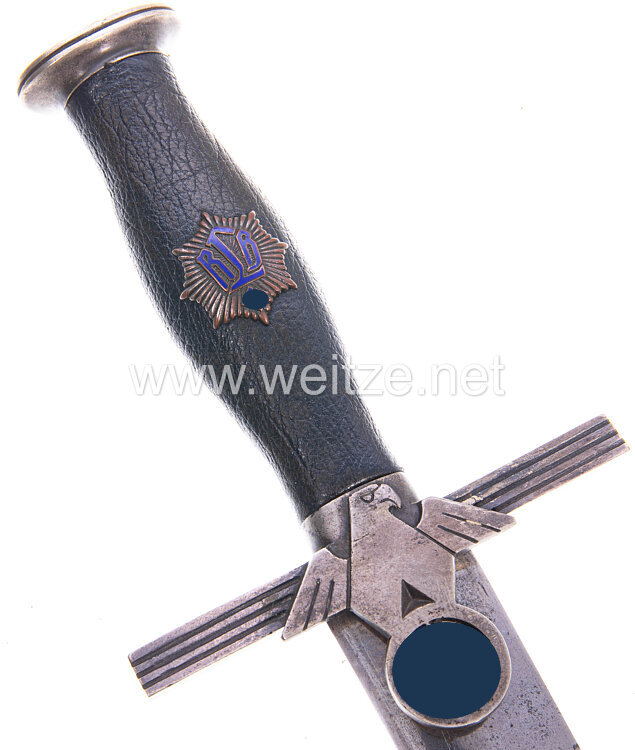
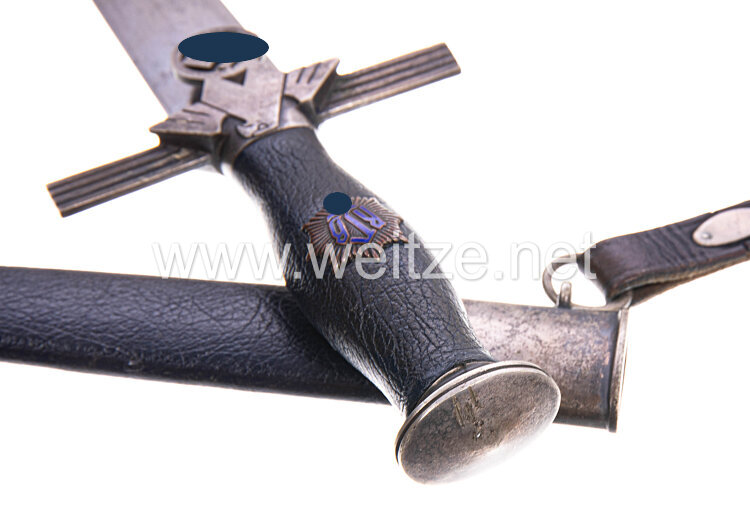
Reichsluftschutzbund (RLB) Dagger for Leader 1st Model
The Reichsluftschutzbund (RLB) Leader's Dagger first model represents a significant collectible from the era of National Socialist Germany. This weapon embodies not only the military aesthetics of the 1930s but also documents the organizational structure of civil air defense in the Third Reich.
The Reichsluftschutzbund was founded on April 29, 1933, as a civilian organization to prepare the German population for possible air raids. Under the leadership of retired Lieutenant General Friedrich von Cochenhausen, the RLB rapidly developed into the largest civilian organization in National Socialist Germany. By 1939, the RLB had approximately 13 million members, reflecting the enormous importance of civil air defense in Nazi ideology.
The introduction of special daggers for RLB leaders occurred within the framework of a comprehensive system of uniforms and decorations designed to make the hierarchical structure of the organization externally visible. The first model of the RLB leader's dagger was introduced in the mid-1930s and differed significantly from later variants. These early daggers were exclusively reserved for leadership personnel and served as status symbols within the organization.
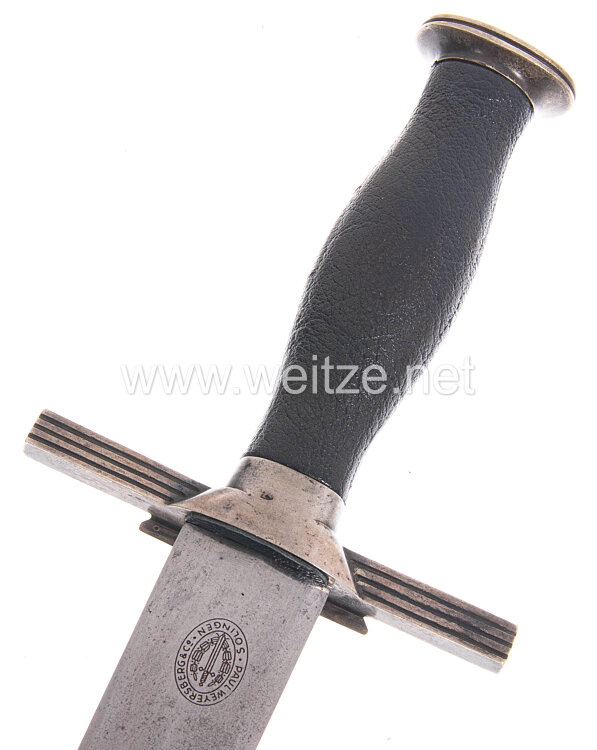
This dagger was manufactured by the renowned Solingen firm Paul Weyersberg & Co., one of the most significant German blade manufacturers with a long tradition. The company, founded in the 19th century, supplied various organizations and military units with edged weapons during the Nazi era. The quality of Weyersberg products was widely recognized, evident in the precise workmanship and durability of their products.
The first model of the RLB leader's dagger is characterized by several distinctive features: The blade is typically straight and double-edged. The nickel fittings are characteristic of early production, as later models often had to resort to substitute materials due to material shortages. The grip is covered with black leather, serving both aesthetic and practical purposes. The applied RLB emblem on the grip displays the characteristic symbol of the Reichsluftschutzbund – a stylized eagle or the RLB logo, making the organization clearly identifiable.
The dagger's scabbard is also covered with black leather and fitted with nickel fittings. These fittings typically include the throat and chape pieces as well as the suspension device. The carrying strap, used to attach the dagger to the belt, was an essential component of the complete equipment and is often no longer present on many surviving examples today.
The manufacture of these daggers was subject to strict quality controls and followed specific specifications regarding dimensions, materials, and design. Manufacturers were required to mark their products with their maker's mark, which is of great importance today in authenticating and dating these objects. The mark “Paul Weyersberg & Co. Solingen” on the blade is such a quality feature.
In the context of the Nazi era, such daggers served not primarily as weapons but as badges of honor and rank insignia. They were worn at ceremonial occasions and parades and symbolized the wearer's authority within the organization. Distribution was based on specific service ranks and was tied to specific functions within the RLB.
After World War II, the Allied Control Authority prohibited the wearing of such items. Many RLB daggers were destroyed or stripped of their Nazi symbols. Today, well-preserved specimens, particularly early examples of the first type, are sought-after collector's items for militaria collectors and historical museums.
From a scholarly perspective, such objects are important sources for research into the Nazi organizational structure, the material culture of the Third Reich, and the symbolic politics of totalitarian systems. They document the penetration of all areas of society with military hierarchies and rituals. The elaborate design and high-quality workmanship of these daggers also reveal the economic priorities and the importance of symbolic representation in the National Socialist state.
The preservation condition of such historical objects is of considerable importance for scholarly research. Well-preserved examples like the one described enable detailed studies of manufacturing techniques, materials used, and stylistic developments. They serve as material witnesses to a dark epoch of German history and remind us of the need for critical engagement with the past.