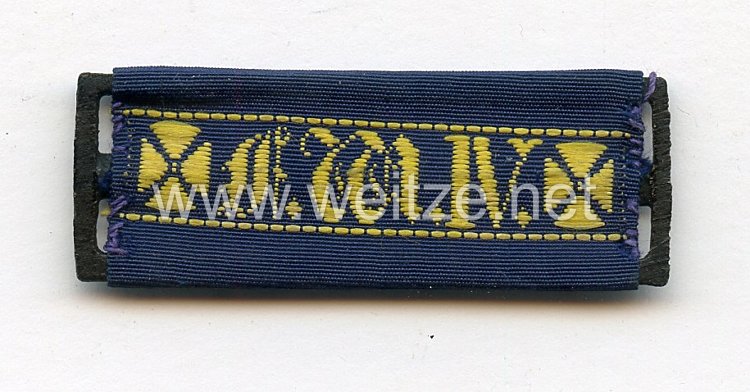
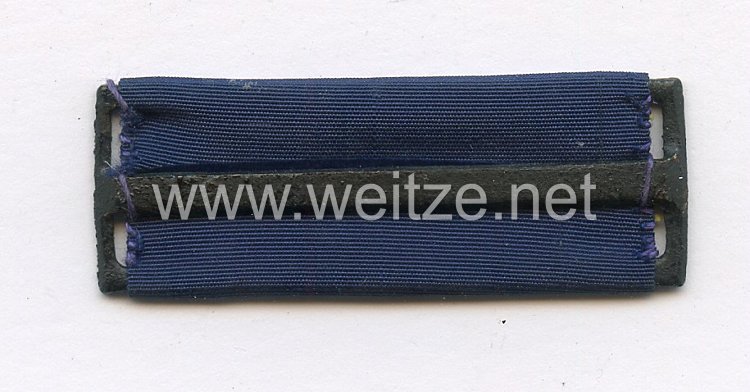
Prussia Landwehr Long Service Award 2nd Class

Blackened iron, without pin. Condition 2.
308321
15,00

Prussia Landwehr Long Service Award 2nd Class

The Prussian Landwehr Service Award Second Class represents a significant testament to 19th-century Prussian military history and embodies the recognition of faithful service in the Landwehr, that important reserve component of the Prussian armed forces.

The institution of the Landwehr was created through the Army Reform of 1813/1814, when Prussia rose against Napoleonic domination. Under the leadership of reformers such as Gerhard von Scharnhorst and August Neidhardt von Gneisenau, a system emerged that extended military service obligations to broad segments of the population. After their active service in the line, soldiers transferred to the Landwehr, where they remained available until age 39.

The Landwehr Service Award was instituted by King Friedrich Wilhelm III on September 3, 1825 through cabinet order. This decoration was intended to honor Landwehr men who had distinguished themselves through long and faithful service. The award was granted in two classes: First Class for officers and Second Class for non-commissioned officers and enlisted men.

The present example of the Second Class was intended for lower ranks and was awarded for twenty years of service in the Landwehr. The decoration consisted of blackened iron, a material that held special significance in Prussian decorative tradition. The use of iron instead of precious metals symbolized the Prussian virtues of modesty, duty fulfillment, and sacrifice. This tradition dates back to the Iron Cross, instituted in 1813 by Friedrich Wilhelm III, which deliberately eschewed precious materials to place the value of bravery above material wealth.

The design of the Landwehr Service Award Second Class followed a simple yet dignified pattern. The cross typically displayed the Prussian crown and bore inscriptions referring to its purpose. The blackened surface was achieved through special oxidation processes that protected the iron from corrosion and gave it its characteristic matte appearance.

Originally, the decoration was worn on the uniform, attached by a pin on the reverse. The described example is without its pin, which is common among surviving pieces, as these attachment elements were lost over time or had to be removed due to damage.

The awarding practice for the Landwehr Service Award was strictly regulated. Candidates not only had to have completed the required service time but also demonstrate an unblemished record. The decoration was typically presented during military ceremonies and recorded in the recipient's military service book.

The historical significance of this decoration lies in several aspects: First, it documents the Prussian military system, which was based on universal conscription and a sophisticated reserve system. This system enabled Prussia to maintain an effective army despite limited resources. Second, it demonstrates the appreciation that the Prussian state showed even for the services of common soldiers. The institutionalization of service awards for long periods of service was a means of motivation and retention of soldiers.

The Landwehr played an important role in the Wars of Unification (1864, 1866, 1870/71). During the Second Schleswig War, the Austro-Prussian War, and the Franco-Prussian War, Landwehr units were mobilized and contributed to Prussian victory. Bearers of the Landwehr Service Award were often veterans of these conflicts.

After the founding of the German Empire in 1871, the Prussian Landwehr system remained in place and was partially transferred to other German states. The Landwehr Service Award continued to be granted until the upheavals of World War I and the collapse of the monarchy in 1918 brought an end to the old order.

For collectors and historians, such decorations are important sources. They document not only military structures but also social-historical aspects: Who served in the Landwehr? What motivations and obligations existed? How was loyalty rewarded? The material of iron also points to the economic conditions and symbolic language of the era.

The indicated condition 2 suggests a well-preserved example with minor signs of wear, which is remarkable for an iron decoration over 150 years old and indicates proper storage.