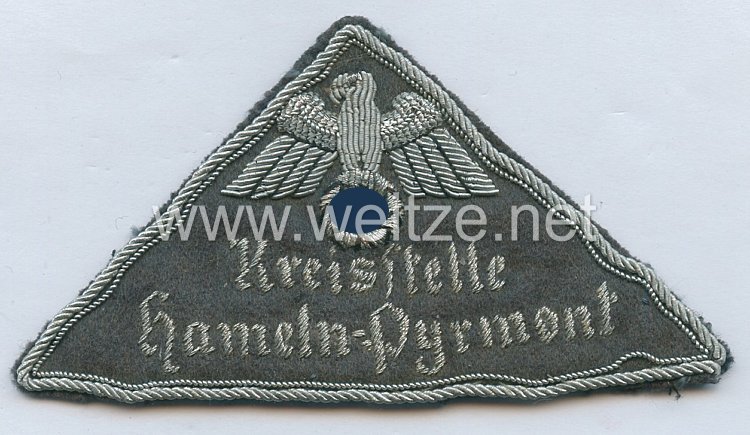
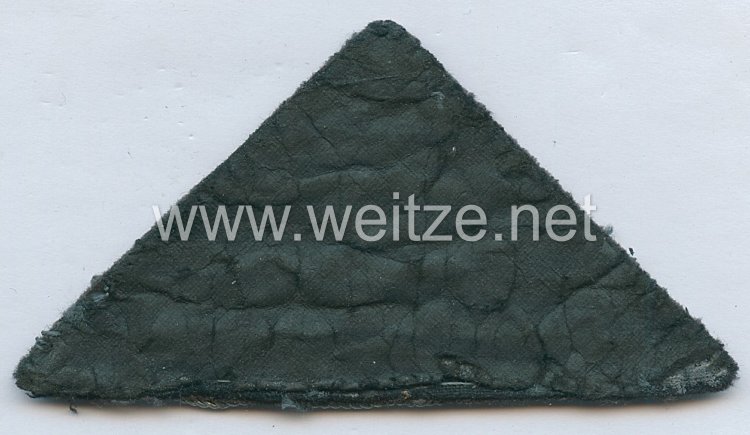
German Red Cross DRK Sleeve Eagle for Leader "Kreisstelle Hameln-Pyrmont"
The German Red Cross (DRK) sleeve eagle for leaders of the district office Hameln-Pyrmont represents a significant testimony to the organization and hierarchy of the German Red Cross during the National Socialist era. This hand-embroidered version in metal thread embodies the precise rank identification within the paramilitary structure that characterized the DRK during the years between 1933 and 1945.
The German Red Cross underwent fundamental restructuring after the Nazi seizure of power in 1933 and was integrated into the National Socialist system of rule. With the Gleichschaltung (coordination) of all organizations, the DRK was placed under the auspices of the Ministry of the Interior and received a strictly hierarchical, military-like structure. The president of the DRK was appointed directly by the Reich Minister of the Interior, and the organization became an important component of civil defense and medical care.
The district office organization formed a middle administrative level within the DRK hierarchy. Each district office was responsible for a specific geographical area, in this case the Hameln-Pyrmont district in what was then the Prussian Province of Hanover. The district office coordinated local DRK activities, organized medical services, first aid courses, and was responsible for the medical care of the civilian population in wartime.
The sleeve eagle as a rank insignia held special significance in the DRK. It was worn on the left upper arm of the DRK uniform and indicated the wearer's position within the organizational hierarchy. The execution in hand-embroidered metal thread indicates a high-quality badge for leadership personnel. This elaborate manufacturing technique was typical for officer ranks and higher functionaries and differed significantly from the simpler, machine-made or printed badges for lower ranks.
The Hameln-Pyrmont district office was part of the regional administrative system. Hameln, a historic town on the Weser River, was the center of this district office, which also included the former Free State of Pyrmont, which had become part of Prussia in 1922. The region held a significant strategic position and was of considerable importance during World War II for the medical care of both military and civilian populations.
The uniforming of the DRK followed uniform regulations from 1934 onward. The characteristic gray-blue or field-gray uniform with corresponding rank insignia was intended to emphasize the paramilitary nature of the organization. Sleeve eagles, collar patches, and other insignia were worn and manufactured according to precise regulations. The use of the eagle symbol corresponded to the general iconography of the National Socialist state, although the DRK used its own specific versions.
The leadership structure at the district level included various ranks and functions. The district office leader was responsible for the entire organization within his area of responsibility and was subordinate to the Gau representative of the DRK. These leaders wore special rank insignia, which included the sleeve eagle described here. The exact position within the hierarchy could be indicated by additional rank insignia, collar patches, or shoulder boards.
In the context of militaria collecting, such DRK insignia are significant historical objects today. They document not only the organizational structure of an important auxiliary organization but also the comprehensive coordination and militarization of German society during the Nazi era. The hand-embroidered execution in metal thread testifies to the craftsmanship quality that was common in the production of uniform insignia of that time.
The condition of such insignia varies greatly. The designation “worn, condition 2” indicates a used piece in good condition that was actually used in service. This gives the object additional historical authenticity, as it represents a genuine testimony to the daily service life of that time. Signs of use may include slight wear, minimal damage to the embroidery, or discoloration.
The historical significance of such objects lies in their ability to document the complex history of the German Red Cross during one of the darkest periods of German history. They remind us how even humanitarian organizations were integrated into totalitarian structures and how medical care became part of the comprehensive war apparatus.