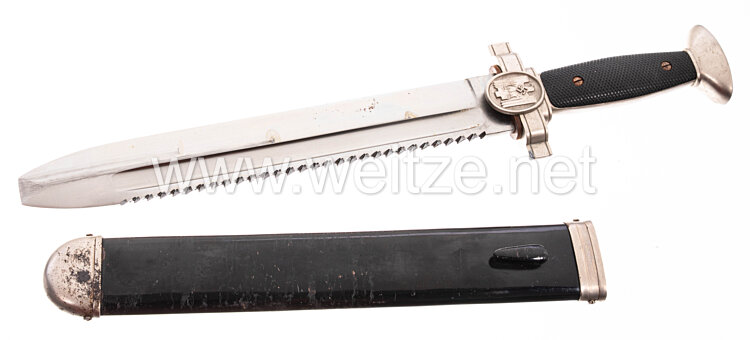
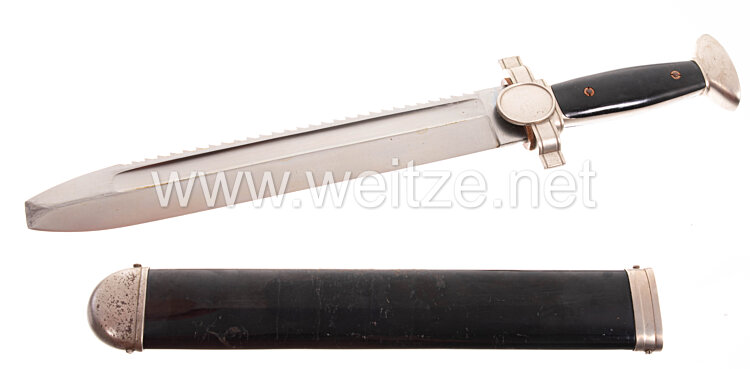
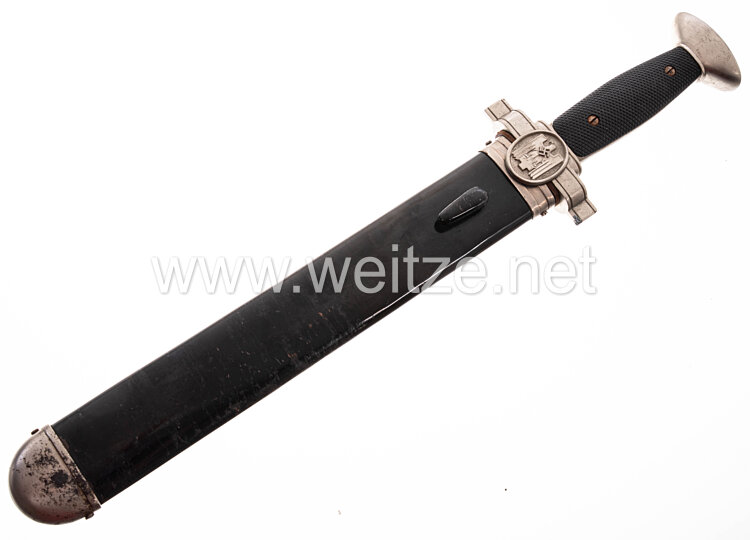
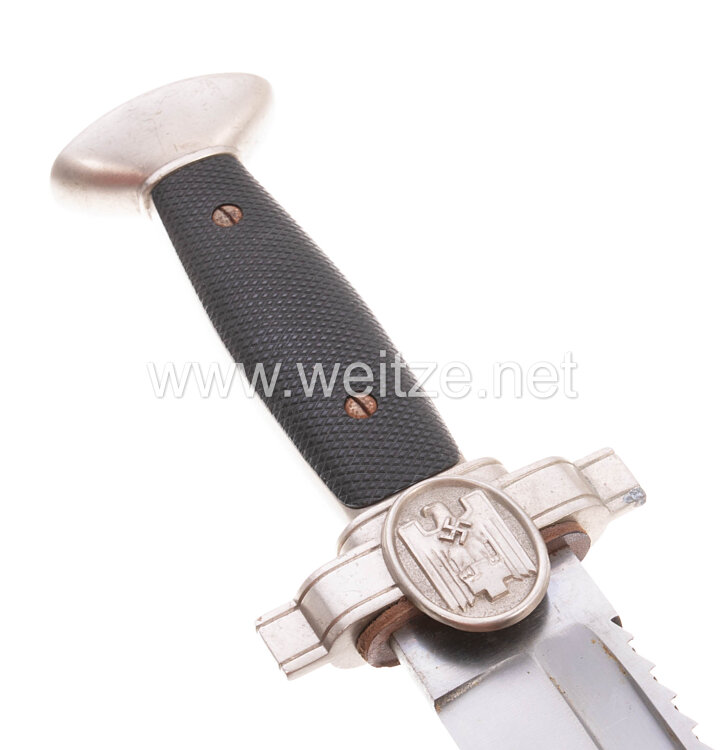
German Red Cross (DRK) Hewer for Enlisted Men
The German Red Cross (DRK) hewer for enlisted men represents a significant example of paramilitary equipment in Nazi Germany. This side arm was introduced in the mid-1930s for members of the DRK, which was increasingly integrated into the National Socialist organizational structure during this period.
The German Red Cross had maintained a long tradition of humanitarian aid and medical services since its founding in the 19th century. However, after the Nazi seizure of power in 1933, the DRK was gradually brought into line (Gleichschaltung) and lost its independence. In 1937, it was officially placed under the Ministry of the Interior and increasingly received military structures and duties, particularly in preparation for an impending war.
The hewer as a side arm followed the National Socialist tradition of giving paramilitary and party organizations a military character through uniform equipment and dress. The weapon was typically based on the model of the SA dagger and those of other party formations, but with specific features for the DRK.
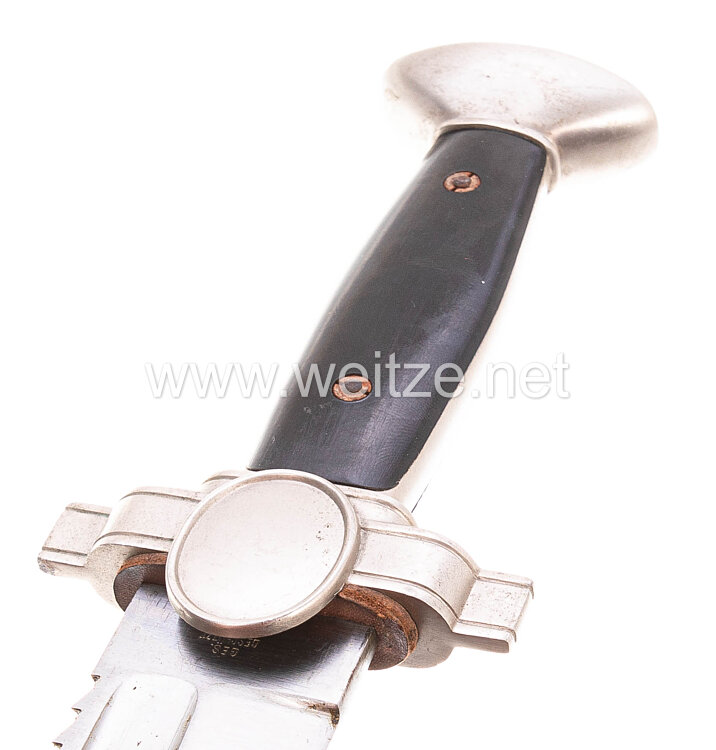
The blade of the described specimen bears the stamp “Ges. Geschützt” (legally protected) on the ricasso, indicating a protected design. This marking was common on German edged weapons of the period and identified copyright-protected patterns. The blades were manufactured by various Solingen producers who specialized in the production of edged weapons. Solingen had been the center of German blade manufacturing for centuries and supplied numerous state and party organizations during the 1930s and 1940s.
The zinc hilt with nickel plating was characteristic of enlisted men's versions. While leader grades often received grips made from more noble materials such as aluminum or silver-plated metal, the enlisted versions were designed more pragmatically. The nickel plating served as corrosion protection and gave the weapon a uniform appearance. The undamaged grip scales testify to careful storage or limited use.
The scabbard with approximately 98% of its original paint preserved is remarkable, as painted surfaces are particularly susceptible to wear and damage. The paint was typically applied in several layers and had to withstand weather conditions. The high degree of preservation indicates that the weapon was carried minimally, which corresponds with the description “only lightly worn.”
The manner of wearing the hewer was regulated by corresponding regulations. DRK members wore the weapon with certain uniforms, particularly at official occasions, parades, and during service. The weapon was both a status symbol and part of the uniformed appearance that symbolized the integration of the DRK into the National Socialist system.
In the context of military history, such hewers are important documents of the Gleichschaltung policy of the NS regime. They demonstrate how even humanitarian organizations were militarized and integrated into war preparations. The DRK played an important role during World War II in medical care, both at the front and at home. The organization was involved in the medical care of the wounded, the organization of medical transports, and the training of medical personnel.
After 1945, such weapons were mostly confiscated by the Allies or had to be surrendered. Many were destroyed or taken as war trophies. The collectible value of such pieces today derives from their historical significance and state of preservation. The described condition 2 (on a scale of 1-6, with 1 being the best) indicates a very well-preserved specimen.
For collectors and historians, such objects are important sources for understanding the material culture of the Third Reich. They document manufacturing techniques, organizational structure, and the aesthetics of the period. At the same time, they require sensitive and critical engagement with their historical significance in the context of a criminal regime.
The preservation of such objects in museums and collections serves historical education and remembrance culture, provided they are presented in appropriate contexts and their history is critically examined.