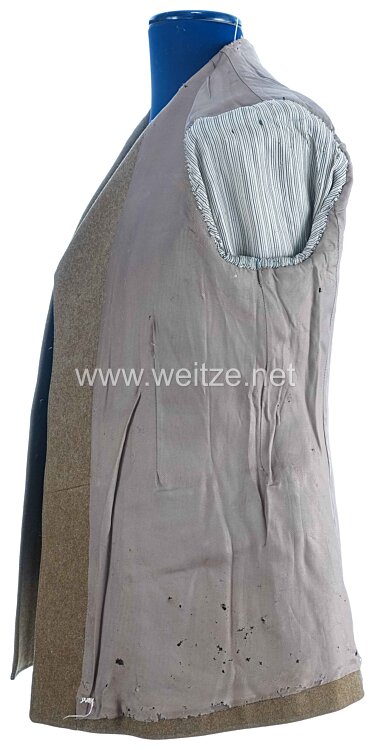
Reich Ministry for the Occupied Eastern Territories Brown Service Tunic for Officials in Eastern Deployment

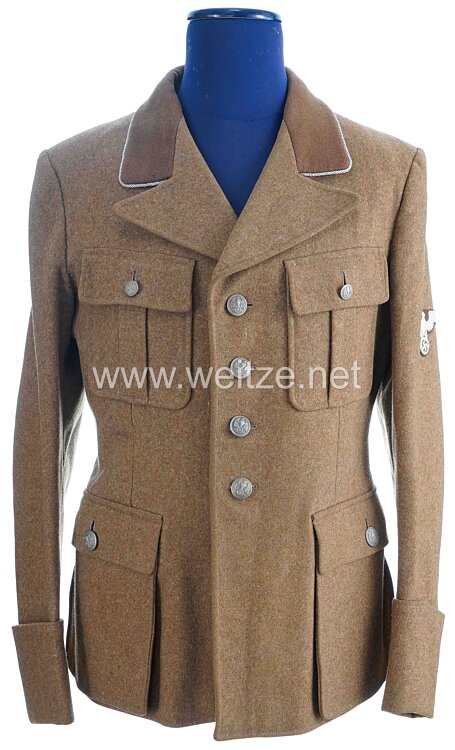
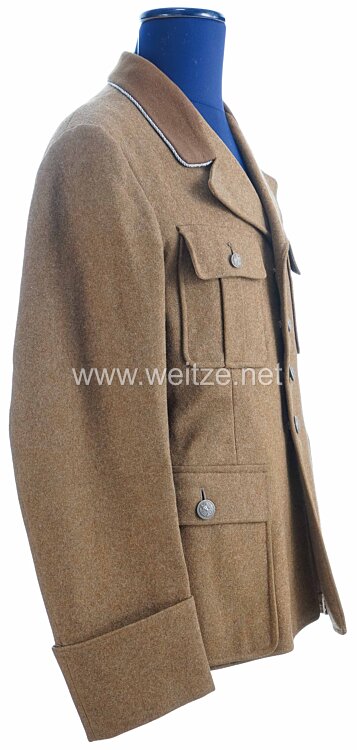
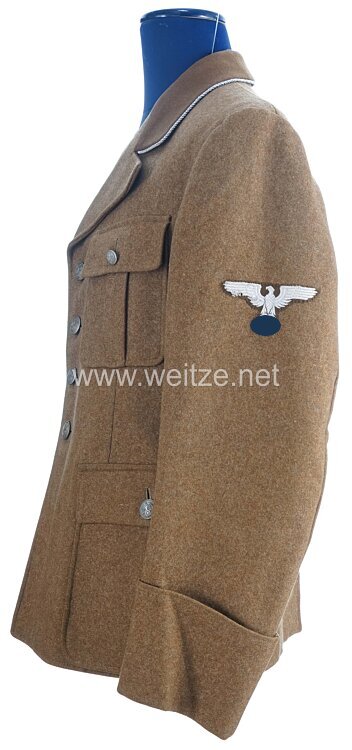
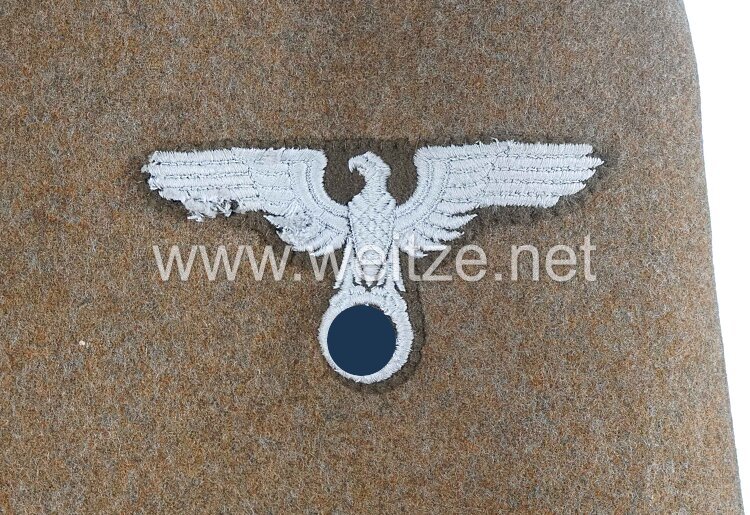
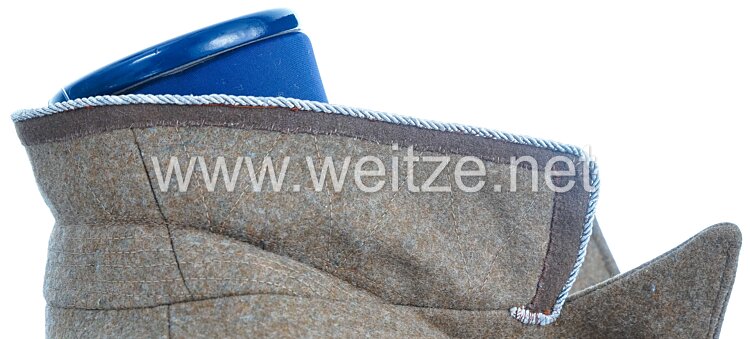
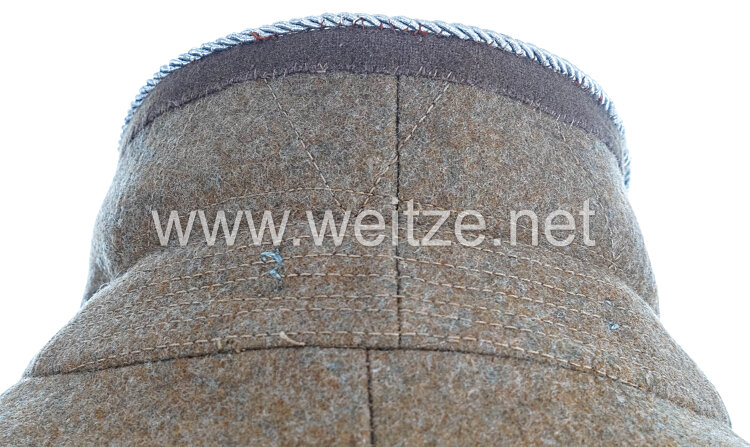
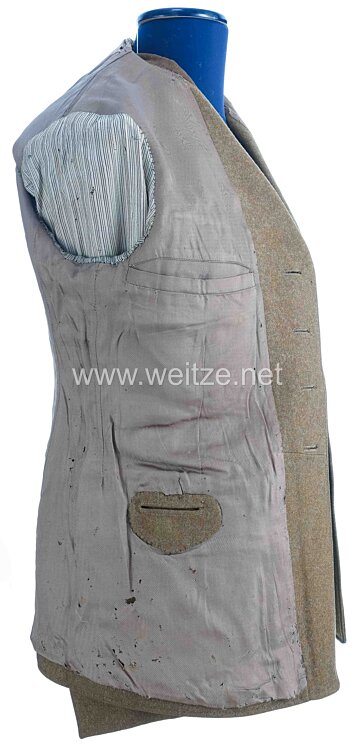
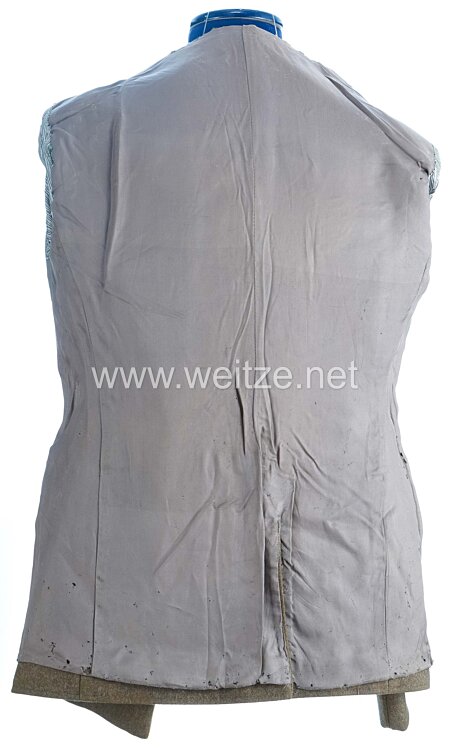
Chamber piece, circa 1943/44. Open service tunic in olive-brown cloth, dark brown collar, 4 patch pockets, complete with all insignia. Fine zinc buttons with national eagles, collar trimmed with silver piping, machine-embroidered sleeve eagle on left sleeve, slightly moth-damaged. Left hip with slit for wearing dagger, moth damage to inner lining. Sleeve length 64 cm, length 70 cm, chest circumference 80 cm, condition 2-. 

448216
1.500,00

Reich Ministry for the Occupied Eastern Territories Brown Service Tunic for Officials in Eastern Deployment

This service tunic for officials in Eastern deployment of the Reich Ministry for the Occupied Eastern Territories (RMfdbO) represents a rare testimony to the National Socialist civil administration in the conquered territories of the Soviet Union during World War II. This garment embodies the bureaucratic dimension of German occupation policy in the East between 1941 and 1945.

The Reich Ministry for the Occupied Eastern Territories was established on July 17, 1941, by Führer decree, only a few weeks after the beginning of Operation Barbarossa on June 22, 1941. Alfred Rosenberg was appointed as Minister, who had previously been regarded as a party ideologue and “Eastern expert” of the NSDAP. The ministry was to assume civil administration of the conquered Soviet territories, which were initially under military administration. It was responsible for the Reich Commissariats of Ostland (Baltic states and Belarus) and Ukraine, with additional commissariats such as Caucasus and Moscow planned but never realized.

The service clothing for officials of the Eastern Ministry was regulated by special dress regulations. The olive-brown to brown color distinguished these uniforms from the field-gray uniforms of the Wehrmacht and the black or brown uniforms of various NSDAP organizations. This color choice was intended to signify membership in the state administration on one hand, while emphasizing the special role in the “Eastern deployment” on the other. The dark brown collar formed a characteristic contrast to the lighter base fabric and was a typical identifying feature of this service clothing.

The silver cord on the collar indicated the civil service status of the wearer and was part of the hierarchical rank insignia system. The sleeve eagle on the left upper arm, machine-embroidered and featuring the swastika, was the central sovereign emblem and mandatory for all wearers of this service clothing. The execution as machine embroidery indicates standardized production for the growing number of officials designated for deployment in the occupied Eastern territories.

Particularly noteworthy is the slit for wearing a dagger on the left hip. This indicates that officials of the Eastern Ministry were authorized to wear a service dagger as part of their uniform, which underscored their quasi-military status. This practice was common among various NS organizations and was intended to emphasize the authority and special character of service in the East.

The temporal classification to 1943/44 corresponds to a phase in which the Reich Ministry, despite the deteriorating military situation, still attempted to maintain and expand its administrative structures. At this time, however, German armed forces had already been largely pushed onto the defensive, and large parts of the originally controlled territories had been recaptured by the Red Army. The production of such service clothing in this late war phase testifies to the bureaucratic persistence of the NS regime.

The RMfdbO employed thousands of officials who were sent from the Old Reich to the occupied territories. These “Eastern officials” were responsible for a wide variety of administrative tasks, from economic administration and agriculture to cultural policy measures. However, the reality of their work was inseparably connected with the criminal occupation policy, which included exploitation, oppression, and extermination.

The fine zinc buttons with sovereign eagles were standardized productions of the German button industry for state and party agencies. The use of fine zinc instead of brass or other metals indicates the material shortage of the late war years, when war-essential metals were increasingly needed for armament purposes.

As a historical object, this service tunic documents the institutional structure of German occupation rule in the East. It symbolically represents the connection between bureaucratic normality and criminal policy that was characteristic of the NS regime. The four patch pockets and practical cut show that these uniforms were designed for actual service deployment, not just for representative purposes.

Surviving examples of such service clothing are rare today, as many were destroyed at the end of the war or lost during the flight from the Eastern territories. They are important sources for researching the material culture of the NS regime and the concrete organization of its administrative structures.