Imperial Schutztruppe in German South West Africa: Visor Cap for Officers

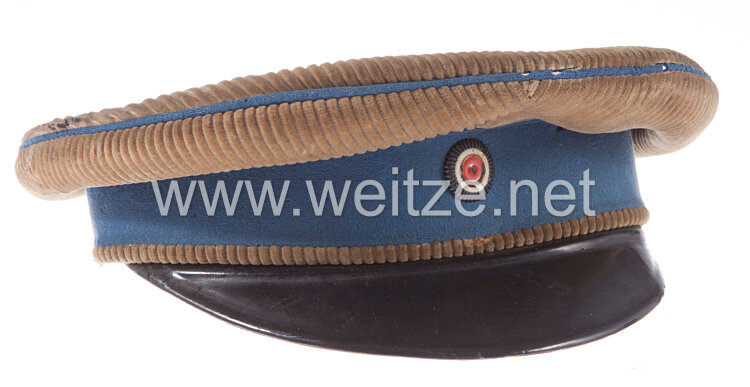
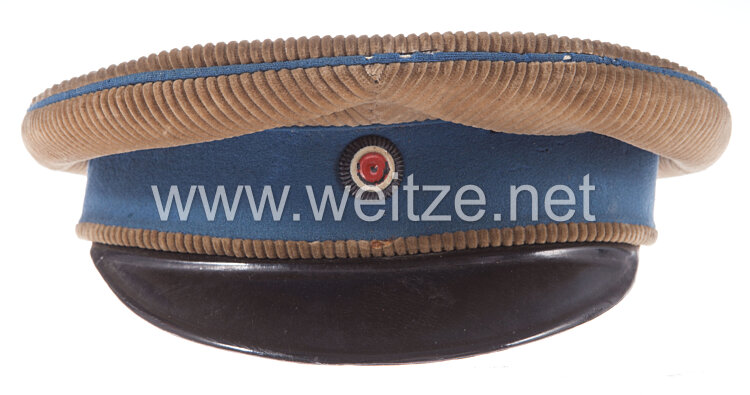
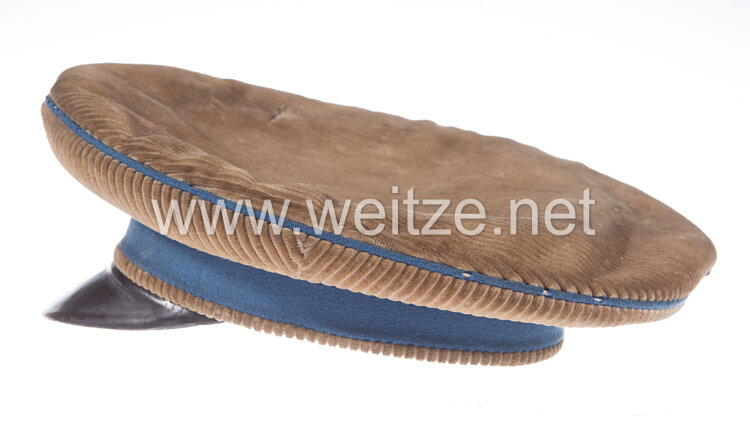
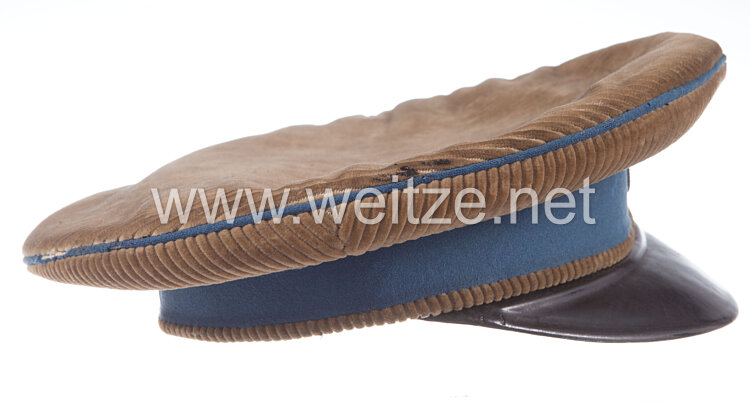
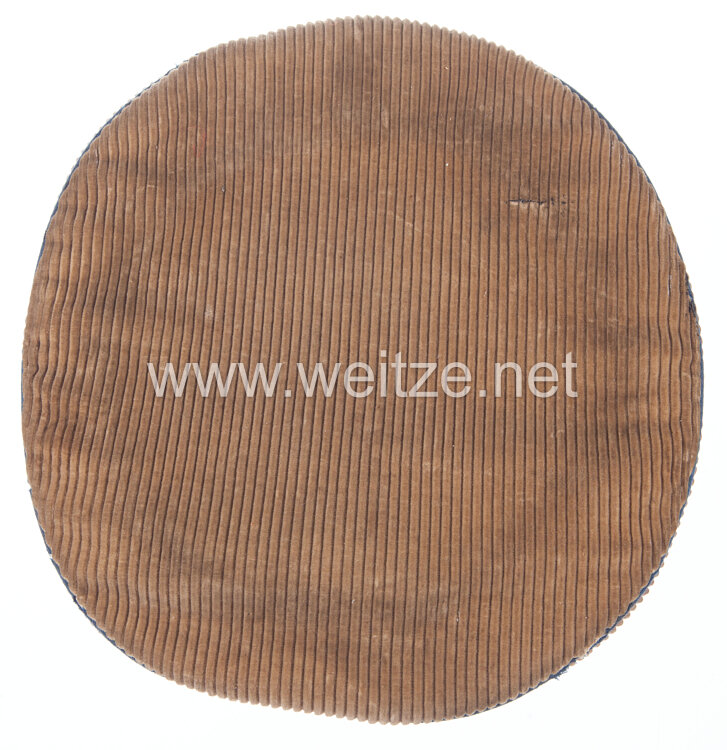
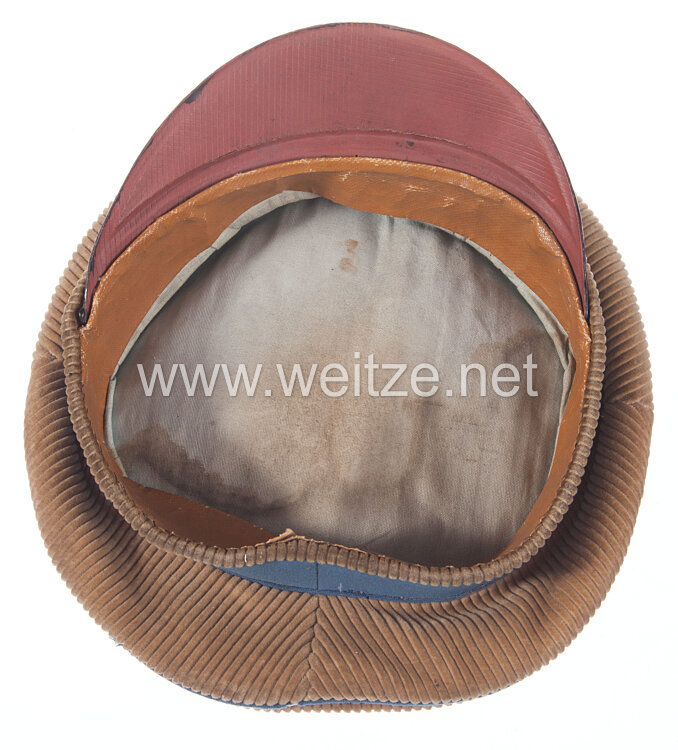
Personal item, circa 1900. Soft visor cap made of brown corded drill fabric, cornflower blue cap band and piping, complete with Reich cockade in officer's quality, short black patent leather visor. Interior with brown sweatband, light blue lining. Size approximately 56. Lightly worn, the corded fabric showing typical signs of age. Overall condition 2. Very rare.
247715
2.300,00

Imperial Schutztruppe in German South West Africa: Visor Cap for Officers

The Imperial Schutztruppe for German South-West Africa was established in 1889 and represented the military presence of the German Empire in this vast colony, which corresponds to modern-day Namibia. This force played a central role in German colonial policy and was responsible for enforcing imperial interests and suppressing uprisings.

The officer's service cap described here, dating from around 1900, is an extraordinary testimony to military uniforming in the German protectorates. Unlike European uniforms, equipment for Africa had to be adapted to extreme climatic conditions. The brown cord drill construction was characteristic of tropical uniforms and differed significantly from the dark blue or field gray uniform items common in Europe.

Cord drill, a durable cotton fabric, was specifically chosen for its suitability in tropical climates. It was breathable, relatively lightweight, and resistant to the harsh conditions of the South-West African interior. The brown color also offered practical advantages for camouflage in the rocky and dusty landscape of the colony.

The cornflower blue piping and cap band identified this headgear as an officer's cap. According to Prussian uniform regulations, which were largely applied in the protectorates as well, cornflower blue was the branch color of the infantry. The Schutztruppe in German South-West Africa consisted mainly of mounted infantry, as the great distances and difficult terrain necessitated the use of horses.

The Imperial cockade in officer's quality was an essential identifying feature and showed allegiance to the German Empire. It typically consisted of concentric rings in black-white-red, the imperial colors, and was more elaborately crafted for officers than for enlisted men. The black patent leather visor was a typical feature of military service caps of this era and provided protection from the intense African sun.

The period around 1900 was a phase of expansion and increasing tensions for German South-West Africa. The Schutztruppe was continuously reinforced as the German colonial administration faced growing resistance from the indigenous population. Officers of the Schutztruppe typically came from the Prussian Army and were seconded to the colony for a specific period.

The brown sweatband leather interior and light blue lining demonstrate the quality workmanship typical of officer equipment. Officers had to procure their uniforms and equipment themselves, which led to individual differences in quality and execution. The indicated size of approximately 56 corresponds to the measurements common for headgear at that time.

The soft construction of this service cap distinguishes it from the stiff parade uniforms worn in Europe. For practical service in Africa, such soft caps were more suitable as they were more comfortable to wear and could be folded when not in use. This was particularly important during long patrol rides.

The rarity of such pieces is explained by several factors. First, the number of German officers in South-West Africa was relatively small – around 1900, the Schutztruppe comprised only about 800 men under German command. Second, many uniform items were heavily stressed by harsh operational conditions and were lost. After the loss of German colonies following World War I and the takeover by South Africa in 1915, many military equipment items were destroyed or lost in the turmoil of the times.

The typical signs of aging in the cord drill fabric and the overall condition suggest that this cap was actually worn and not just kept as a parade uniform. It thus represents an authentic piece of German colonial history and recalls an era that is critically reflected upon today. The Schutztruppen were involved in the violent suppression of the indigenous population, particularly during the Herero and Namaqua War (1904-1908), which is considered the first genocide of the 20th century.

For collectors of military historical objects and museums, such an officer's cap of the Imperial Schutztruppe represents a significant historical document that provides insight into the material culture of German colonialism and contributes to the critical examination of this difficult chapter in German history.