Reichsluftschutzbund (RLB) Armband for Female Auxiliary Volunteers

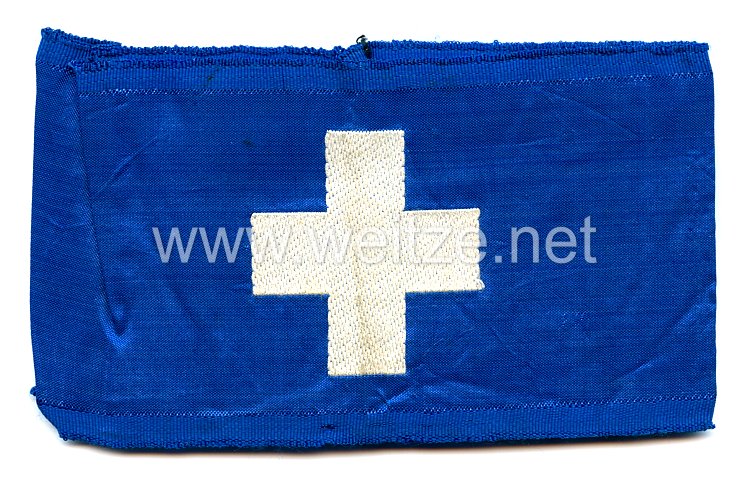
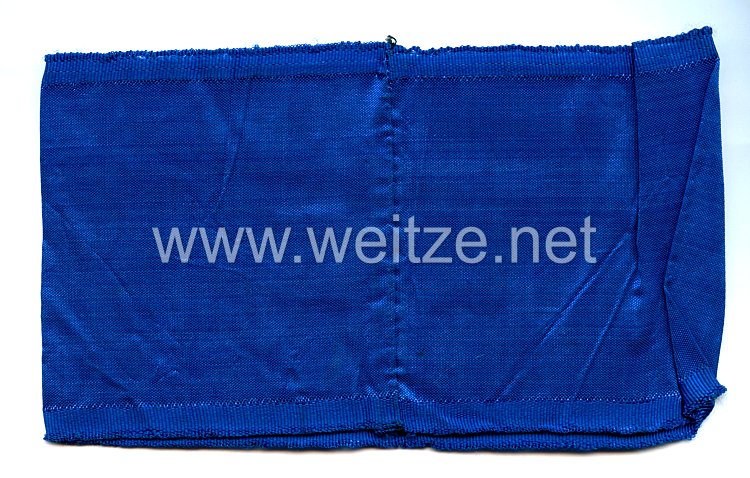
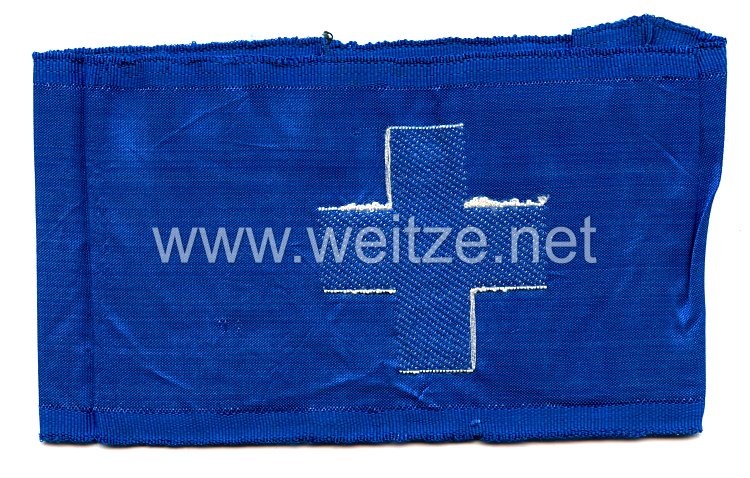
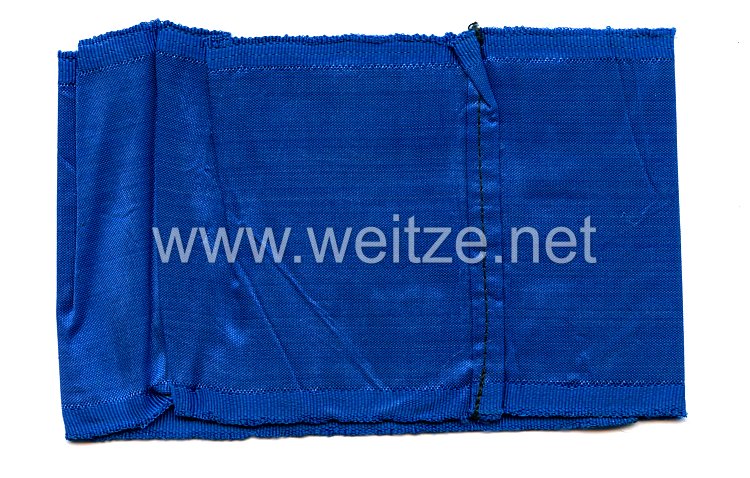
Light blue armband with woven cross, condition 2.
361214
120,00

Reichsluftschutzbund (RLB) Armband for Female Auxiliary Volunteers

The Reichsluftschutzbund (RLB) armband for lay medical auxiliaries represents a significant artifact of the civilian air defense organization in Nazi Germany. The Reichsluftschutzbund (National Air Raid Protection League) was founded on April 29, 1933, and developed into the largest civilian mass organization of the Third Reich, with over 22 million members by the end of World War II.

The light blue armband with woven cross was specifically designated for Laienhelferinnen (lay female auxiliaries) in the RLB medical service. The choice of light blue was internationally recognized as identification for medical personnel and complied with the provisions of the Geneva Convention. The woven cross symbolized the medical service activities of these auxiliaries, who were not trained nurses but volunteers with basic first aid training.

The RLB was subordinate to the Reich Ministry of Aviation under Hermann Göring and had the task of preparing the civilian population for the dangers of air raids. This included theoretical training on air raid protection measures, practical exercises in firefighting, rescue of buried victims, and medical first aid. The organization was hierarchically structured and divided into local, district, and state groups.

The lay female auxiliaries formed an important component of the RLB medical service. They received training in first aid, wound care, handling of gas attack victims, and care of air raid casualties. Unlike professional medical personnel, they served on a voluntary basis and came from all social classes. Their identification through the light blue armband was essential to be recognized as medical personnel in emergencies and to stand under the protection of international conventions.

The practical significance of these auxiliaries grew with the intensification of Allied bombing raids from 1942 onwards. After major attacks such as on Hamburg (Operation Gomorrah, July 1943), Cologne, or Dresden, thousands of lay auxiliaries were deployed to treat the wounded, rescue the buried, and assist with emergency medical care. Their work was dangerous as they often operated during ongoing attacks or immediately afterward, under threat of collapse and amid fires.

The armband itself was manufactured according to specific regulations. The light blue color had to be clearly visible, the cross was typically red and woven to ensure permanent identification. The armband was worn on the left upper arm and was often the only marking distinguishing the auxiliaries from the rest of the civilian population. In addition to the armband, lay auxiliaries frequently wore dark or field-gray work clothing and a steel helmet.

From a historical perspective, this armband documents several aspects: First, the total mobilization of German society in World War II, in which civilians were systematically integrated into the war effort. Second, it demonstrates the increasing importance of aerial warfare and its impact on the civilian population. Third, it illustrates the role of women in wartime service, who, while not fighting at the front, performed humanitarian services under life-threatening conditions.

After the war ended in 1945, the RLB was dissolved along with all other Nazi organizations. The Allies banned the organization as part of denazification. However, many of the practical experiences in civil defense were incorporated into the later civil defense organizations of the Federal Republic of Germany and the German Democratic Republic. Armbands like this are today important museum objects that commemorate the horrors of aerial warfare and the civilian population in World War II.

r