Wehrmacht Photographs, Foreign Auxiliary Workers
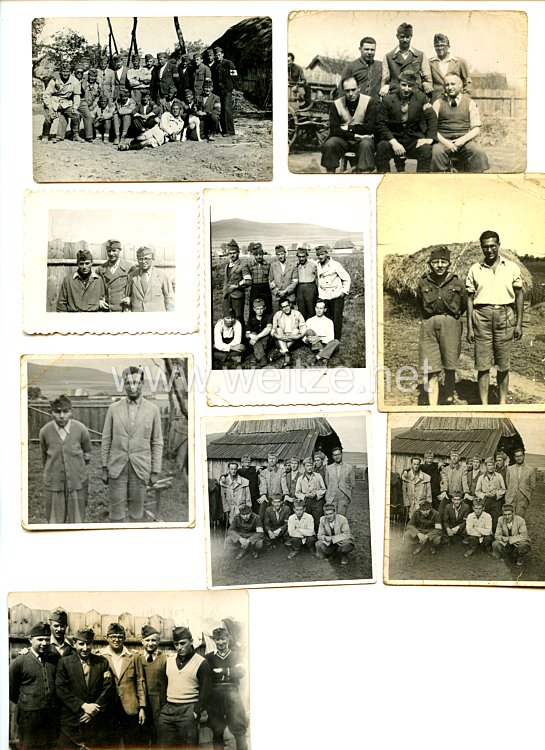
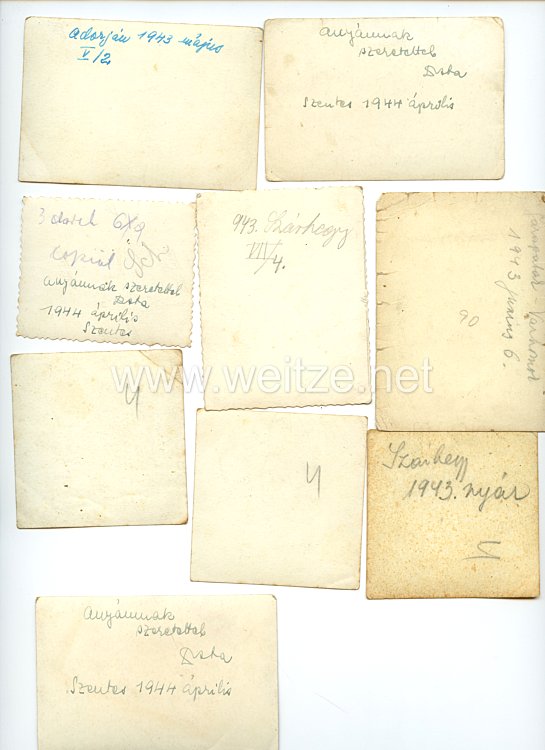
This collection of nine photographs documents a significant and deeply problematic chapter of German history during World War II: the employment of foreign auxiliary workers in Nazi Germany. These images from the Wehrmacht period offer visual insights into the complex reality of forced labor and the systematic exploitation of workers between 1939 and 1945.
The term “foreign auxiliary workers” (ausländische Hilfsarbeiter) was a euphemistic designation used by the Nazi regime that obscured the true nature of this system. In reality, it represented a comprehensive program of forced labor that affected millions of people from occupied territories. As early as 1939, with the outbreak of war, it became clear that the German war economy would depend on foreign labor. The Plenipotentiary General for Labor Deployment, a position created in 1942 under Fritz Sauckel, coordinated the systematic recruitment and often violent deportation of workers.
Photographs like these were taken for various reasons. Wehrmacht members frequently documented their service through private photographs, while official images were created for propaganda purposes or administrative documentation. The Wehrmacht's photographic reporting was subject to strict guidelines from the Propaganda Companies, though private photographs often provided unfiltered glimpses into daily life.
Between 1939 and 1945, an estimated 13 to 14 million foreign workers were employed in the German Reich. These came primarily from Poland, the Soviet Union, France, Italy, the Netherlands, Belgium, and other occupied territories. Working conditions varied significantly depending on the ethnic origin of the workers, with Soviet and Polish forced laborers subjected to the harshest conditions. The Nazi regime established a complex system of classifications and markings that reflected its racist ideology.
The Wehrmacht itself was substantially involved in the deployment of foreign workers. Prisoners of war were systematically forced to work, which violated the Geneva Convention, especially when they were employed in the armaments industry. Furthermore, in occupied territories, the Wehrmacht often coordinated the registration and transport of civilians for forced labor in the Reich.
Such photographs today possess invaluable historical significance. They serve as visual primary sources for research on forced labor, occupation policies, and daily life during World War II. After the war, many of these documents were used in the prosecution of Nazi crimes and in compensation proceedings. The German Federal Archives and other institutions now preserve extensive collections of such photographs.
Academic engagement with the topic of forced labor intensified particularly since the 1980s. The establishment of the “Remembrance, Responsibility and Future” Foundation in 2000 marked an important step in acknowledging the suffering of forced laborers and their compensation. Photographic documents played a central role in identifying perpetrators and victims as well as reconstructing historical events.
For collectors and historians, such photographic collections represent ethically complex objects. On one hand, they possess undeniable documentary value; on the other, they raise questions about the appropriate handling of evidence of injustice and crimes. Proper contextualization and scholarly examination are essential to make these materials useful for education and research without violating the dignity of the people depicted.
The condition of such photographs is crucial for their historical value. The classification “Condition 2” indicates well-preserved prints, which increases their usability for research purposes. The conservation of historical photographs requires special climatic conditions and proper storage to prevent further degradation.