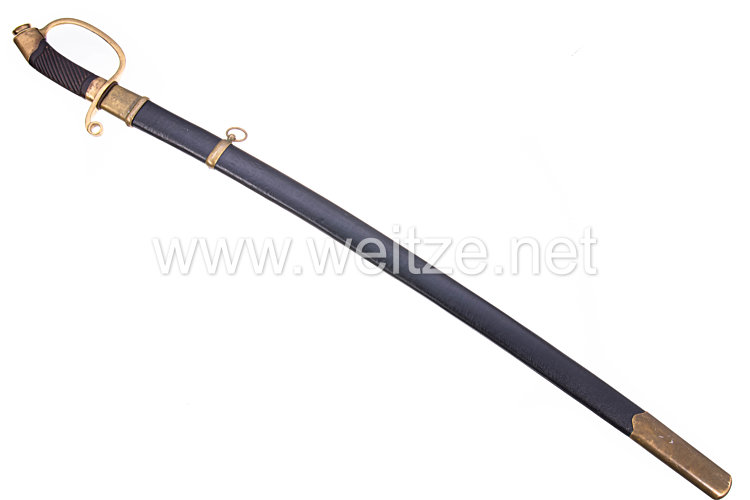
The Russian Officer's Shashka Model 1881 represents a significant turning point in the development of Russian edged weapons during the late 19th century. This characteristic weapon, originally from the Caucasus, was adapted and standardized by Tsarist Russia to replace traditional sabers in the cavalry.
The shashka has its roots among the Caucasian equestrian peoples, particularly the Circassians and Cossacks. The name derives from the Circassian word “shashqua,” meaning “long knife.” Unlike European sabers, the traditional shashka lacks a hand guard, facilitating quick handling and the characteristic drawing of the weapon. This feature made it particularly effective in cavalry close combat.
The Model 1881 was introduced through an imperial decree and marked the official adoption of the shashka as the standard edged weapon for officers of the Russian army. This standardization was part of comprehensive military reforms under Tsar Alexander III, aimed at improving the efficiency and uniformity of the armed forces. The reform took into account positive experiences with Caucasian weapons during the Russian Empire's numerous campaigns in that region.
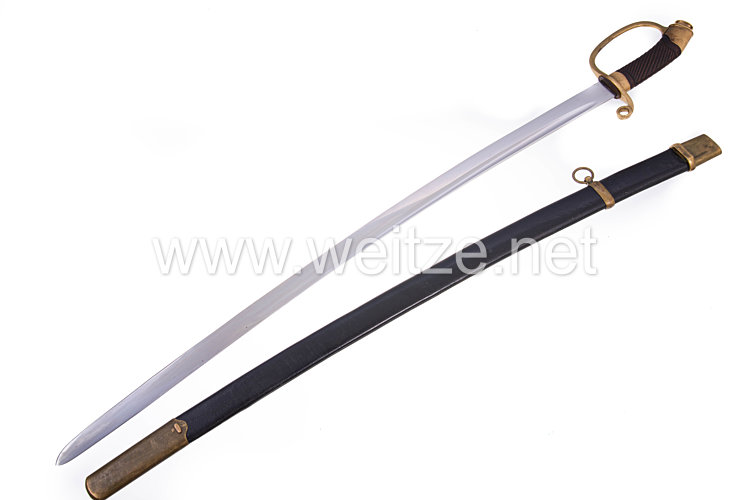
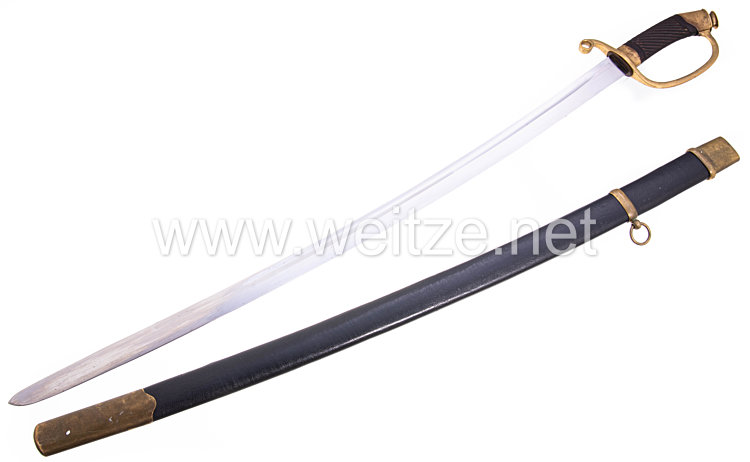
The present specimen is of German manufacture, indicating the extensive trade relations between the German Reich and the Tsarist Empire. Significant Solingen blade smiths such as WKC (Weyersberg, Kirschbaum & Co.), Eickhorn, and other renowned manufacturers produced military edged weapons for export to Russia. These productions often served as pattern and presentation pieces displaying the highest craftsmanship quality.
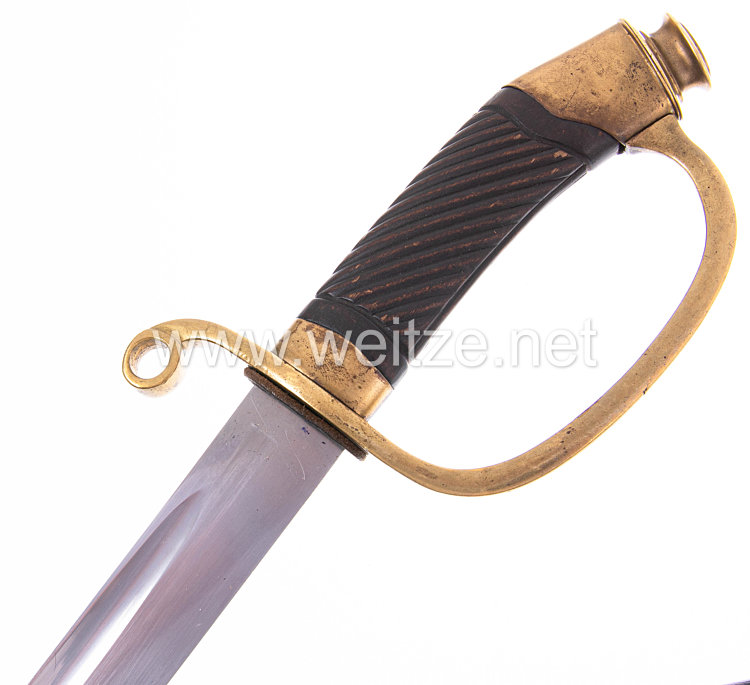
The blade shows the typical slight curvature characteristic of the shashka. With an overall length of 960mm, it corresponds to the regular dimensions for officer weapons. The narrow fullers on both sides reduced the blade's weight without compromising its stability and facilitated withdrawal from wounds - an important feature in combat.
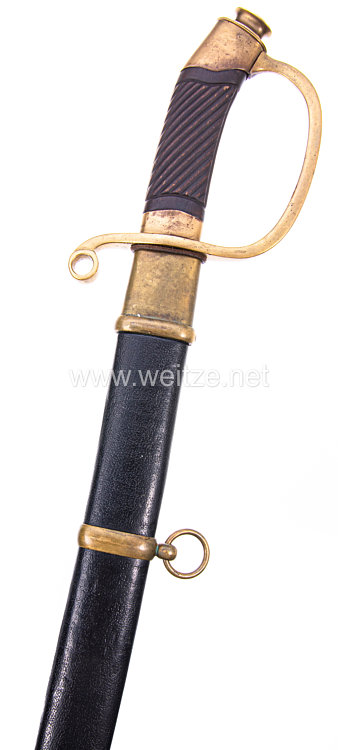
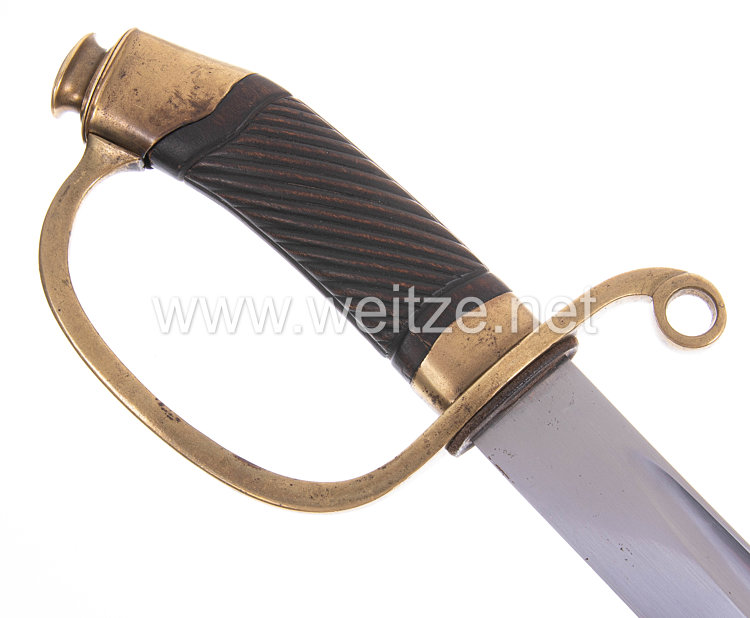
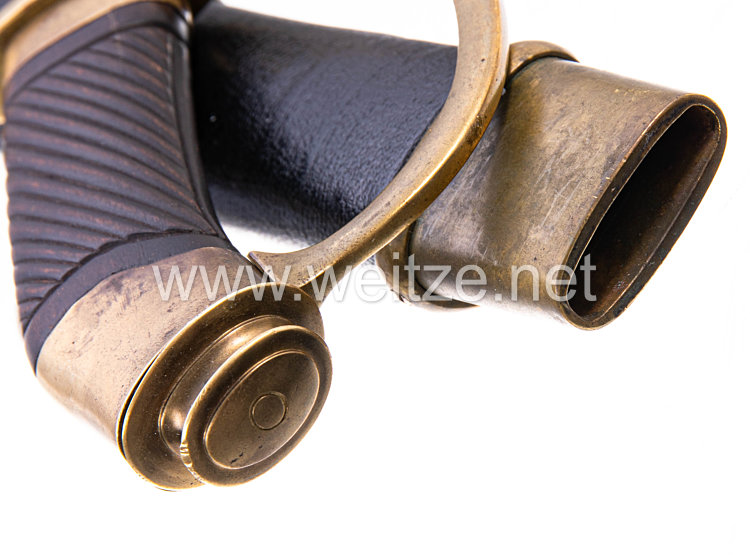
The wooden grip with steep fluting corresponds to Russian specifications and provides a secure hold. The brass hilt was typical for officer weapons and offered a compromise between functionality and representative appearance. Brass was more corrosion-resistant than iron and gave the weapon a more dignified appearance suitable for officers.
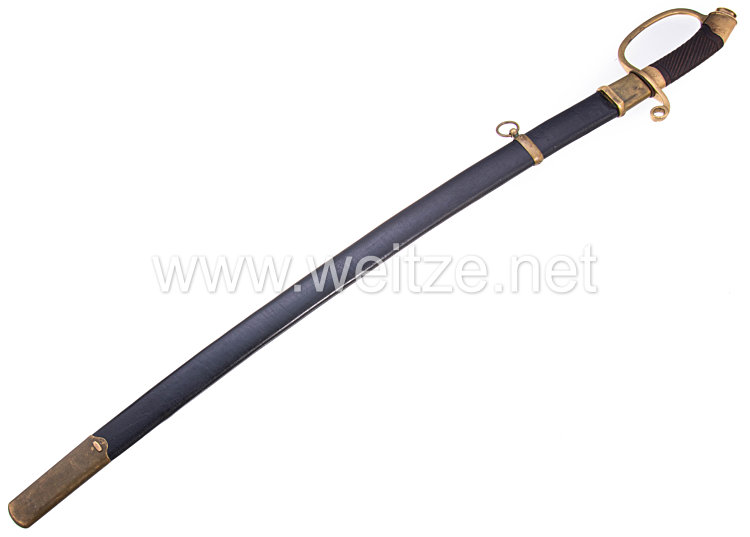
The brown leather-covered wooden scabbard with brass fittings also follows Russian standards. The leather covering protected the wooden scabbard from weather influences and damage. The brass fittings served not only decoration but also attachment to the sword belt and reinforced mechanically stressed areas.
The fact that this shashka is unworn indicates that it was never used in active service. Such pattern pieces were frequently produced for exhibitions, as sales samples for military authorities, or as gifts for high-ranking officers. The German arms industry was a leader in edged weapon production during the late 19th century and supplied armies worldwide.
The Shashka M.1881 remained in service until the collapse of the Tsarist Empire in 1917 and was subsequently adopted by the Red Army. Various modifications were introduced during the 1920s and 1930s, but the basic design remained intact. The weapon served in both World War I and the Russian Civil War and was even carried by cavalry units during World War II, although its practical significance by that time was largely symbolic.
Today, well-preserved specimens of the Shashka M.1881, particularly unworn pattern pieces of German manufacture, are sought-after collector's items. They document not only Russian military history but also international trade relations and the quality of European weapon-smithing craftsmanship of the late 19th century. The condition grade 2 of this specimen indicates exceptionally good preservation over more than a century.