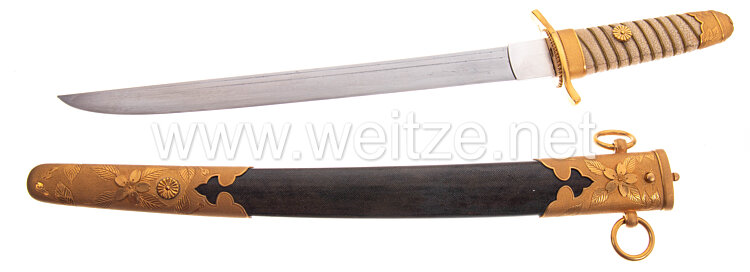
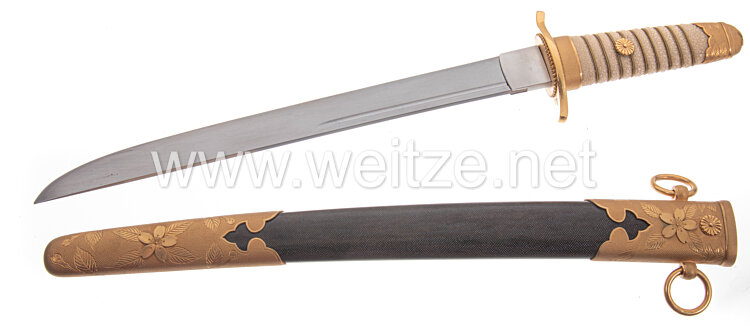
Japanese World War II Admiral's Dirk of the Imperial Japanese Navy

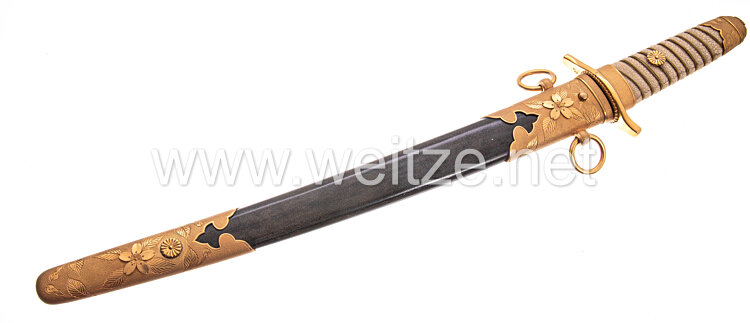
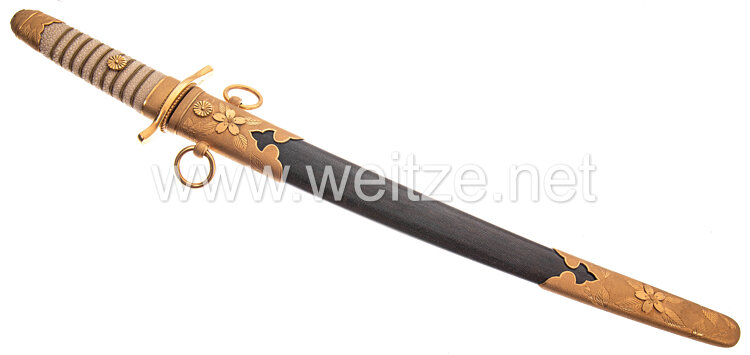
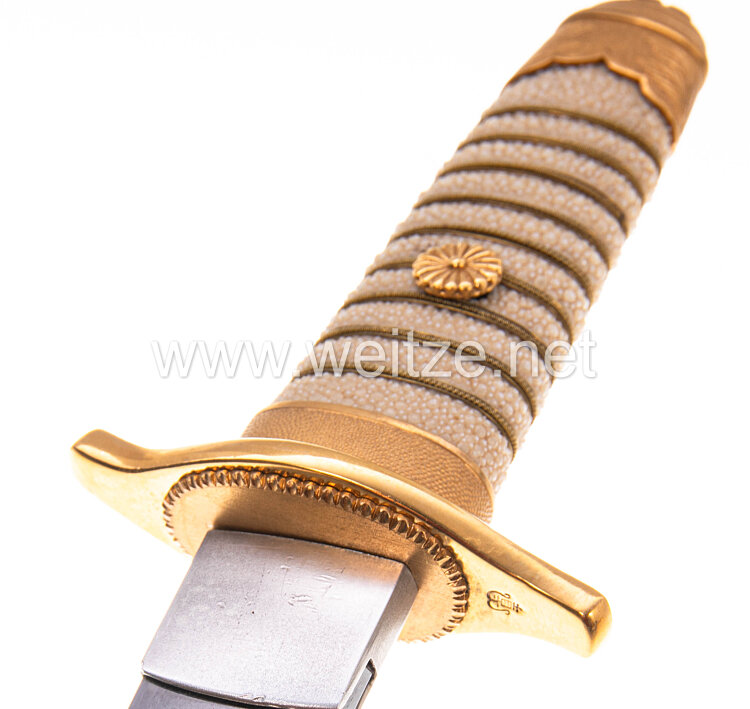
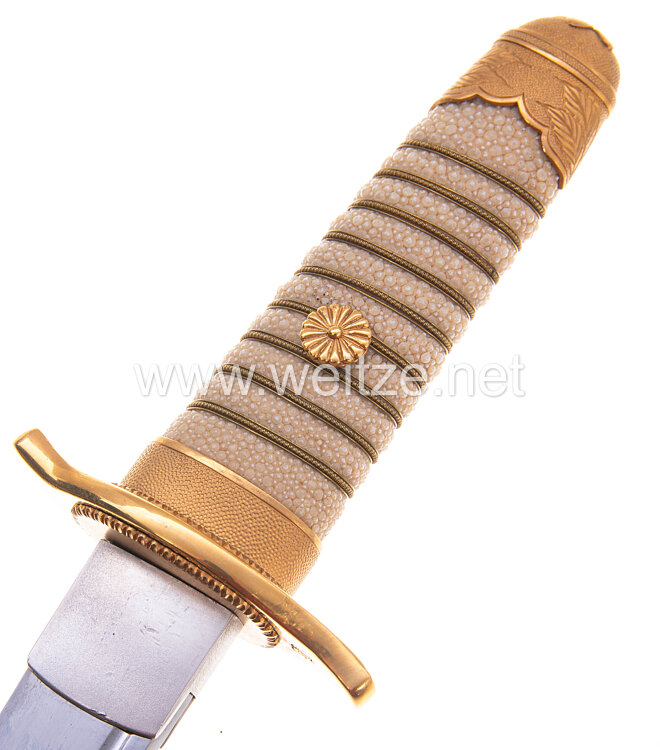
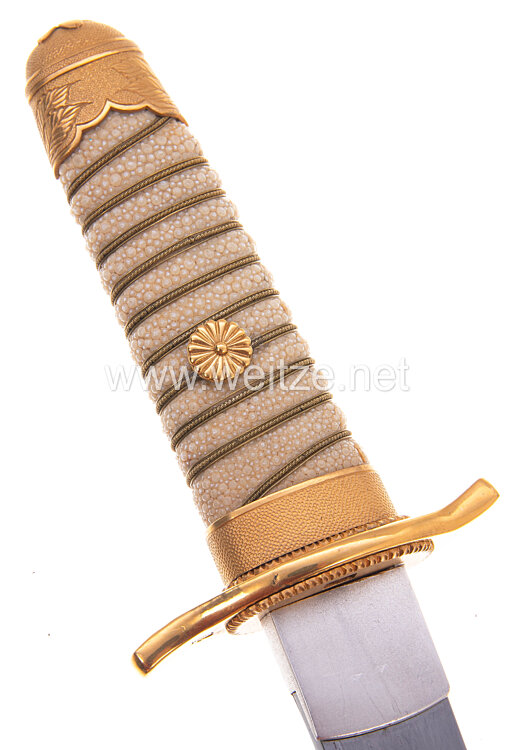
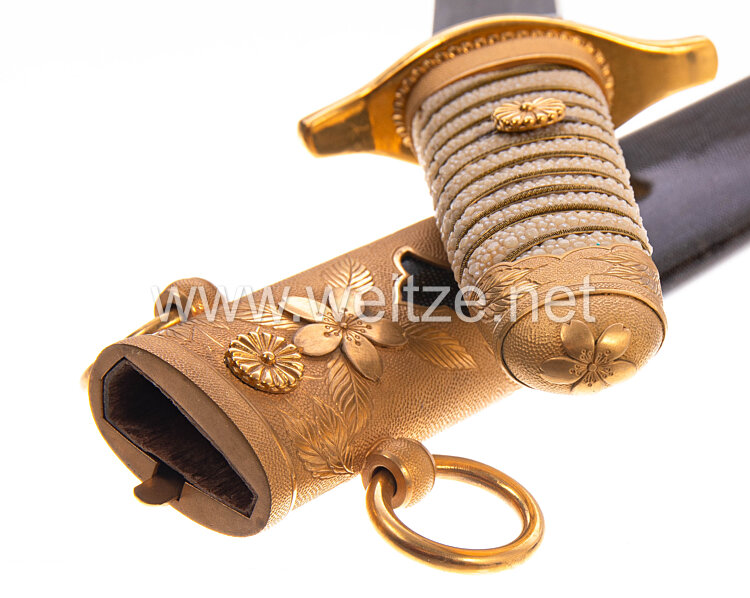
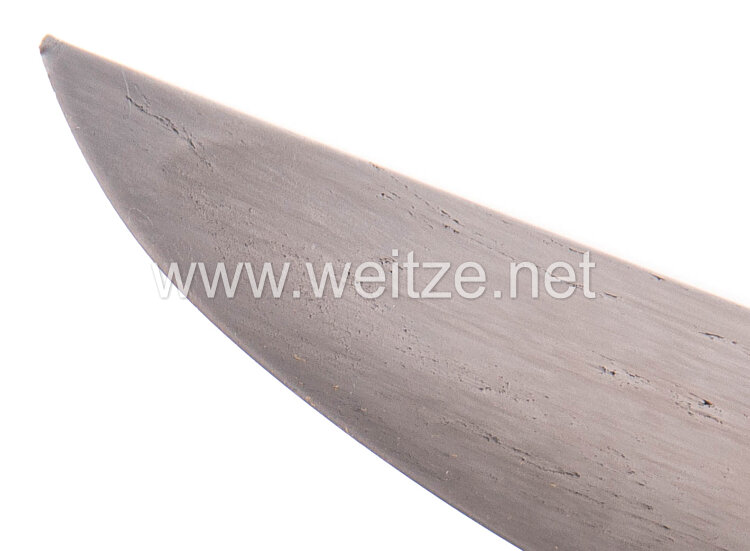
The hilt and scabbard fittings in fire-gilt brass, the pommel cap surmounted by the lotus blossom emblem of the Imperial Japanese Navy, white sharkskin grip, grip wrapping intact, the underside of the crossguard with acceptance mark, the hand-forged blade of wedge-shaped form is certainly over 200 years old, the temper line (hamon) clearly and distinctly visible, the point only slightly blunted, the scabbard fittings with lotus flower decorations. Unworn example in very good condition.
Very rare!
Overall length: 500mm
Blade length: 305mm


459310
16.500,00

Japanese World War II Admiral's Dirk of the Imperial Japanese Navy

The Admiral's Dagger of the Imperial Japanese Navy (Dai-Nippon Teikoku Kaigun) represents a significant example of the fusion between traditional Japanese sword-making craftsmanship and modern military insignia of the 20th century. These weapons embody the deep cultural roots of the Japanese naval forces in centuries-old samurai traditions.

The Imperial Japanese Navy was officially established in 1872 during the Meiji Restoration, when Japan opened itself to Western modernization. Nevertheless, the Navy deliberately retained traditional Japanese elements, particularly in officer equipment. The use of blades dating partly from the Edo Period (1603-1868) or even earlier epochs was not uncommon and demonstrated the continuity between the samurai past and modern warfare.

The lotus flower (Hasu) as an emblem on the grip and scabbard holds special significance in Japanese symbolism. It represents purity, enlightenment, and rebirth in the Buddhist context and was used by the Imperial Navy as one of its identifying marks, intended to emphasize the spiritual dimension of military service. Admirals wore these daggers as symbols of their high rank and responsibility.

The technical characteristics of such admiral's daggers followed strict regulations. The fire-gilded brass fittings were reserved for higher officer ranks, while lower ranks wore silver-plated or simpler fittings. The use of sharkskin (Same-kawa) for the grip is a direct adoption from traditional Japanese sword-making, where this material was valued for its non-slip properties and durability.

The hand-forged blade with visible temper line (Hamon) indicates the use of traditional Japanese forging techniques. Such blades were often reworked from older swords or came from family possessions and were fitted into new military mountings. The wedge-shaped design distinguishes these daggers from curved samurai swords but corresponds to Western dagger forms that Japan adopted during modernization.

The acceptance mark on the crossguard indicates official inspection and approval by naval authorities. The Imperial Navy maintained strict quality controls for officer weapons, and only tested pieces could be worn in service. These marks often enable dating and attribution to specific manufacturers or inspection offices.

During World War II (1941-1945 in the Pacific), Japanese admirals wore these daggers as part of their dress uniform on official occasions. They were less combat weapons than ceremonial rank insignia symbolizing the dignity and authority of the wearer. The Japanese Navy, which fought in battles such as Pearl Harbor, Midway, and Leyte Gulf, cultivated a pronounced class consciousness that manifested itself in the magnificent equipment of its officers.

After Japan's surrender in 1945, many such weapons were taken by Allied soldiers as war trophies or confiscated during disarmament. The fact that a piece remained unworn suggests it may never have been used in active service or was kept as a reserve piece. Such unused examples are particularly rare and valuable today.

The rarity of admiral's daggers can be explained by several factors: First, the number of admirals in the Imperial Navy was naturally limited. Second, many of these weapons were destroyed or lost after 1945. Third, production was elaborate and required highly skilled craftsmen who mastered traditional techniques.

The overall length of 500mm and blade length of 305mm correspond to standard dimensions for Imperial Navy admiral's daggers. These dimensions distinguish them from shorter officer daggers of lower ranks and longer traditional katana.

Today, such admiral's daggers are important historical artifacts that provide insight into the military culture of imperial Japan. They document the unique synthesis of traditional Japanese craftsmanship and modern military organization that characterized Japan in the first half of the 20th century.