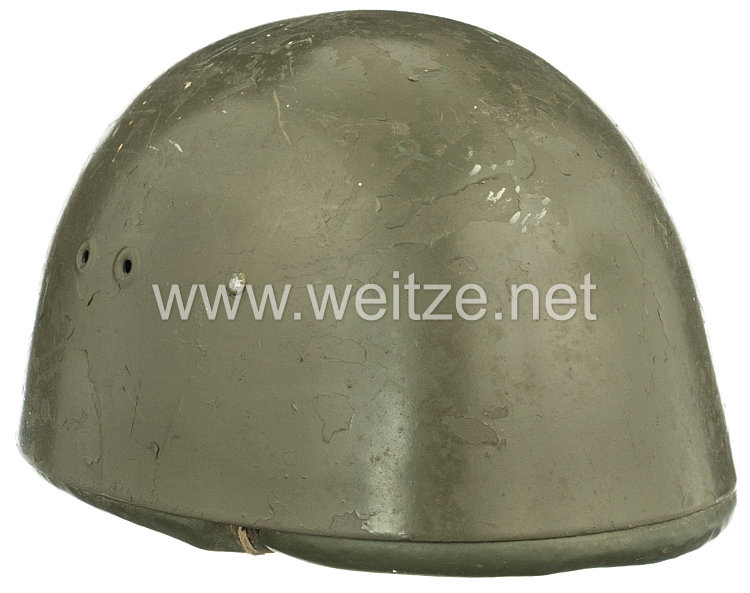
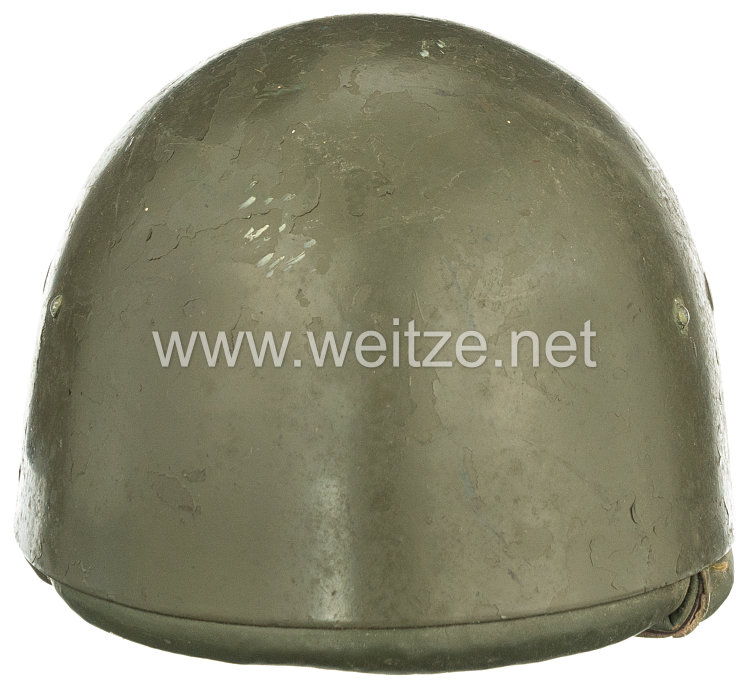
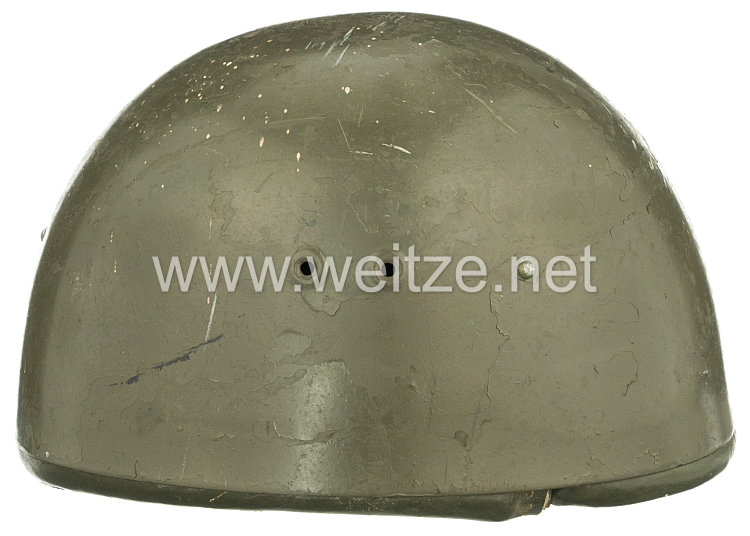
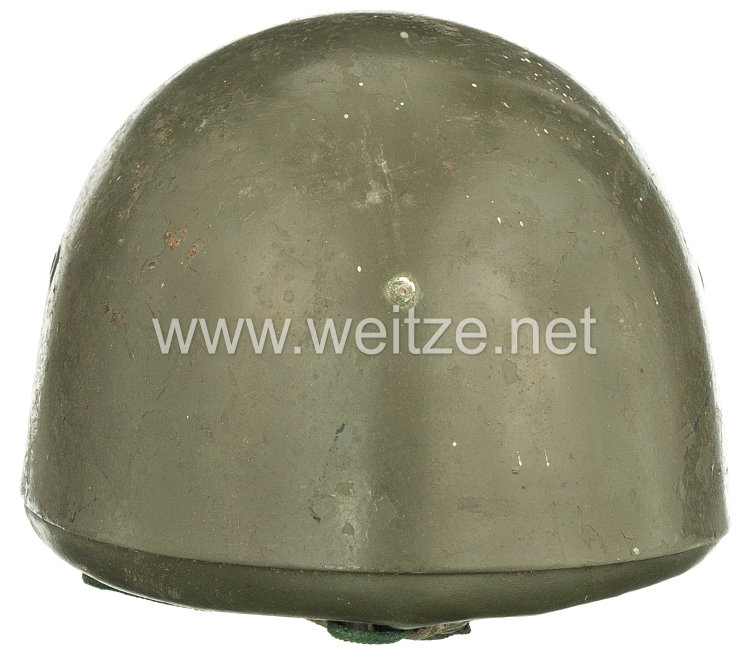
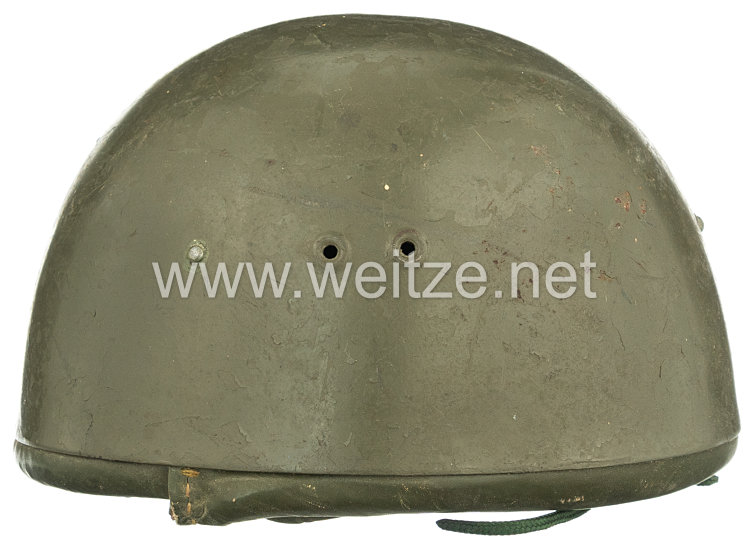
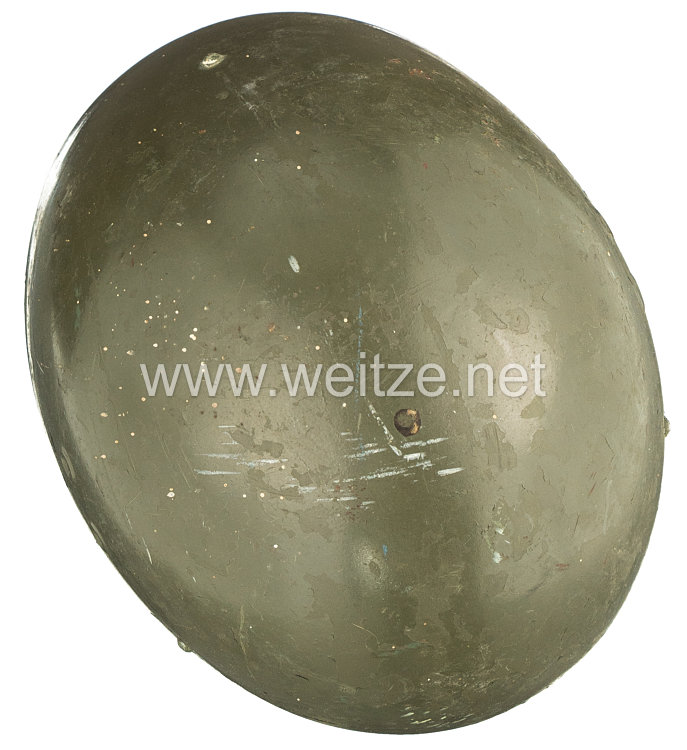
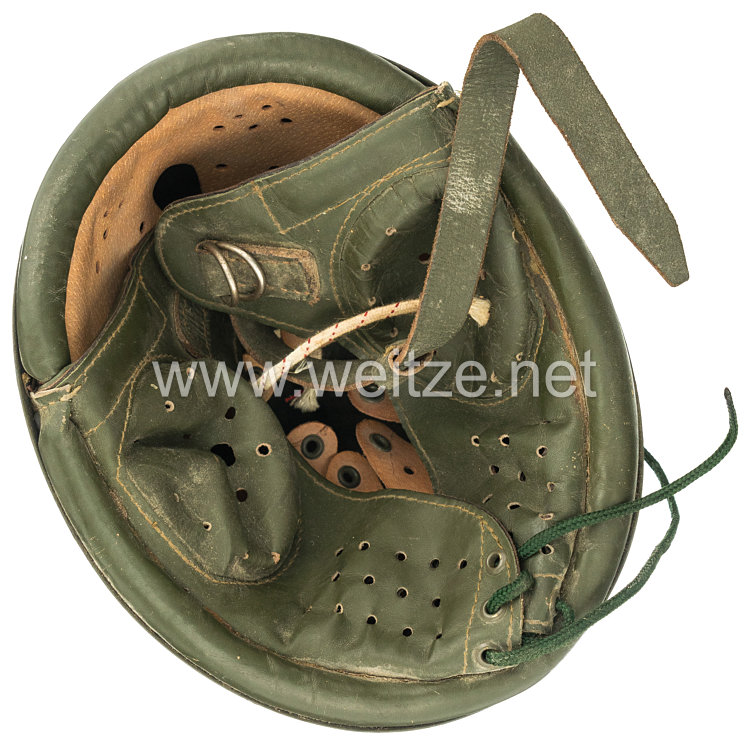
German Democratic Republic (GDR) National People's Army (NVA) Paratrooper Steel Helmet

, on the inside of the liner the marking “..... 1976”, head size approx. 56. Condition 2.
Since the GDR did not produce its own jump helmets, these came from stocks of the Polish People's Army.
434410
250,00

German Democratic Republic (GDR) National People's Army (NVA) Paratrooper Steel Helmet

The paratrooper helmet of the National People's Army (NVA) of the German Democratic Republic represents a fascinating example of military procurement policy and international relations within the Warsaw Pact. This specimen from 1976 documents the close cooperation between socialist brother states in military matters.

The NVA was founded on March 1, 1956, as the regular armed force of the GDR and developed into one of the most powerful armies of the Warsaw Pact. Within the NVA, the paratroopers played a special role, although their units remained relatively small compared to other branches. The air assault forces and paratrooper units were part of the Air Force/Air Defense of the NVA.

A remarkable aspect of GDR military history is the fact that East Germany did not produce its own paratrooper helmets. This economic and production-technical decision meant that the NVA depended on imports from friendly socialist states. The Polish People's Army (Ludowe Wojsko Polskie) became the main supplier of these specialized equipment items.

The Polish steel helmets for paratroopers were based on Soviet designs and manufactured in Poland's state production facilities. They were characterized by their robust construction and special shape, which met the particular requirements of airborne operations. Unlike standard combat helmets, paratrooper helmets had to provide additional protection during landing while being compatible with parachute equipment.

The production year 1976 falls into a phase of consolidation and modernization of the NVA. During the 1970s, the GDR army reached its peak in terms of equipment and training standards. Military cooperation within the Warsaw Pact was close, and standardization as well as mutual support in equipment procurement were central elements of the joint defense policy.

The marking inside the helmet's liner corresponds to typical production markings of that time. Such markings typically contained information about the manufacturer, production year, and sometimes also about standard sizes. The head size 56 corresponds to a medium size and was one of the standard sizes in Warsaw Pact military equipment.

Procuring equipment from Poland made economic sense for the GDR. The Polish defense industry had considerable capacity and produced not only for its own needs but also for export to other socialist countries. This division of labor within the Council for Mutual Economic Assistance (COMECON) allowed individual states to specialize in certain production areas.

The NVA paratroopers were mainly organized in the 40th Air Assault Regiment and later units. They completed their training in the Soviet Union and Poland, among other places, where they were also familiarized with the equipment of these countries. The use of Polish helmets was therefore not only a matter of procurement but also of interoperability within the Warsaw Pact.

Steel helmets of this type provided protection against shrapnel and impacts during the jump and landing. Their construction took into account the special stresses of airborne operations. The inner liner was designed to absorb shocks while ensuring a secure fit. The chin straps were reinforced to keep the helmet securely on the head even at high wind speeds during free fall.

After reunification in 1990, the NVA was dissolved, and its equipment was either incorporated into the Bundeswehr, scrapped, or sold for collector purposes. Helmets like this became sought-after objects for militaria collectors, as they represent an authentic testimony to GDR military history and document the international interconnections within the Warsaw Pact.

r