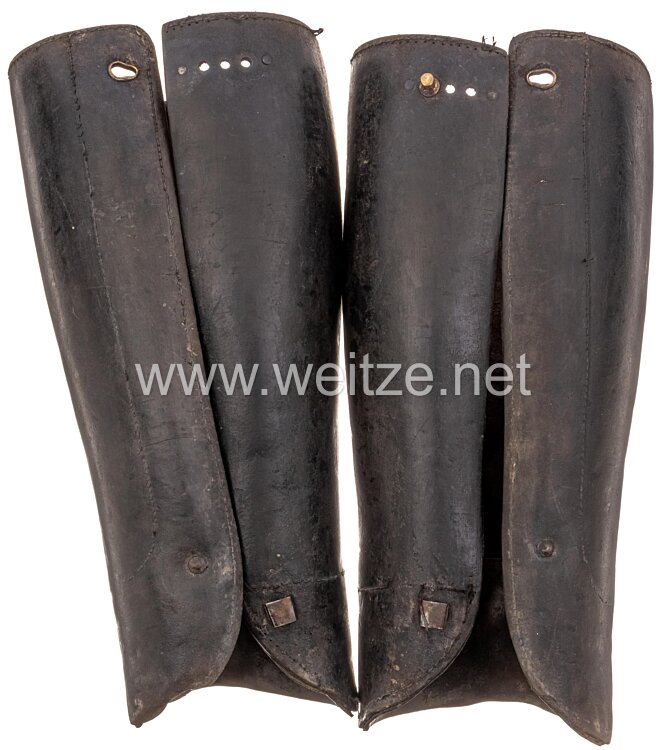
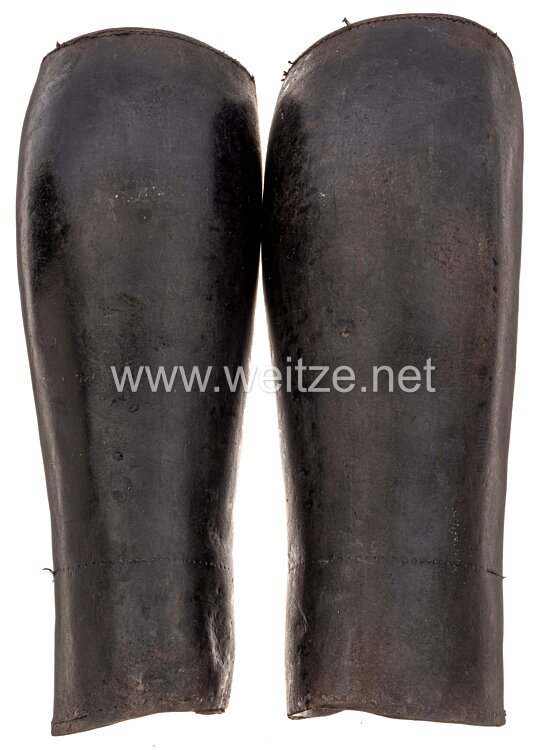
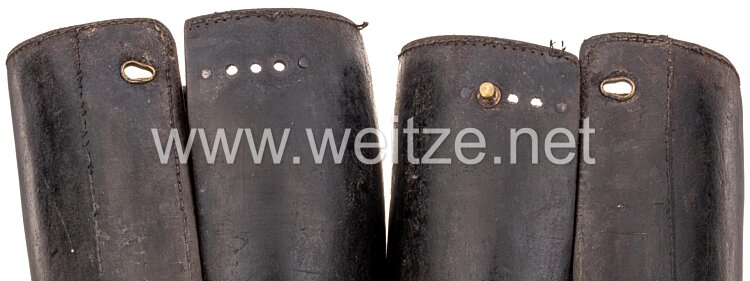
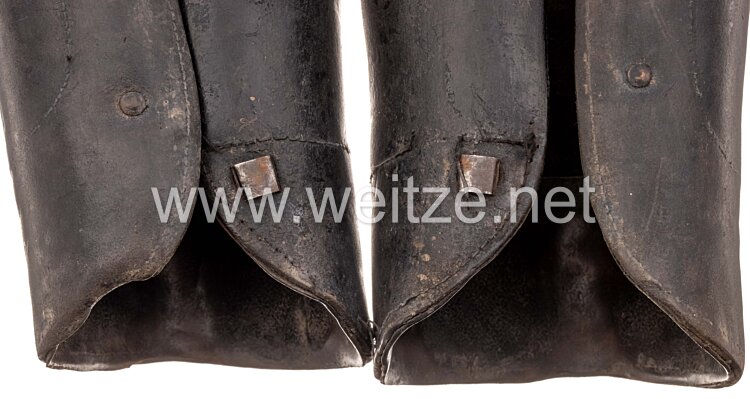
The leather gaiters described here represent a characteristic piece of equipment worn by German officers during the First World War. Such gaiters were an indispensable component of military dress and fulfilled both practical and representative functions in the Imperial Army.
Function and Construction
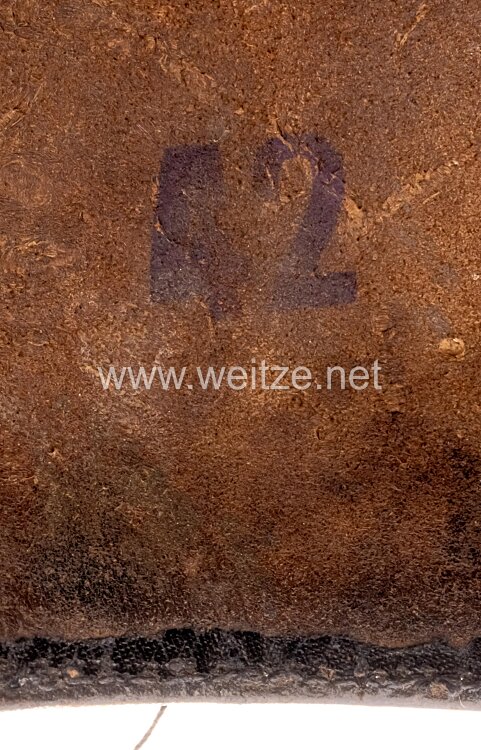
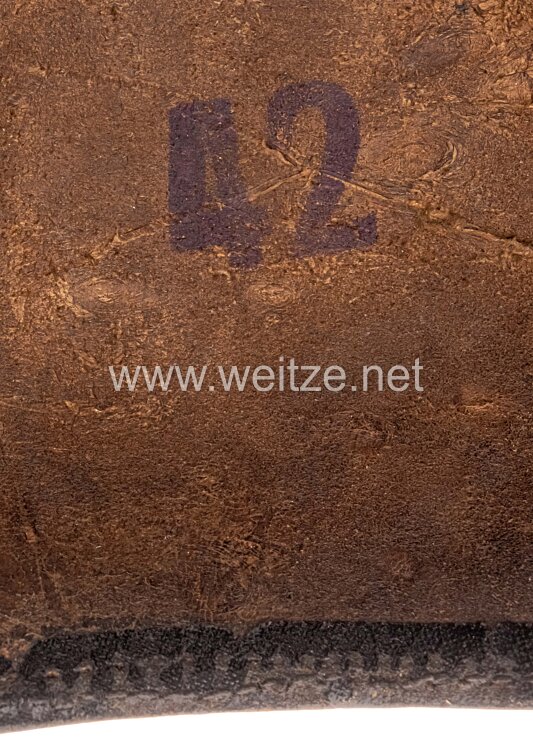
Gaiters primarily served to protect the lower legs and upper shoe area from dirt, moisture, and mechanical wear. The black lacquered finish on the exterior was typical for officer versions and was intended to maintain a well-kept, shiny appearance. The interior stamp with the size marking “42” corresponds to the usual manufacturing practices of that era. The functional buckles demonstrate the robust construction of these equipment items, which had to be reliable even under field conditions.
The Cuirassier Regiment von Driesen (Westphalian) No. 4
The historical context of these gaiters becomes particularly interesting through their connection to Münster, the home garrison of the Cuirassier Regiment von Driesen (Westphalian) No. 4. This distinguished regiment belonged to the heavy cavalry of the Prussian Army and bore its name in honor of the Prussian General August Wilhelm von Driesen (1702-1759).
The regiment was originally established in 1717 as a dragoon regiment and converted into a cuirassier regiment in 1819. Since 1889, Münster had been the regiment's garrison town. The cuirassiers were considered the elite of the cavalry and traditionally wore cuirasses (breastplates) during parades, although these had lost any practical significance by the First World War.
Officer Equipment in World War I
Officers in the Imperial Army were generally required to procure their own equipment, which resulted in high-quality but individually varied items. The leather gaiters described here from around 1917 reflect the material shortages and changed production conditions in the third year of the war. Despite increasing economic constraints, quality and appropriate appearance remained important for officer equipment.
The dress regulations of the Prussian Army detailed the form, color, and manner of wearing various uniform components. Gaiters were an integral part of both walking-out uniform and field uniform. For cavalry officers, they were particularly important as they provided additional protection while riding.
The War Year 1917
The dating to around 1917 is historically significant. By this year, the German Reich was in its third year of war. The initial war enthusiasm had long since given way to disillusionment. The battles of attrition on the Western Front, particularly the Battle of Flanders and the horror of Passchendaele, demanded enormous casualties. The role of cavalry had fundamentally changed: modern trench warfare with machine guns, barbed wire, and artillery had rendered traditional cavalry charges obsolete.
Cuirassier Regiment No. 4, like other cavalry units, was increasingly employed in dismounted roles. Many cavalrymen fought as infantry in the trenches or were used for security tasks in rear areas.
Münster as a Garrison Town
Münster in Westphalia had a long tradition as an important garrison town. The military presence significantly shaped the cityscape and social life. Officers' casinos, drill grounds, and barracks complexes were permanent features of the urban infrastructure. The fact that equipment items from the regiment still surface in Münster today testifies to the deep roots of this military unit in the region.
Collector Value and Historical Significance
Such gaiters are now sought-after collector items that provide insight into the material culture of the First World War. They document craftsmanship, military regulations, and the daily life of officers. The condition rating “2” indicates a well-preserved specimen, which is remarkable after more than a hundred years. The functional buckles underscore the quality of workmanship.
For military historical research, such objects are valuable sources that help reconstruct the life and equipment of First World War soldiers. They complement written sources and photographs, making history literally tangible.