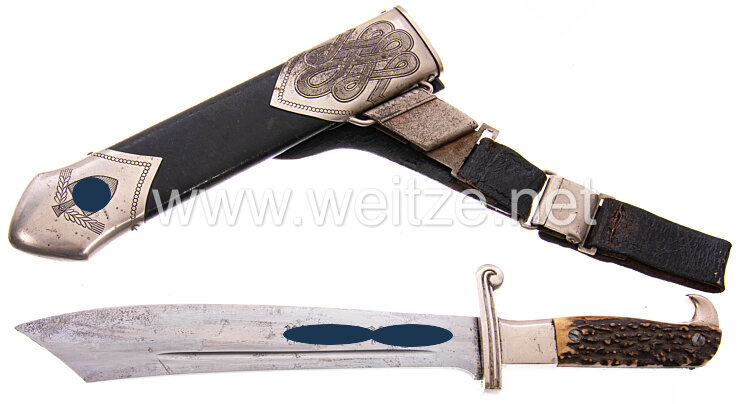
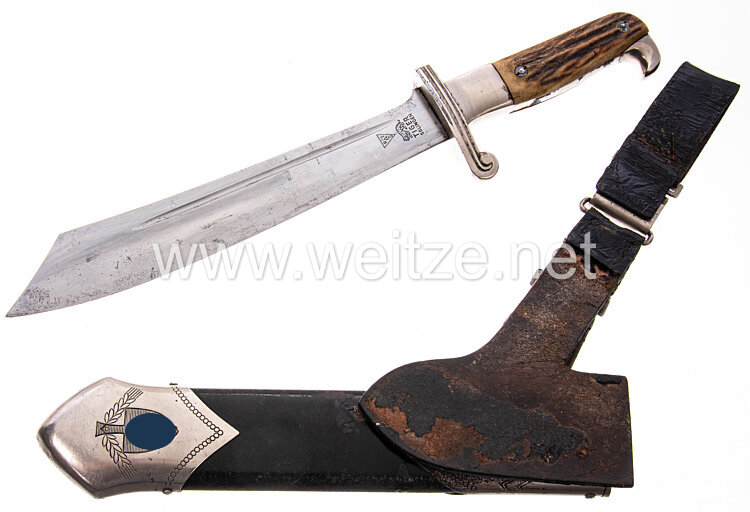
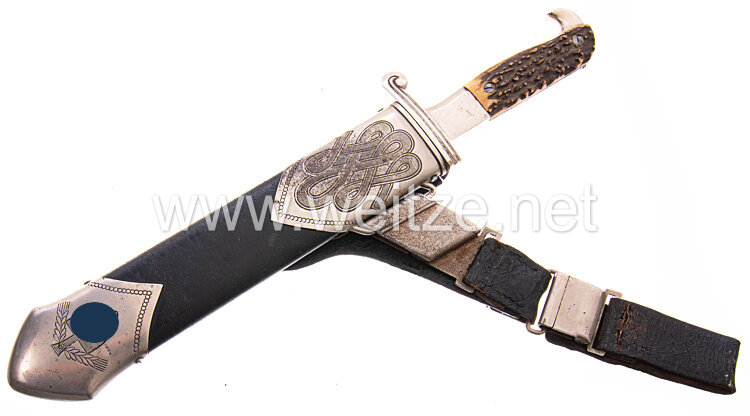
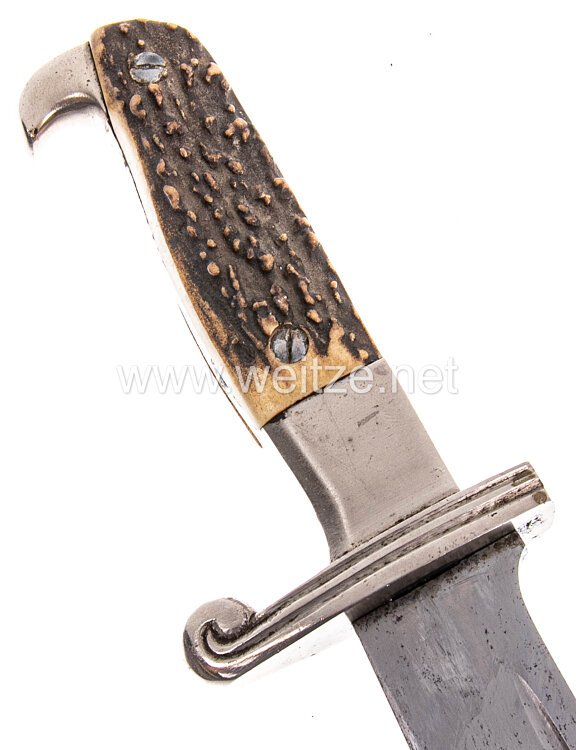
Reich Labor Service (RAD) Hewer for Enlisted Men and Junior Leaders
The Reichsarbeitsdienst Hauer: Symbol of an Ideologized Labor Organization
The Reichsarbeitsdienst (RAD) or Reich Labor Service was a paramilitary organization in Nazi Germany that played a central role in mobilizing the German population between 1935 and 1945. The RAD Hauer (spade) for enlisted men and junior leaders described here represents a characteristic piece of equipment from this organization, serving both practical and symbolic functions.
The roots of the Reich Labor Service reach back to the Weimar Republic, when voluntary labor services were established to combat unemployment. After the Nazi seizure of power in 1933, the labor service became increasingly centralized and ideologized. On June 26, 1935, the “Reich Labor Service Law” introduced compulsory labor service, initially for young men between 18 and 25 years of age. From 1939 onward, a mandatory year of service was also introduced for young women.
The Hauer, also called Arbeitsdienstspaten (labor service spade) or simply Spaten, was the most symbolic tool and emblem of the RAD. It served not only as a working implement for numerous construction, land reclamation, and infrastructure projects, but also as a parade object during marches and ceremonies. The use of the spade as a “weapon of labor” underscored the Nazi ideology that portrayed physical labor as equivalent to military service.
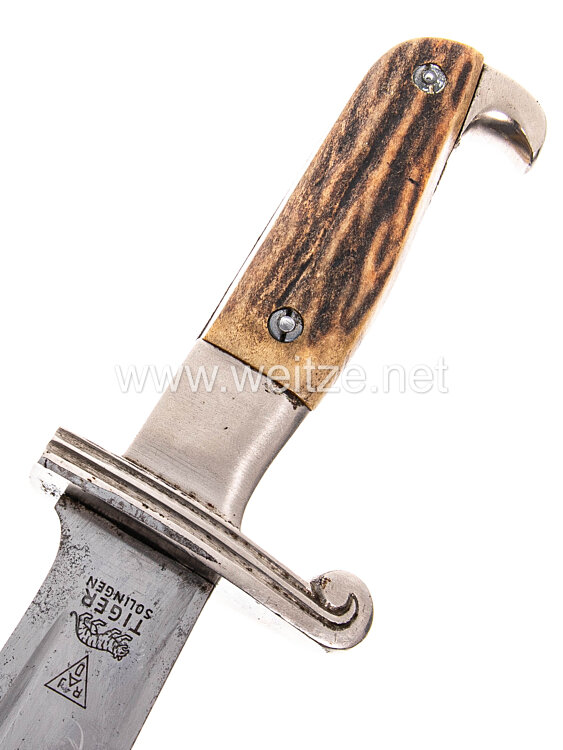
The present specimen displays typical construction features of an RAD Hauer. The blade bears the maker's mark “Tiger Solingen”, a rather rare manufacturer from the famous blade-making city of Solingen. Solingen had been renowned for centuries for producing high-quality cutlery, and during the Nazi era, numerous firms based there manufactured military equipment and edged weapons. Besides better-known manufacturers like Eickhorn, Alcoso, or Carl Wüsthof, there were also smaller companies that produced RAD equipment.
The iron hilt with its nickel plating and bolted staghorn grip scales conforms to the official specifications for RAD Hauers. The use of staghorn was traditional in German edged weapons and provided a robust, grippy surface. The nickel plating served as corrosion protection and gave the piece a uniform appearance.
Particularly noteworthy is the scabbard with over 90% of its original lacquer finish. RAD scabbards were typically made of metal and finished with black or brown lacquer. The nickel-plated fittings, consisting of an upper throat and lower chape, along with the characteristic suspension ring, enabled the Hauer to be worn on the belt. The slightly darkened condition of the upper fittings indicates authentic aging and use.
The Reich Labor Service was organized hierarchically. The enlisted men (Mannschaften) formed the base, while junior leaders (Unterführer), comparable to non-commissioned officers, were responsible for direct leadership of work groups. The Hauers for these ranks differed from those of higher leaders, which were often more elaborately designed and bore additional insignia.
The activities of the RAD encompassed a broad spectrum: land improvement projects, dike construction, road and autobahn building, land reclamation, and from 1939 increasingly militarily relevant construction projects such as building the Westwall and other fortifications. The six-month labor service was mandatory for all young Germans before military service or university studies and also served ideological indoctrination purposes.
During assemblies and parades, drill was performed with the Hauer, similar to rifle drill in the military. The famous “spade presentations” at Reich Party Rallies and other Nazi events underscored the pseudo-military orientation of the organization. The rhythmic handling of spades during choreographed mass rallies was a core propaganda element.
After 1945, the Reich Labor Service was dissolved as part of the Nazi regime. Its equipment items, including the Hauers, became historical artifacts. Today they are objects of study for military historians and collectors who document and research the material culture of the Third Reich.
The described specimen in good condition with its authentic features – the rare maker's mark, original grip scales, and largely preserved lacquer finish – offers a material insight into the everyday equipment of an organization that shaped millions of young Germans and was part of the comprehensive control and mobilization apparatus of the Nazi state.