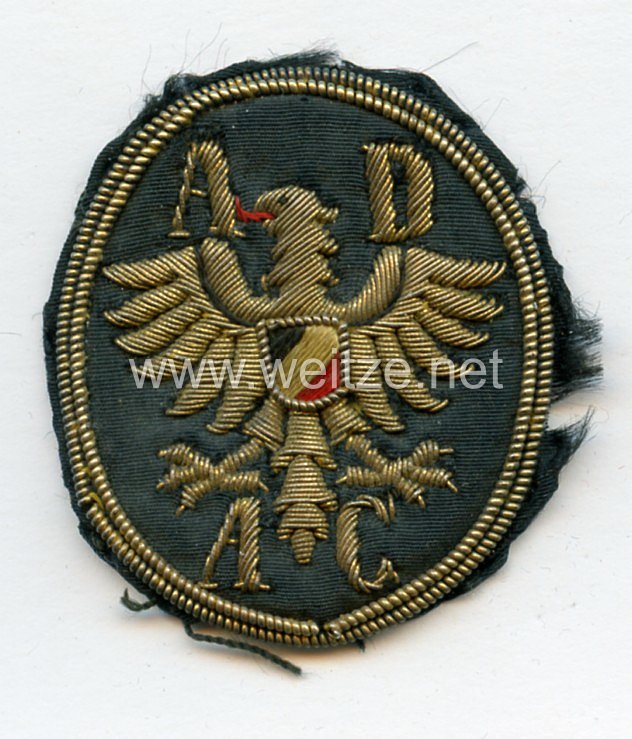
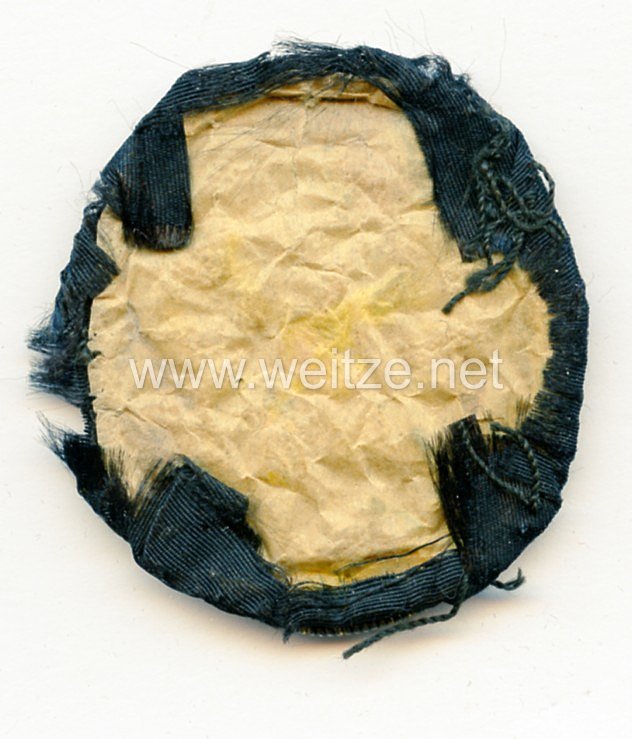
German Empire ADAC Allgemeiner Deutscher Automobil Club Cap Badge

circa 1910. Hand-embroidered with metal thread, condition 2
399307
80,00

German Empire ADAC Allgemeiner Deutscher Automobil Club Cap Badge

The ADAC cap badge from around 1910 represents a fascinating testament to early German automotive history and embodies an era when the automobile transitioned from an exotic luxury item to a significant means of transportation. The Allgemeiner Deutscher Automobil-Club (General German Automobile Club), founded on May 24, 1903, in Stuttgart, rapidly developed into one of the most important advocacy organizations for German motorists in the German Empire.

The founding of the ADAC coincided with a period of revolutionary technical developments. At the beginning of the 20th century, Germany was in the midst of rapid industrialization, and the automobile symbolized progress, mobility, and social status. The club's objectives included representing the interests of motorists, promoting the development of the road network, and establishing legal and technical standards.

The hand-embroidered badge with metal thread described here represents the highest craftsmanship quality of that era. The manufacturing technique of metal thread embroidery was elaborate and expensive, indicating the exclusivity of the early automobile movement. Such badges were typically worn on uniform caps or special club caps and served as identification marks of club membership.

Around 1910, membership in the ADAC was a clear sign of wealth and modernity. Motor vehicles remained a privilege of the wealthy classes until World War I – industrialists, large landowners, senior civil servants, and officers formed the majority of automobile owners. The ADAC's membership grew from approximately 1,500 founding members in 1903 to over 10,000 members before World War I.

The Wilhelmine Era (1888-1918) was characterized by a pronounced tendency toward uniformity and external insignia of rank. This social convention was also reflected in civilian association culture. Automobile clubs, sports clubs, and other organizations adopted military elements in their external presentation, including uniform-style clothing with corresponding badges. The ADAC cap badge fits seamlessly into this tradition.

The technical execution as metal thread embroidery required specialized craftsmen, known as gold or silver embroiderers, who often passed their art down through generations. These artisans used silvered or gilded metal threads, sometimes copper threads, which were embroidered onto a backing material. The durability and luster of these badges were meant to symbolize permanence and quality – characteristics also associated with the automobile itself.

The period around 1910 marks a particularly interesting phase in the history of the ADAC and the German automobile movement. Technical advances in automobile construction made vehicles more reliable and user-friendly. Simultaneously, a complex infrastructure developed: roads were expanded, traffic regulations established, and the first gas stations emerged. The ADAC played an active role in these developments by advocating for better road conditions and providing practical assistance to its members.

The club uniform and its badges were not merely decorative elements but also possessed practical functions. During breakdown assistance, club events, or automobile races, they enabled quick identification of club members and officials. The quality and execution of the badge also conveyed information about status within the organization.

World War I (1914-1918) marked a turning point for civilian automobile culture. Many private vehicles were requisitioned for military purposes, and the production of civilian vehicles largely ceased. Cap badges like the one described here from the pre-war period thus acquired special historical value as testimonies to a bygone era of bourgeois prosperity and technological optimism.

After the war, the ADAC continued to develop and adapted to the changed social conditions of the Weimar Republic. The democratization of the automobile began, although it was not fully realized until after World War II. However, the early badges from the Imperial era remained important collectibles and historical documents.

Today, such hand-embroidered cap badges made with metal thread are sought-after collector's items that not only document the history of the ADAC but also provide insight into the craftsmanship, social conventions, and automobile culture of the early 20th century. They uniquely combine the history of technology, social history, and craft history, and are important testimonies to an era of social and technological transformation in the German Empire.

r