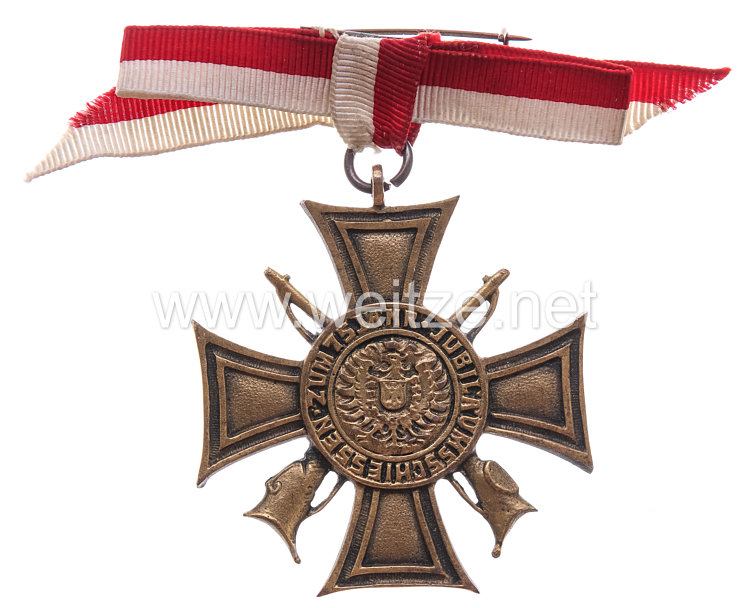
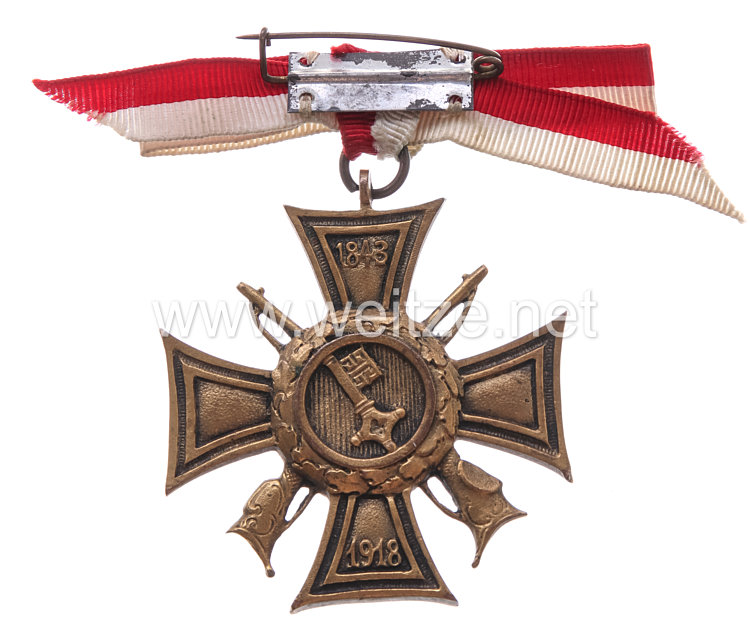
Bremer Schützenverein von 1843 - Commemorative Badge 1918 for the 75th Anniversary Shooting Competition
The commemorative badge of the Bremen Shooting Club of 1843 for the 75th anniversary shooting competition of 1918 represents a significant tradition of German associational life, with roots deep in the 19th century. This decoration was awarded to mark an important milestone in the history of one of the most traditional shooting clubs in northwestern Germany.
The Bremen Shooting Club was founded in 1843, during a time when shooting associations throughout German territories experienced a cultural and social golden age. The founding occurred during the Vormärz era, a phase of political upheaval and growing bourgeois self-confidence. Shooting clubs served not only to cultivate marksmanship and tradition but also functioned as important social networks for the rising middle class.
The year 1918, when the 75th anniversary was celebrated, marked a dramatic turning point in German history. The end of World War I, the November Revolution, and the collapse of the German Empire characterized this year. That the club celebrated its anniversary despite these turbulent times testifies to the constancy and significance of such civic institutions in social life.
The white-red ribbon of the commemorative badge carries special symbolic meaning. This color combination was traditionally associated with the Hanseatic city of Bremen and reflected local identity. White and red were also the colors of the Hanseatic League and appeared in numerous emblems of North German cities. The use of these colors underscored the club's deep roots in Bremen's urban society.
Commemorative badges of this type were awarded according to strict rules of associational life. They served as visible decorations for participants in special shooting events and as badges of honor for distinguished members. The wearing pin allowed the badge to be attached to clothing, typically on a jacket or vest, thereby publicly displaying membership in the club and participation in the anniversary shooting competition.
German shooting associations developed an elaborate system of decorations, orders, and commemorative badges during the 19th century. These often followed heraldic principles and were inspired in their design by military decorations, without possessing official military character. Rather, they represented the paramilitary tradition of bourgeois shooting guilds, which had their origins in medieval defense organizations.
Anniversary shooting competitions were significant events in club life. They brought together not only the club's own members but frequently attracted friendly associations from the region and beyond. Such events comprised multi-day festival programs with parades, concerts, banquets, and naturally various shooting competitions. The awarding of commemorative badges formed a ceremonial highlight of these gatherings.
The manufacture of such badges was usually carried out by specialized metalware factories and jewelers. In Bremen and its surroundings, there were several workshops that specialized in producing association badges. The quality of craftsmanship varied depending on the club's financial means and the occasion of the award.
After World War I, the social role of shooting clubs changed considerably. The Weimar Republic brought new political frameworks, and many traditional institutions had to adapt. Nevertheless, shooting clubs remained important bearers of local culture and tradition. The commemorative badge of 1918 thus stands at the threshold between two epochs: the Wilhelmine era with its pronounced associational life and the uncertain post-war period of the young republic.
Today, such commemorative badges are important sources for researching everyday and cultural history. They document not only the history of individual clubs but also provide insight into material culture, artistic movements, and social practices of their time. For collectors and historians, they represent valuable testimonies of a bygone era in which associations played a central role in social life.