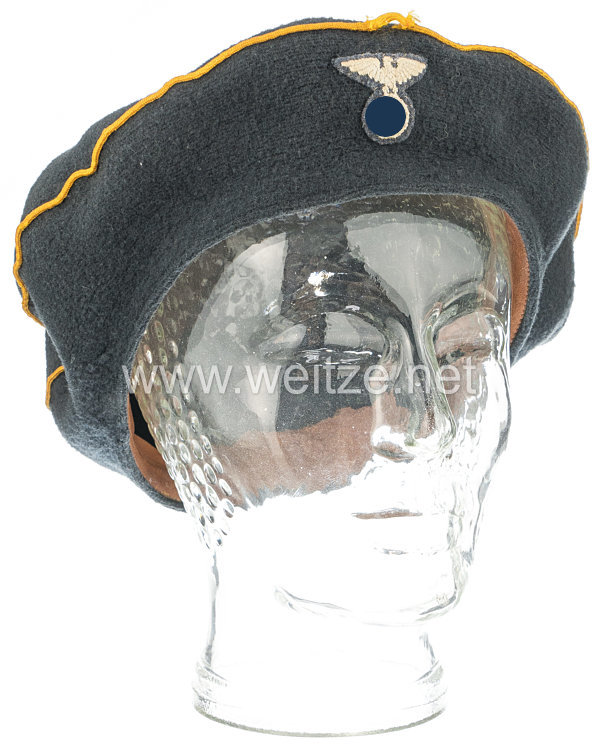
National Socialist Flyers Corps (NSFK) Enlisted Men's Service Cap

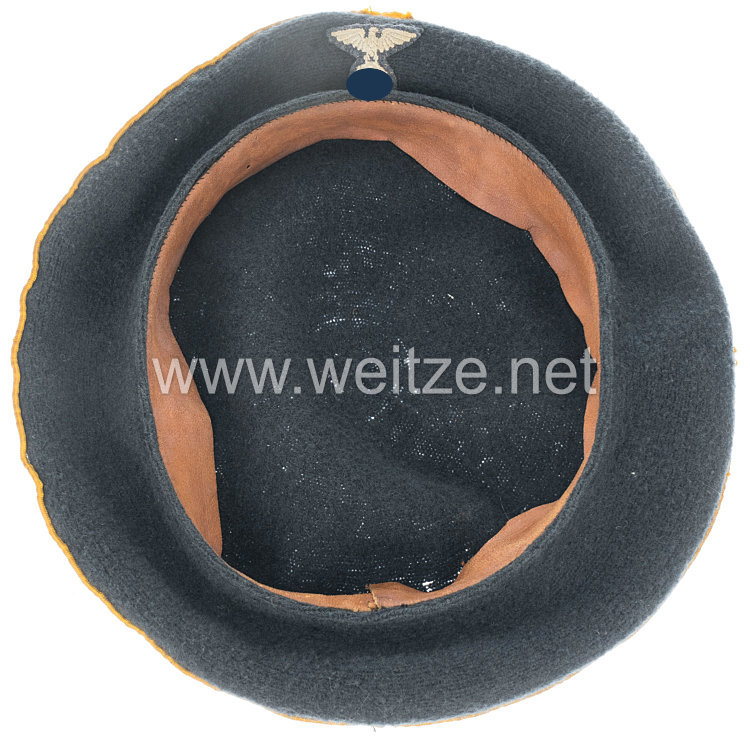
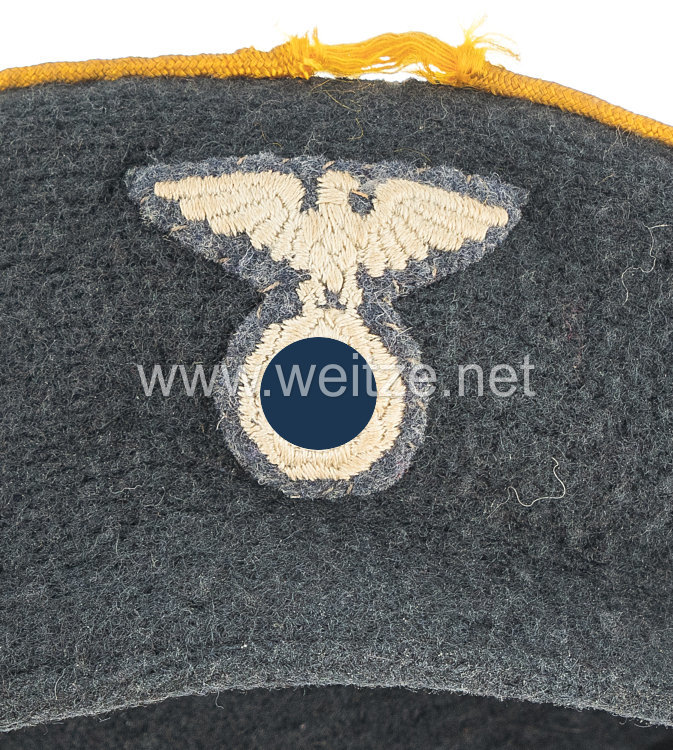
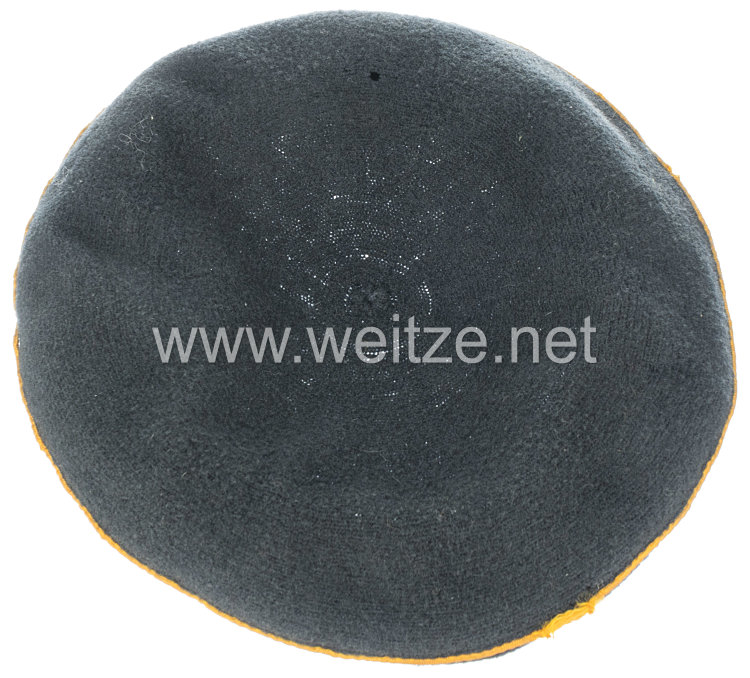
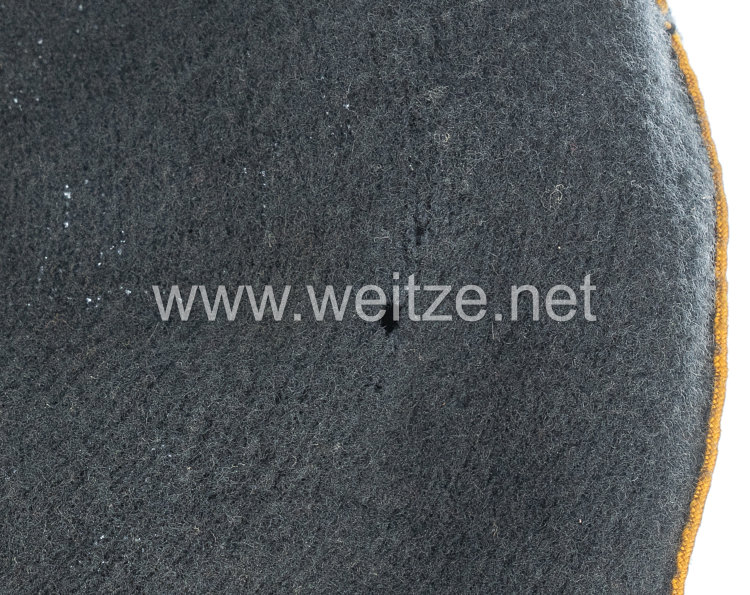
circa 1934. Beret-style cap in Luftwaffe gray cloth, yellow piping. Complete with first model national eagle. Interior brown sweatband, size 56. The piping is damaged and the cap has some moth holes, condition 2.
445404
900,00

National Socialist Flyers Corps (NSFK) Enlisted Men's Service Cap

The Nationalsozialistisches Fliegerkorps (NSFK) service cap for enlisted men represents a significant chapter in German aviation history during the National Socialist era. The NSFK was officially founded on April 17, 1937, but emerged from the Deutscher Luftsportverband (DLV), established in 1933, which took over preliminary flight training and youth promotion after the Nazi seizure of power.

This particular beret-style cap in Luftwaffe-gray cloth with yellow piping dates from the early period of the organization, around 1934. The yellow piping was the characteristic insignia of the flying corps and later the NSFK, continuing the traditional branch color of aviation. This coloring clearly distinguished members of aviation units from other formations.

The first model of the national eagle (Hoheitsadler) that this cap bears is of particular historical significance. After the 1933 seizure of power, new insignia and symbols were gradually introduced. The first-generation national eagle was characterized by its specific design and was replaced by modified versions in subsequent years. These early specimens are therefore particularly significant for understanding the development of National Socialist uniform regulations.

Size 56 and the brown sweatband leather inside correspond to the manufacturing standards of that time. German headgear was manufactured according to the metric system, with the size corresponding to the head circumference in centimeters. The sweatband served to provide comfort and absorb moisture.

The NSFK had several important functions in the National Socialist state. Primarily, it served the pre-military training of young men in aviation. At a time when Germany had been subjected to strict armament restrictions by the Treaty of Versailles, the NSFK and its predecessor organizations offered an opportunity to train military pilots under the guise of sport flying. After the official announcement of the Luftwaffe in 1935, this function became even more important.

Korpsführer of the NSFK was Friedrich Christiansen, a former naval aviator and holder of the Pour le Mérite from World War I. Under his leadership, the NSFK developed into a mass organization with at times over 500,000 members. Training included gliding, powered flight, parachuting, and technical professions in aircraft construction.

The enlisted men's service cap was part of the service uniform for simple members without leadership ranks. Unlike the more elaborate peaked caps of leaders, the beret-style cap was more practical and less expensive to manufacture. It was worn both during training events and at official occasions.

The damaged piping and moth holes on this specimen testify to decades of storage and are typical for textiles from this era. While such signs of wear diminish the conservation condition, they paradoxically often increase historical authenticity, as they document the actual use of the object.

After the end of World War II, the NSFK, like all National Socialist organizations, was dissolved and banned by Control Council Law No. 2 of October 1945. Uniforms and equipment were confiscated or destroyed by their owners, which is why authentic pieces from the organization's early period are rare today.

From a military-historical perspective, this service cap documents the transition period from covert to open German rearmament. It stands symbolically for the circumvention of the Versailles Treaty provisions and the systematic preparation for war under the pretext of sporting and civilian activities.

The condition rating of 2, despite the damage, indicates that the cap retains most of its original components and remains recognizable as an authentic period piece. For collectors and historians, such items provide tangible evidence of the systematic militarization of German society in the 1930s.