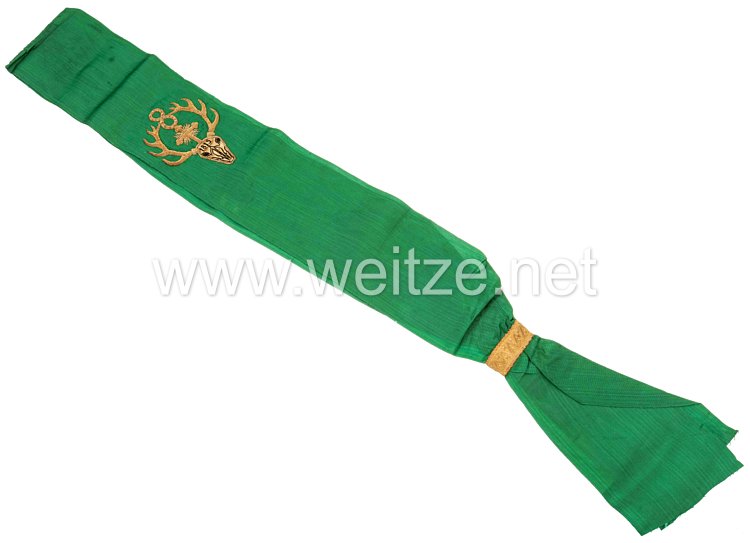
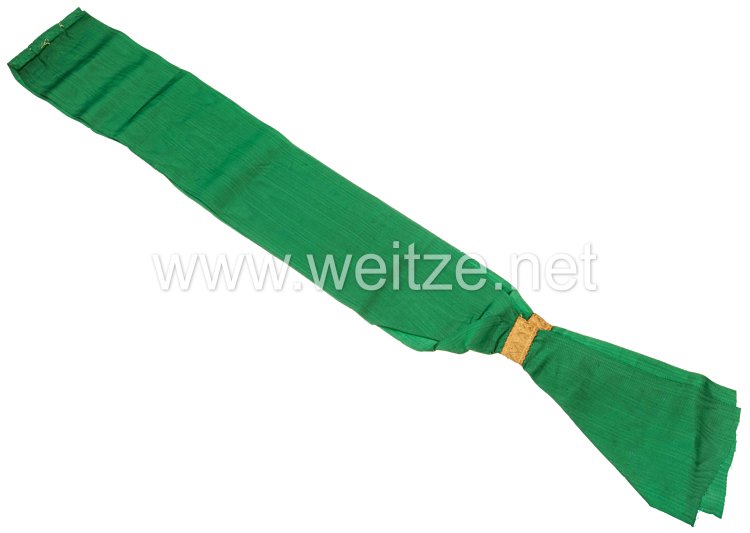
Prussian Sash for the Color Bearer of the Veterans' Association Flag of the “Association of Former 8th (Rhenish) Jäger,” “Hamburg Local Chapter”

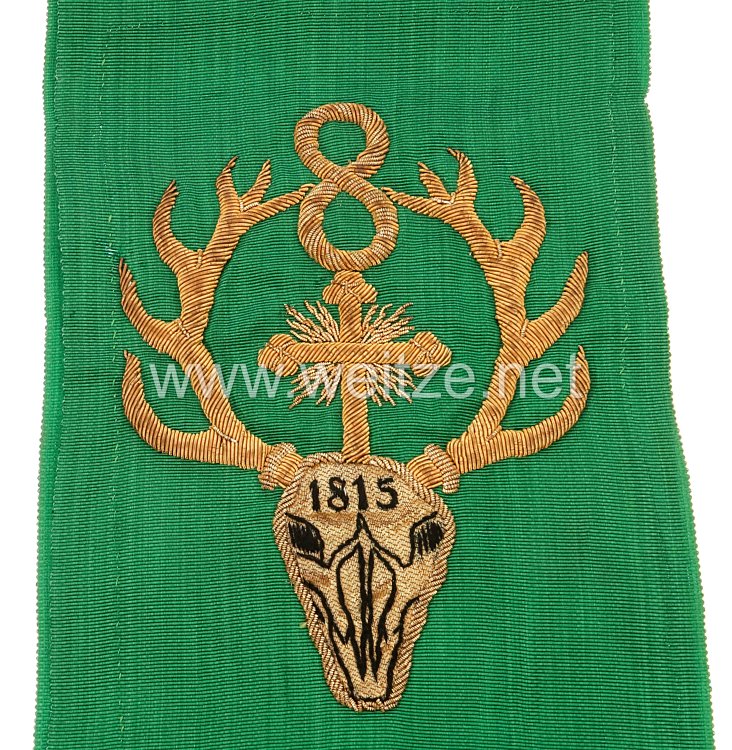
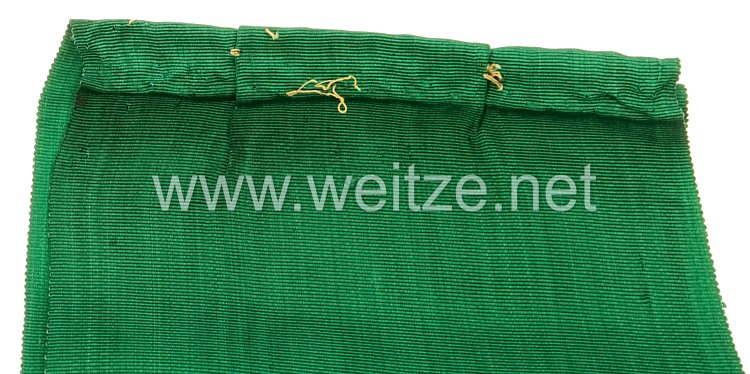
Circa 1920. Green shoulder sash, embroidered with the Hubertus stag with regimental number “8” above the cross and the year of battalion foundation “1815”, Condition 2.

The Rheinisches Jäger-Bataillon Nr. 8 was stationed in Schlettstadt in Alsace since 1890. It was founded on October 3, 1815 as part of the newly established Prussian Jäger troops.


344901
280,00

Prussian Sash for the Color Bearer of the Veterans' Association Flag of the “Association of Former 8th (Rhenish) Jäger,” “Hamburg Local Chapter”

This sash for the flag bearer of the Association of Former Members of the 8th (Rhenish) Jäger Battalion, Hamburg local chapter, represents a fascinating chapter of German military and associational history during the Weimar Republic. Manufactured around 1920, this green shoulder band embodies the continuing comradeship and tradition maintenance of former soldiers after the end of World War I.

The Rhenish Jäger Battalion No. 8 was established on October 3, 1815, as part of the newly founded Prussian Jäger troops. This foundation occurred during the army reforms following the Wars of Liberation against Napoleon, when Prussia fundamentally reorganized its armed forces. The Jäger battalions formed an elite infantry, selected from the best marksmen and most physically capable soldiers. They were intended for skirmishing, reconnaissance, and service as light infantry.

Since 1890, the regiment had been stationed in Schlettstadt (French: Sélestat) in Alsace, a region that belonged to the German Empire after the Franco-Prussian War of 1870/71. The stationing in this strategically important border region underscores the military significance of the battalion within the Imperial Army.

The sash itself displays characteristic elements of Jäger symbolism. The embroidered Hubertus stag is the traditional symbol of the Jäger troops and refers to Saint Hubertus, the patron saint of hunters. The regimental number "8" above the cross between the stag's antlers and the year "1815" document the proud history and tradition of the unit. The green color of the shoulder band corresponds to the traditional branch color of the Jäger in the Prussian and German army.

After the end of World War I in 1918 and the associated dissolution of the Imperial Army, veterans' associations (Kriegervereine) emerged throughout the German Reich. These associations served multiple purposes: they maintained the comradeship of former soldiers, preserved regimental traditions, supported war invalids and survivors, and organized memorial events. Local chapters were often organized according to former regiments, even when members now lived in other parts of Germany.

The Hamburg local chapter of the association of former 8th Jäger shows that former members of the regiment stationed in Alsace settled in the Hanseatic city after the war. This was not unusual, as Hamburg, as a significant economic metropolis, attracted many people and welcomed veterans from various regions.

The flag of a veterans' association held central symbolic significance. It represented the honor and tradition of the former regiment and served as the focal point at events, parades, and memorial ceremonies. The flag bearer thus exercised an honorary office of special dignity. The sash identified him as the one honored with carrying the association's flag. This office was usually given to deserving members.

The period around 1920, when this sash was created, was a phase of construction and reorganization for veterans' associations. The young Weimar Republic had an ambivalent relationship with these organizations. On one hand, they were important social networks; on the other, they maintained monarchist traditions and were often critical of the Republic.

The craftsmanship quality of such sashes varied considerably, depending on the association's financial resources and the importance of the occasion. The embroidery of the Hubertus stag with specific regimental details required considerable craftsmanship and was often executed by specialized military effects manufacturers or local embroidery workshops.

Today, such sashes are important testimonies to German military and social history. They document not only the history of individual regiments but also the culture of remembrance and tradition maintenance during the interwar period. For collectors and historians, they offer insights into the mentality history of former soldiers and the significance of military traditions in post-war civilian society.

r