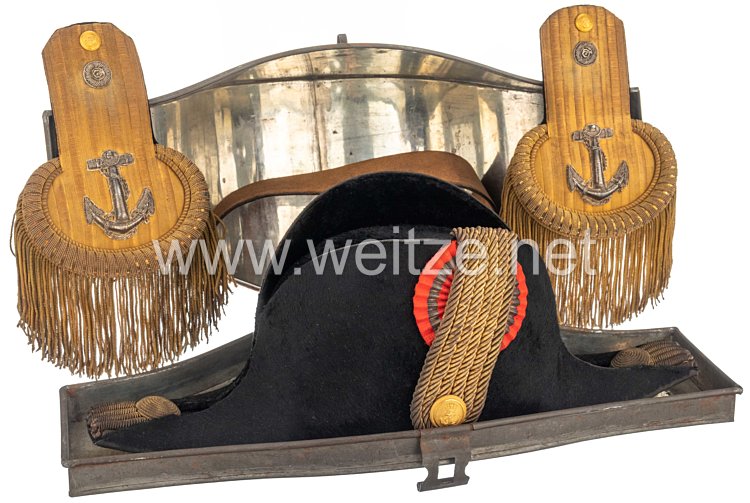
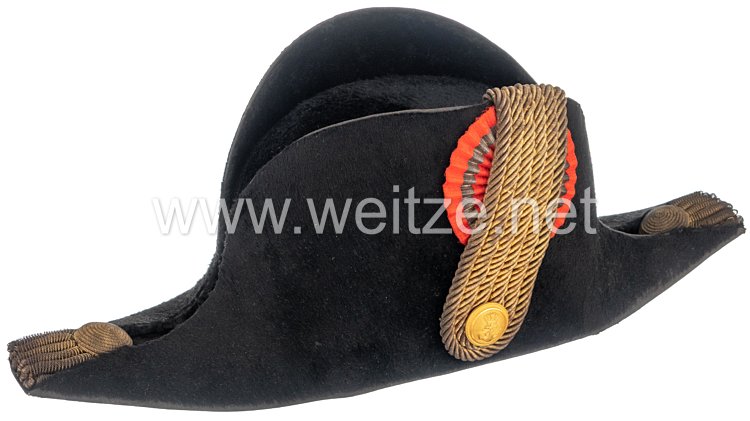
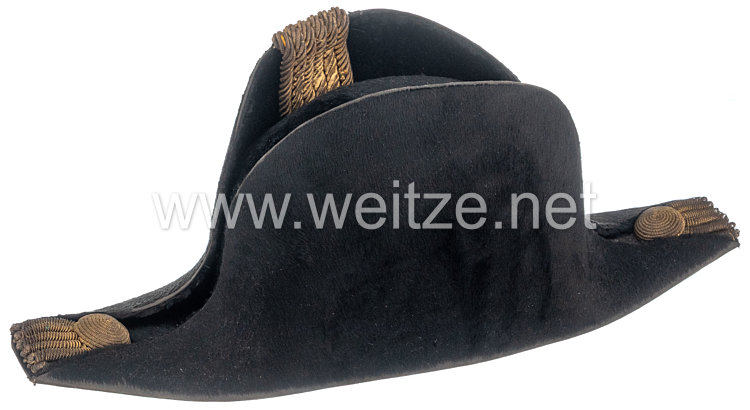
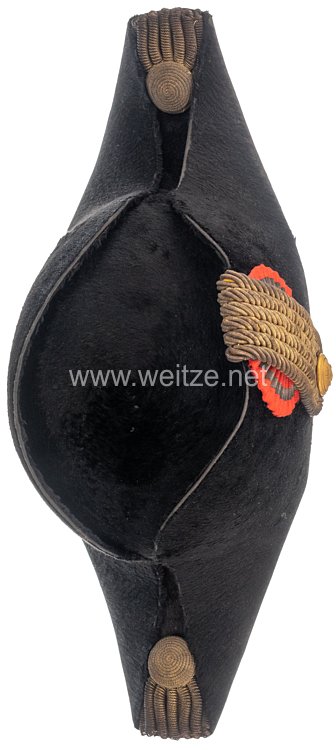
Kingdom of Denmark Bicorne and Epaulettes for an Officer of the Kongelige Danske Marine in Original Metal Case

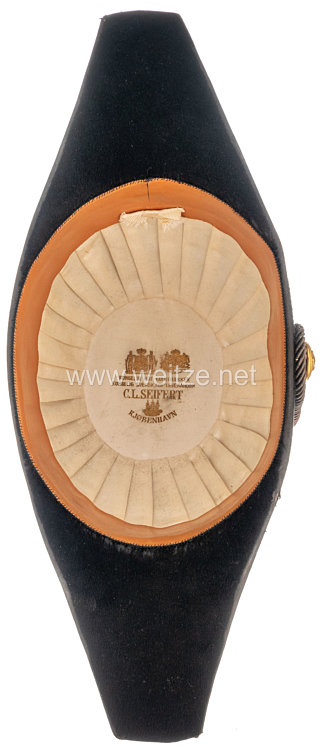
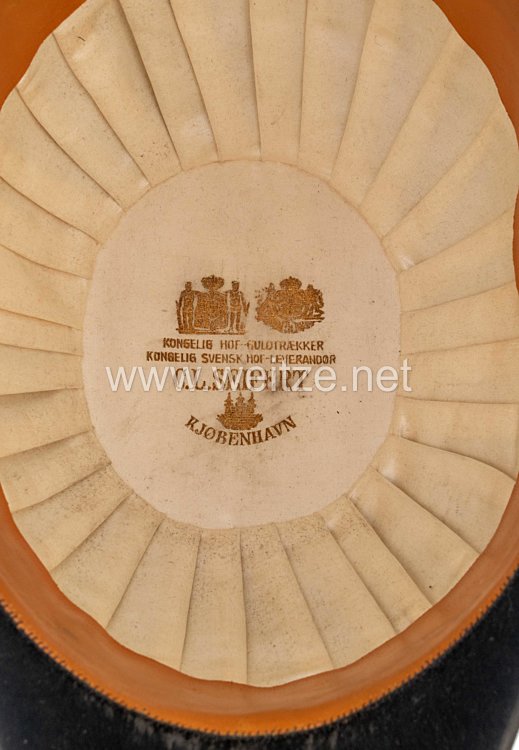
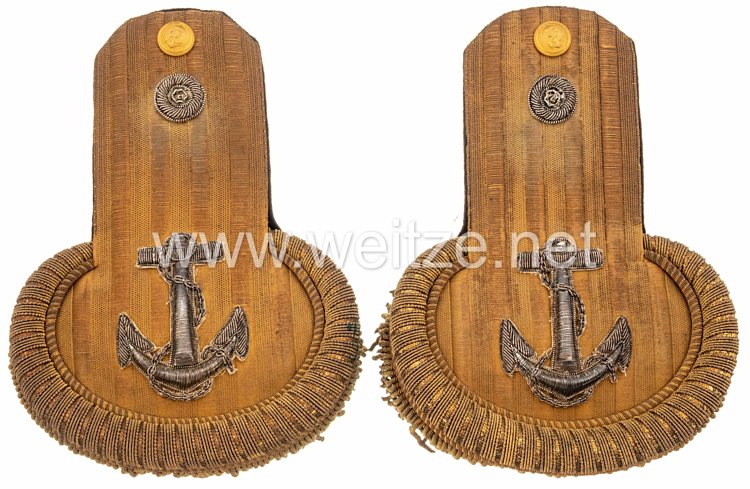
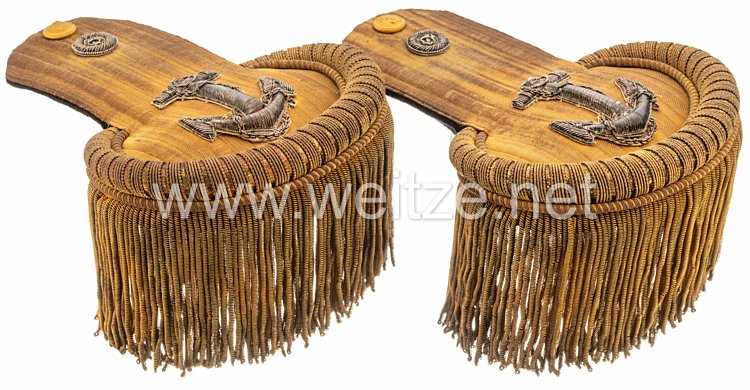
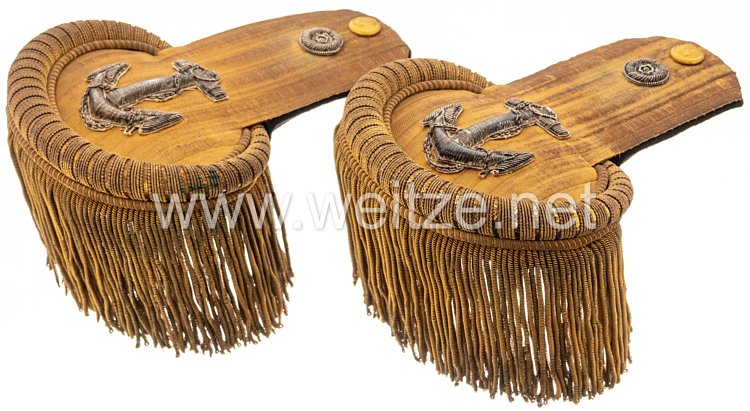
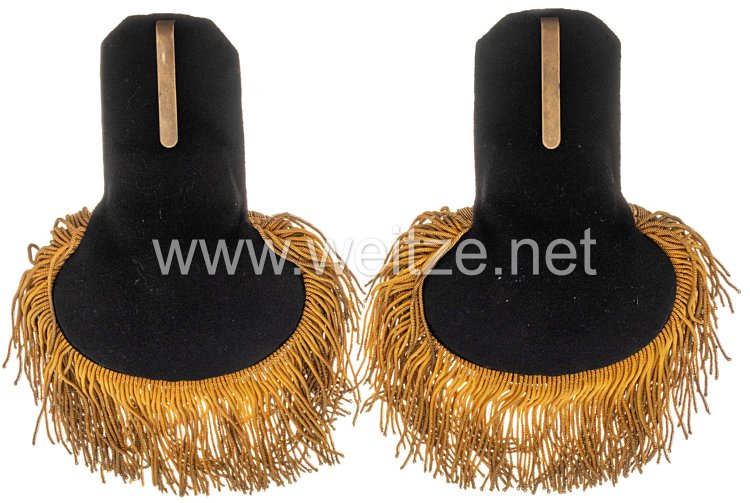
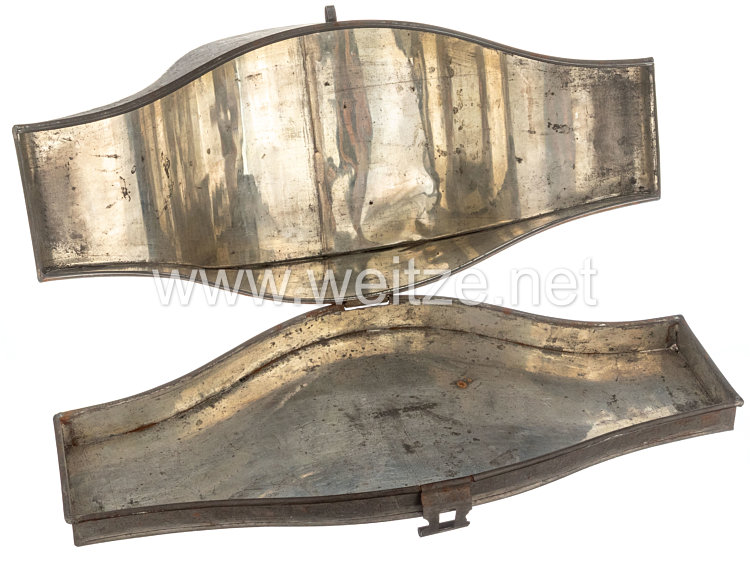
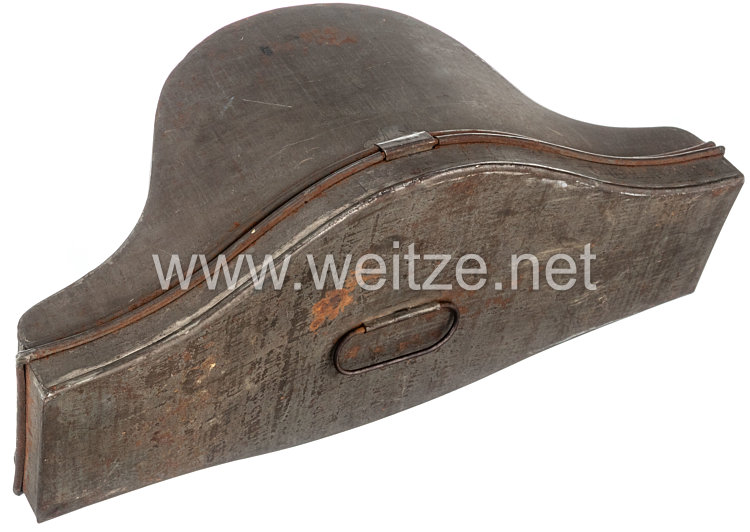
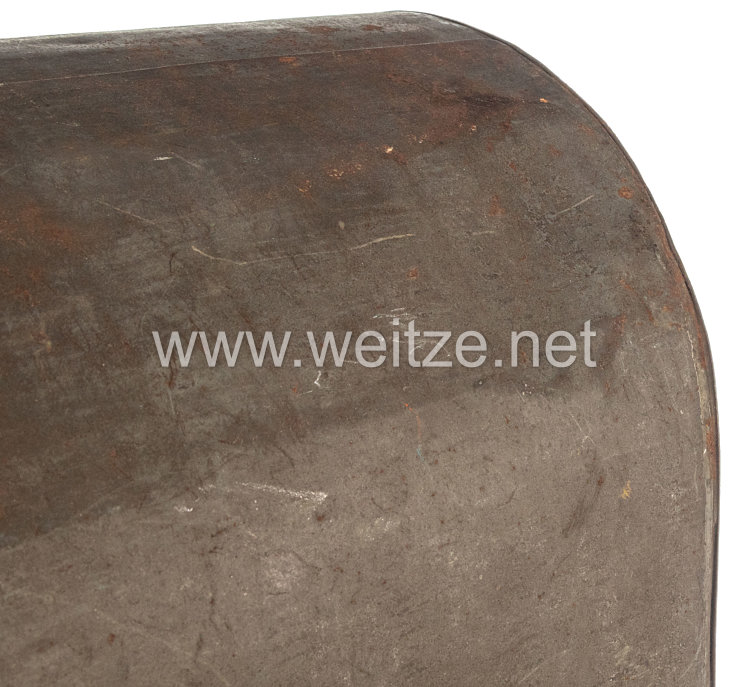
Circa 1910. The bicorne of black needle felt with gold cords, on the right the gold agraffe with red and white silk cockade. Interior with brown leather sweatband and white silk lining with maker “C.L. Seifert Kjöbenhavn ...”. Size 57. Included are the large gold epaulettes in the original olive-lacquered metal case. Condition 2.
406601
750,00

Kingdom of Denmark Bicorne and Epaulettes for an Officer of the Kongelige Danske Marine in Original Metal Case

The Kongelige Danske Marine (Royal Danish Navy) possesses one of Europe's oldest naval traditions, dating back to the Middle Ages. Around 1910, when this uniform ensemble was created, Denmark was experiencing a phase of military modernization while simultaneously maintaining traditional uniform elements for officers.

The bicorne hat, also known as a cocked hat, had been a characteristic feature of military officers' uniforms throughout Europe since the late 18th century. In the Danish Navy, this headgear was worn particularly at ceremonial occasions and with full dress uniforms. The construction from black needle felt met the standards of the period, with the golden cords indicating officer rank. The agraffe with the red-and-white silk cockade in Danish national colors was an indispensable element of national identification.

The manufacturer C.L. Seifert of Copenhagen was one of the renowned uniform tailors and outfitters to the Danish armed forces in the pre-World War I era. Such specialized artisan firms produced uniforms and equipment according to strict military regulations and primarily supplied officers, who were required to procure their own uniforms.

Epaulettes had been an essential rank insignia in European armies and navies since the early 19th century. In the Danish Navy, golden epaulettes served to identify higher officer ranks. Their elaborate construction with gold threads and their imposing size emphasized the wearer's social status and military authority. With full dress uniforms, they were worn on both shoulders, while service uniforms often featured only one epaulette or shoulder pieces of different design.

The original tin case with olive-green lacquer finish is an important contemporary detail. Such specially manufactured containers served to protect the delicate and valuable uniform items. Officers, who were frequently transferred between different bases or served aboard ships, required robust yet compact storage solutions for their full dress uniform components.

The period around 1910 was a time of transition for the Danish Navy. After the loss of Schleswig-Holstein in 1864, Denmark had reoriented its military strategy. The Navy focused on defending Danish waters and securing trade routes in the Baltic Sea and Kattegat. Despite limited resources, the kingdom invested in modern warships while maintaining traditional uniform regulations for the officer corps.

The uniform regulations of the Kongelige Danske Marine were detailed and distinguished between various ranks and occasions. Full dress uniforms with bicorne and epaulettes were worn at official receptions, parades, royal audiences, and other ceremonial events. These uniforms symbolized not only military hierarchy but also the connection between the Navy and the Danish royal house.

The Danish Navy's officer corps traditionally recruited from the educated middle and upper classes. An officer's career required not only thorough training at the Søværnets Officersskole (Naval Officers' School) but also considerable financial means, as officers had to largely procure their uniforms and equipment themselves. A complete uniform ensemble with bicorne, several pairs of epaulettes, and accompanying sabers and accessories represented a substantial investment.

The craftsmanship quality of such uniform pieces was extraordinarily high. The gold cords and epaulettes were manufactured by specialized passementerie workshops, using genuine gold thread or high-quality gilt metal spun wire. The bicorne had to not only look impressive but also meet practical requirements: it had to be wearable in various weather conditions and maintain its shape over years of use.

During World War I, in which Denmark remained neutral, the Navy retained its traditional uniforms while simultaneously introducing more practical service uniforms for daily wear. However, the full dress uniform with bicorne and epaulettes remained in use for certain occasions well into the 20th century before eventually being replaced by more modern uniform designs.

Today, such completely preserved uniform ensembles with original cases are important testimonies to military history and the social culture of the early 20th century. They document not only military traditions but also craftsmanship, the social history of the officer corps, and the national symbolism of a significant European maritime power.

r