Aviation World War I - “Der Faulpelz” Humorous Postcard
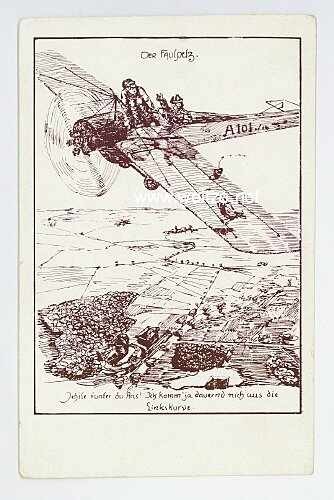
This humorous postcard titled “Der Faulpelz” (The Lazybones) represents a fascinating aspect of everyday culture during World War I (1914-1918), specifically in the context of military aviation, which was still a novel concept at the time. Such postcards were significant media for communication, propaganda, and humorous commentary on the war and the new dimension of aerial warfare.
Aviation in World War I marked a revolutionary turning point in military history. What began in 1914 with simple reconnaissance aircraft developed within a few years into an independent branch of the armed forces with fighter planes, bombers, and specialized air forces. Germany established the Fliegertruppe (Aviation Unit of the German Army) as early as 1910, which expanded and modernized considerably during the war.
Postcards with aviation motifs experienced extraordinary popularity during World War I. They served multiple purposes: on one hand, they were a practical means of communication between the front and home; on the other, they functioned as propaganda instruments and morale boosters. Humorous cards like this one formed a special genre that helped process the horrors of war and create a certain psychological distance from the events.
The title “Der Faulpelz” suggests a satirical or self-ironic representation typical of the soldiers' humor of the era. At a time when aviators were regarded as modern heroes and the military elite - think of famous flying aces like Manfred von Richthofen (the Red Baron) or Oswald Boelcke - humor offered a way to break through the heroic narrative and show the human side of soldiers. Such humorous depictions were particularly popular among the soldiers themselves, as they strengthened camaraderie and allowed criticism in an acceptable form.
The production of field postcards was a significant industry during World War I. Millions of cards were printed, with motifs ranging from patriotic scenes to romantic depictions and humorous subjects. The Feldpost (field post) itself was of immense importance for maintaining morale. Up to 28.7 billion items were transported through the German field post during the war.
The condition grade of 2 corresponds in philatelic and collecting terminology to very good to good preservation. The fact that the card is unused means it was never sent through the postal system, which is often of particular interest to collectors as such specimens are usually better preserved.
Humorous aviation postcards often reflected the ambivalent attitude toward the new technology. Aviation was fascinating on one hand, symbolizing modernity and progress, but on the other hand, it was dangerous and alien. Statistics show that the loss rate among aviators was extremely high - many pilots survived only a few weeks in front-line service. Humor helped deal with this existential threat.
The artistic design of such cards varied considerably. Some were designed by professional artists, others were simpler printed products. They showed aviators in various situations: at work, during leisure time, in comical moments, or in exaggerated heroic poses. The motif of the “Lazybones” could allow for various interpretations - from depicting a comfortable moment between missions to satirical criticism of supposedly less dangerous duties.
These postcards are today important historical documents that provide insight into the mentality, daily life, and culture of the time. They show how the population and soldiers dealt with the war, which images and narratives were popular, and how humor was used as a coping strategy. For research into the everyday history of World War I, they are indispensable sources that supplement and often counteract official historiography.
Collectors and museums today preserve thousands of such cards, which together paint a multifaceted picture of the era. They document not only military aspects but also social, cultural, and psychological dimensions of the first total war of the modern age.