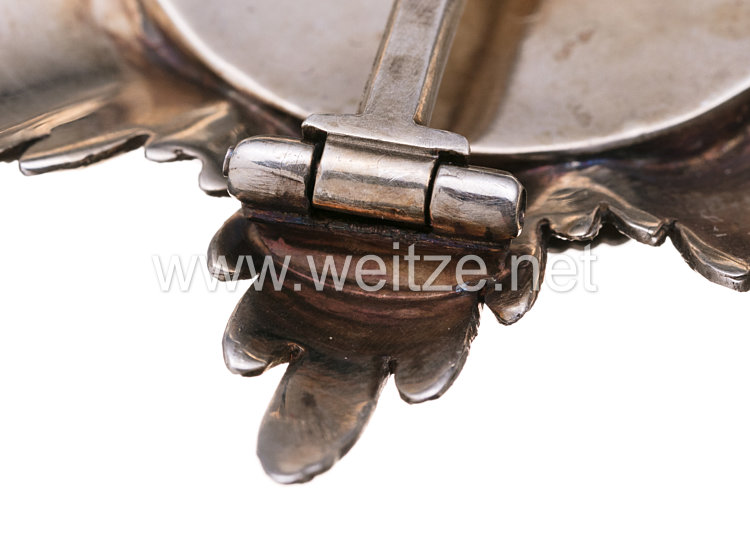
Imperial Austrian Order of the Iron Crown Breast Star 1st Class

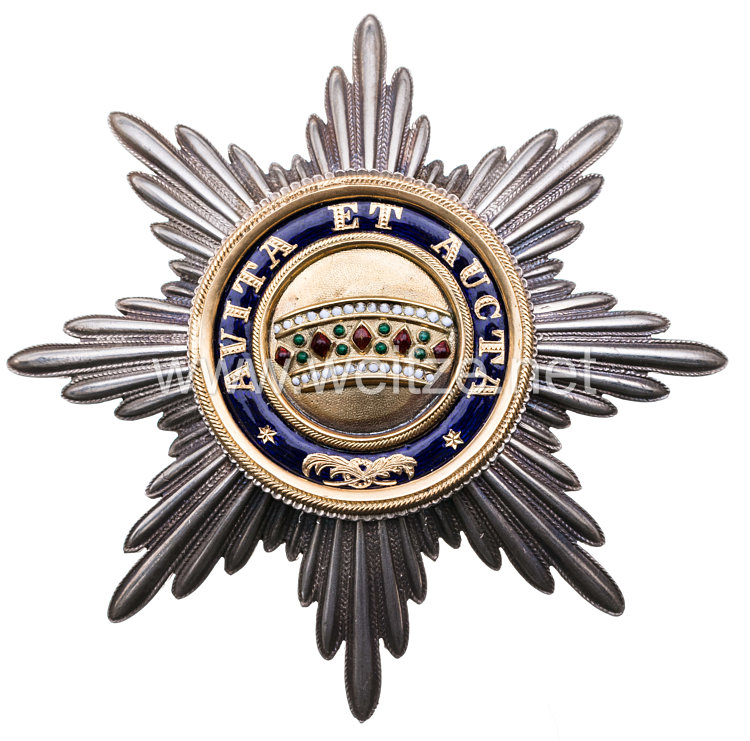
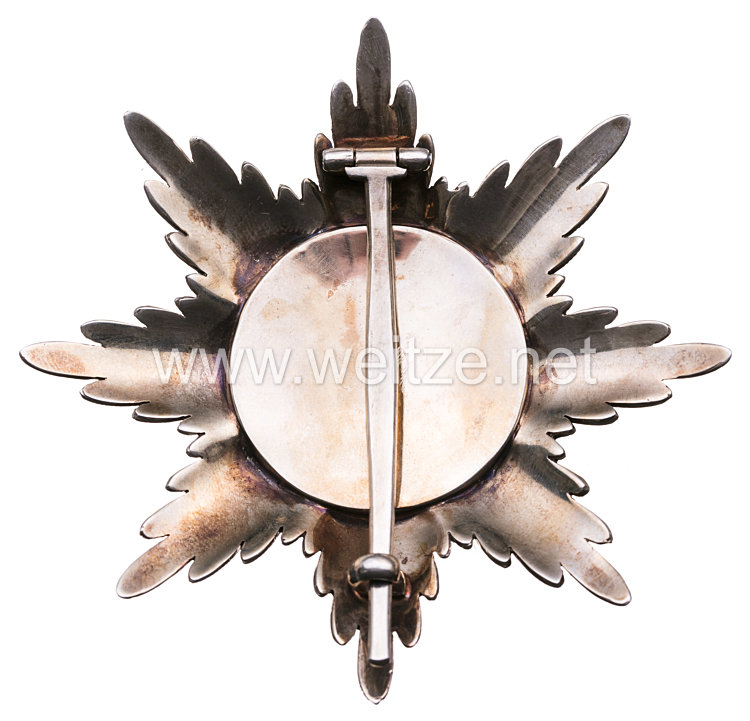
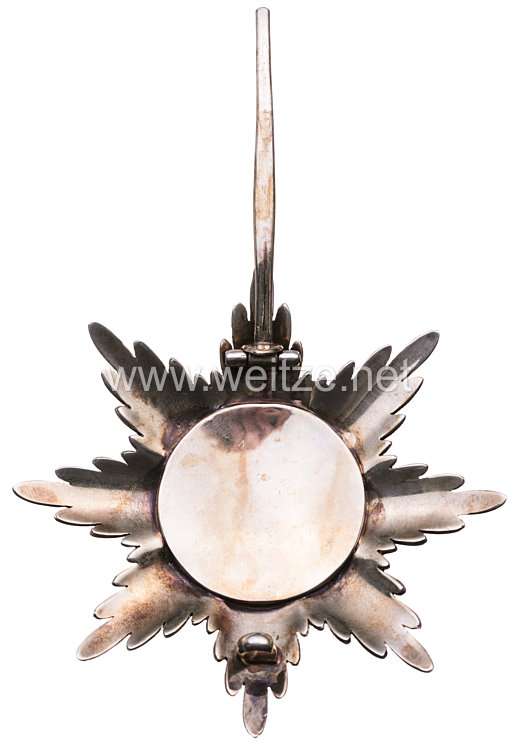
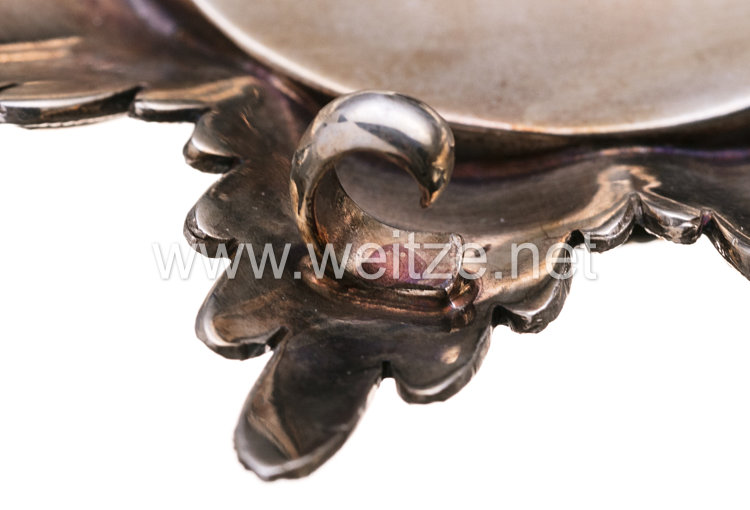
The breast star is most likely manufactured by the firm Rothe, Wien, circa 1866. The star body in silver, the medallion and appliqués in gold, the blue enamel ring still in the early dark blue execution, the medallion with finely granulated background. Reverse gilt, on broad pin, without hallmarks. Only lightly worn, in exceptionally fine condition.
Only minimally worn, in exceptionally fine condition.
Extremely rare, one of the few originals.
299000

Imperial Austrian Order of the Iron Crown Breast Star 1st Class

The Imperial Austrian Order of the Iron Crown stands among the most distinguished decorations of the Habsburg monarchy, embodying a fascinating connection between Napoleonic tradition and Austrian imperial grandeur. Its name derives from the ancient Iron Crown of Lombardy, a medieval relic allegedly containing a nail from the True Cross. This historic crown became a symbol of sovereignty over northern Italian territories and the inspiration for one of Europe's most prestigious orders of chivalry.

The order's history begins with Napoleon Bonaparte, who established an Order of the Iron Crown on 5 June 1805 following his coronation as King of Italy. Under Napoleonic rule between 1805 and 1814, a total of 1,909 knights were awarded the decoration. After Napoleon's defeat and the Congress of Vienna, the Kingdom of Lombardy-Venetia was assigned to Austria, and Emperor Franz I decided to continue the order in adapted form. The order was instituted on 7 April 1815, statutes were approved in January 1816, and official restoration occurred on 12 February 1816, the Emperor's birthday.

The Austrian version differed markedly from its Napoleonic predecessor. The French eagle was replaced with the double-headed Austrian eagle, and ribbon colors changed from gold and green to gold and royal blue. Newly added were the motto “AVITA ET AUCTA” (Inherited and Augmented) along with the letter “F” for Franz and the date 1815. These modifications symbolized Habsburg continuity of power and claims to the Lombard heritage.

The First Class breast star represents the highest grade of this three-class decoration. Originally, membership was strictly limited: only 20 First Class knights, 30 Second Class, and 50 Third Class were permitted, totaling 100 members excluding Imperial Family members. The eight-pointed silver star was worn on the left breast and featured a central medallion showing the Iron Crown on a gold field, surrounded by a dark blue enamel ring inscribed “AVITA ET AUCTA.” The medallion background was crafted with fine graining. Typical dimensions for First Class breast stars of this period ranged approximately 86 to 93 millimeters.

The social significance of the order can hardly be overstated. Until 18 July 1884, the First Class conferred upon its bearer the title of Privy Councillor, the style of Excellency, and the right to attend court. The order served particularly the rising bourgeoisie of the empire as a route to ennoblement and was awarded to both Habsburg subjects and foreigners. After 1866, following Austria's loss of Italian territories, the order evolved into an all-purpose decoration no longer limited to Italian connections.

Among prominent recipients were military figures such as Field Marshal Radetzky and Archduke Albrecht, but also cultural luminaries including composer Johann Strauss and painter Hans Makart, as well as industrialists like Adolf Ignaz Mautner, who was ennobled in 1872 as Ritter Mautner von Markhof. Danish Vice Admiral Hans Birch Dahlerup received this honor in 1850, and Feldmarschallleutnant Tadeusz Rozwadowski was among its distinguished military recipients.

During World War I, the character of the decoration fundamentally changed. Original numerical restrictions were greatly exceeded, and the order increasingly functioned as an officer's bravery decoration that could be awarded multiple times. Thousands of awards were made—for example, 166 Third Class awards went to just three Landesschützen (provincial rifle) and Kaiserschützen (imperial rifle) regiments alone. From 1860, a War Decoration variant existed with a laurel wreath, and from 1917, crossed swords could be added for personal bravery.

The present example is attributed to the renowned Viennese firm C.F. Rothe, a prominent imperial and royal court jeweler and orders manufacturer of the 19th and early 20th centuries. The dating around 1866 falls within an important transitional phase of Austrian history. The star displays characteristic features of early production types, particularly the dark blue enamel execution. The reverse is gilt and fitted with a broad pin; hallmarks are absent, which is consistent with manufacture before Austrian hallmarking requirements were established. Production variants evolved over time, with Type I spanning 1816-1838, Type II from 1838 to the 1850s, and Type III from the 1850s to 1918. From 1877, First Class stars were specified to have faceted rays, and from 1847, stars were to be made of metal rather than embroidered.

With the collapse of the Austro-Hungarian Empire in 1918, the order's history as an active decoration ended. All chivalric orders except the Order of the Golden Fleece were formally abolished. The Habsburg Laws (Habsburgergesetz) of 3 April 1919 and the Law on the Abolition of Nobility (Adelsaufhebungsgesetz) of the same date revoked noble titles and privileges, rendering the order defunct as a legal entity. However, original examples remain highly prized among collectors of Austro-Hungarian imperial decorations for their historical significance and rarity, serving as tangible reminders of a vanished imperial world.

r