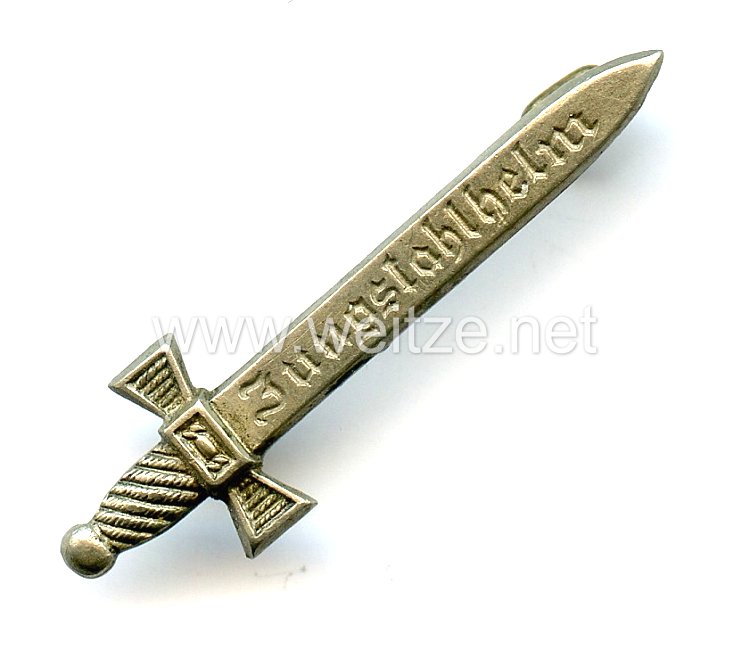
Jungstahlhelm (Jungsta)

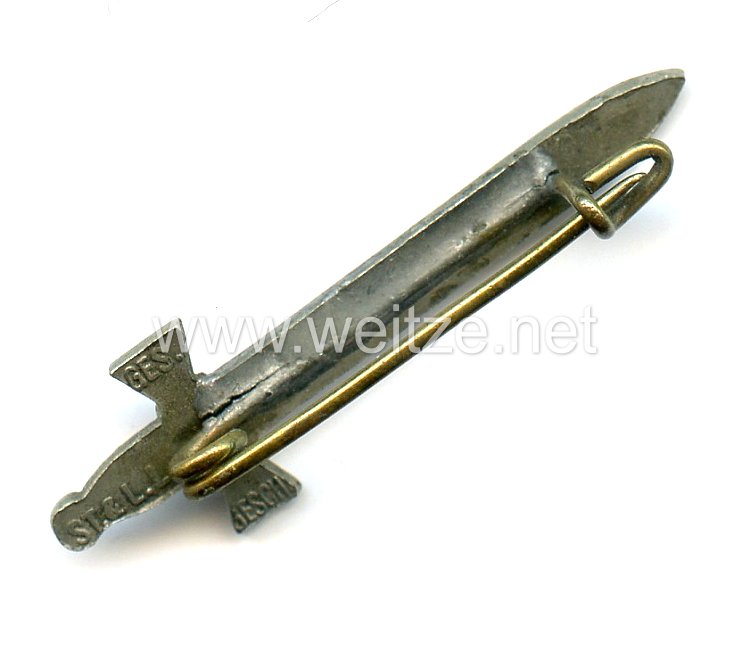
Civilian badge (from 1929), on pin, maker: St.& L. L. GES.GESCH., condition 2.
Steinhauer & Lück Lüdenscheid
440800
60,00

Jungstahlhelm (Jungsta)

The Jungstahlhelm badge represents a fascinating testimony to the German youth organizations of the Weimar Republic. This particular specimen was manufactured as a civilian badge from 1929 onwards and bears the manufacturer's mark St.& L. L. GES.GESCH., standing for the renowned firm Steinhauer & Lück from Lüdenscheid.

The Stahlhelm, Bund der Frontsoldaten (Steel Helmet, League of Front Soldiers) was founded in December 1918 in Magdeburg as a paramilitary organization of former front-line fighters from World War I. Under the leadership of Franz Seldte, the organization quickly developed into one of the largest paramilitary associations of the Weimar Republic. At the height of its existence in the early 1930s, the Stahlhelm counted over one million members.

The youth organization of the Stahlhelm, the Jungstahlhelm (Young Steel Helmet), was officially founded in 1924 to recruit young men aged approximately 18 to 21 who were still too young for regular membership in the Stahlhelm. The Jungstahlhelm understood itself as a pre-military training organization with a strongly national-conservative orientation. Members wore gray uniforms and practiced military drill and field exercises.

The present badge was manufactured by the company Steinhauer & Lück from Lüdenscheid, one of the leading producers of militaria and association badges in Germany. Lüdenscheid had established itself since the 19th century as a center of the German metal goods industry, particularly for buttons, medals, and badges. The firm Steinhauer & Lück was among the most significant manufacturers in this sector and supplied numerous organizations, associations, and military institutions.

The marking GES.GESCH. stands for “gesetzlich geschützt” (legally protected) and indicates that the design was registered with the Reich Patent Office. This practice was common in the Weimar Republic to prevent product piracy and ensure the quality of badges. The manufacturer's mark on the reverse enables clear attribution and dating of such objects today.

From 1929 onwards, a phase of intensive expansion began for the Stahlhelm organization and its youth wing. During this time, civilian badges for various occasions were increasingly produced, which could be worn by members on civilian clothing. These lapel pins served purposes of identification, sense of belonging, and political demonstration.

The Stahlhelm organization represented decidedly anti-republican, monarchist, and revisionist positions. It rejected the Treaty of Versailles and sought the restoration of German great power status. The Jungstahlhelm served as a recruitment pool for the main organization and was intended to shape the younger generation according to this ideology.

The political landscape of the Weimar Republic was characterized by a multitude of paramilitary associations. Alongside the Stahlhelm existed the Reichsbanner Schwarz-Rot-Gold (republican-democratic), the Sturmabteilung (SA) of the NSDAP, and various communist combat leagues. These organizations contributed significantly to the polarization and ultimately to the destabilization of the Republic.

After the National Socialist seizure of power in 1933, the Stahlhelm was initially incorporated into the SA. The Jungstahlhelm was transferred to the Hitler Youth, with many former members assuming leadership positions there. In 1935, the Stahlhelm organization was effectively dissolved, thus ending the independent existence of its youth organization.

Today, Jungstahlhelm badges are important historical documents that provide insight into the complex organizational landscape of the Weimar Republic. They document the efforts of conservative and nationalist forces to mobilize youth and win them over to their political goals. Collectors and historians value such objects as material witnesses to a turbulent epoch of German history that helped pave the way to National Socialism.