Prussia Cartridge Box for Officers of the Kürassier-Regiment Königin (Pommersches) Nr. 2

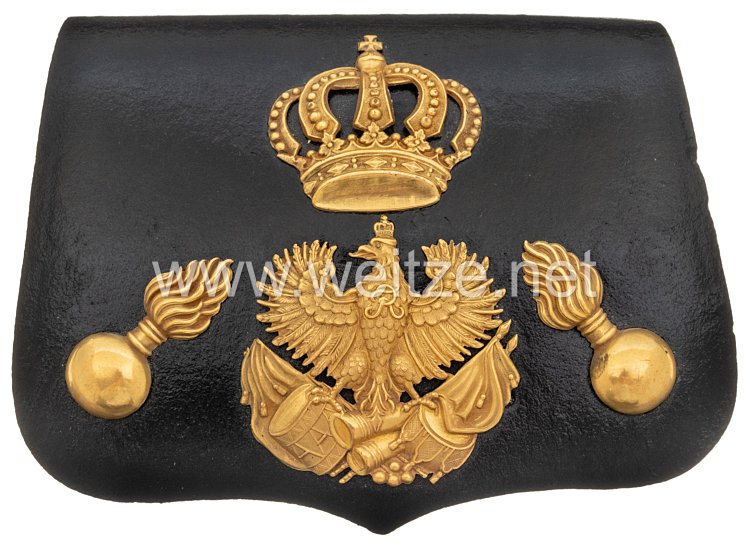
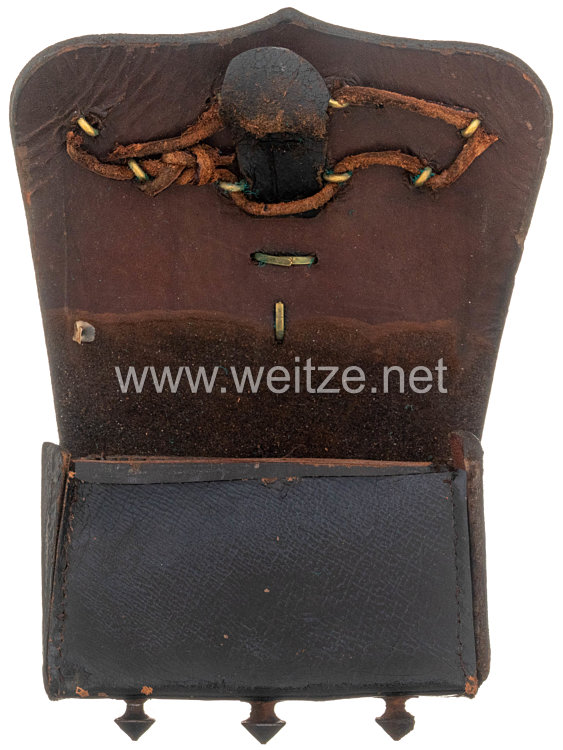
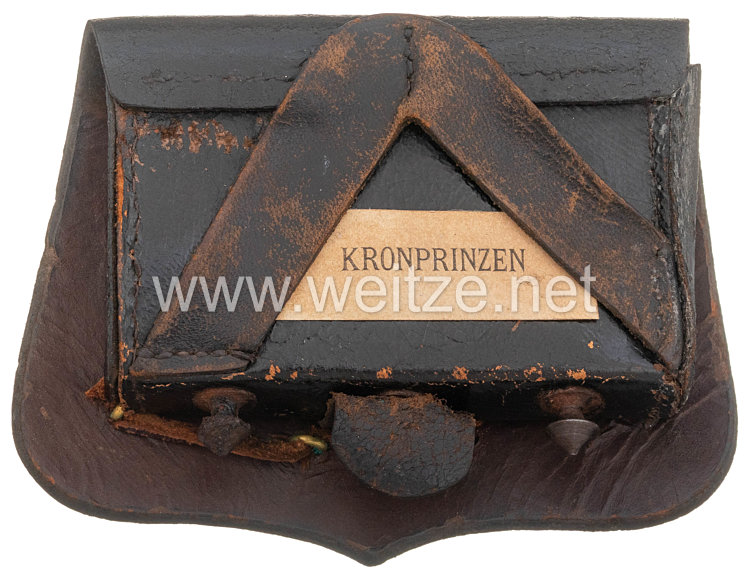
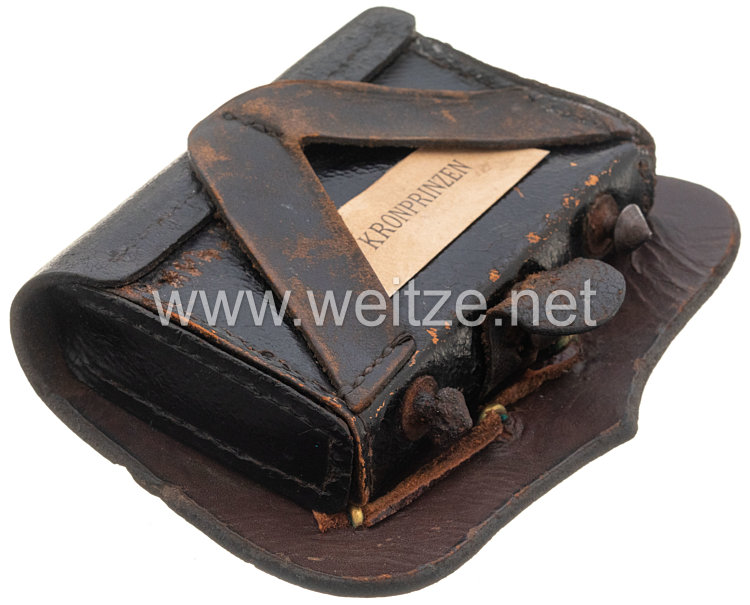
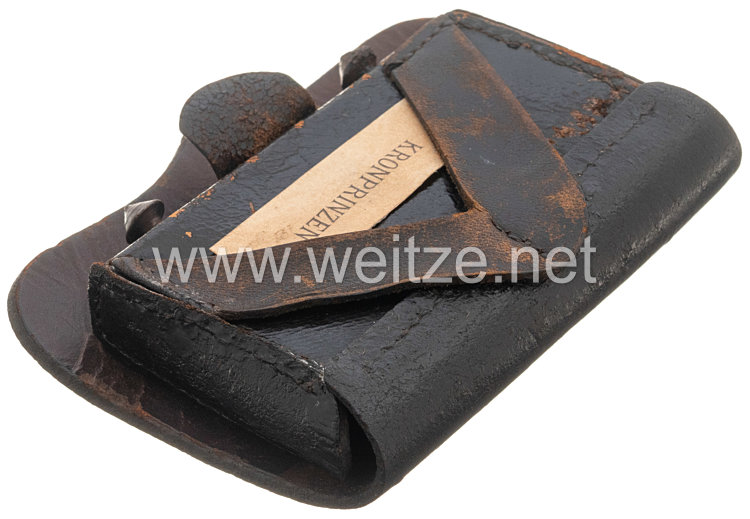
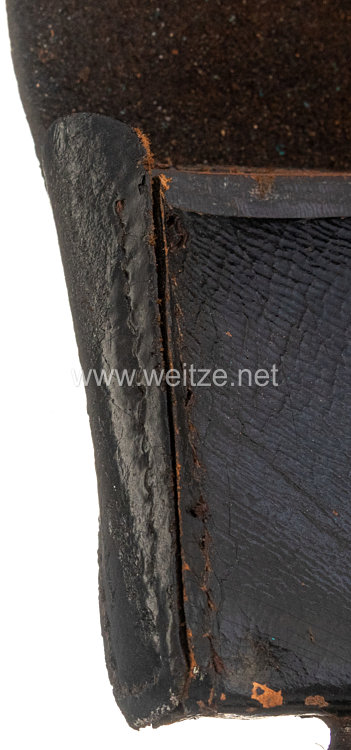
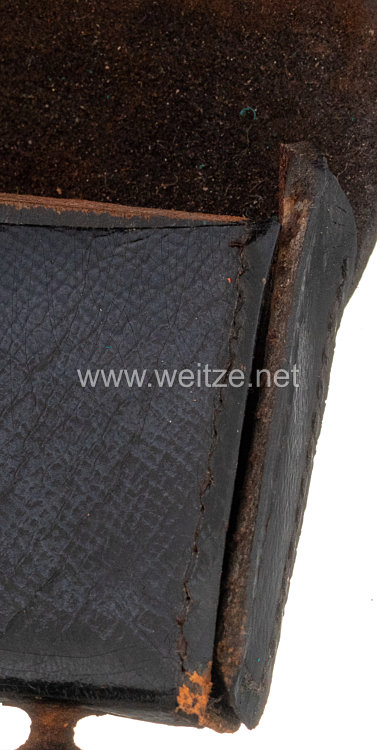
Garrison Pasewalk, circa 1910. Elegant cartridge box of black patent leather with gilt appliqués: Prussian eagle over trophies, flanked by 2 flaming grenades. Minimally worn, in exceptionally fine condition. Verso with paper vignette “Kronprinzen”.
Very likely from the personal property of the German Crown Prince Wilhelm von Preußen.
248899
2.300,00

Prussia Cartridge Box for Officers of the Kürassier-Regiment Königin (Pommersches) Nr. 2

The officer's cartridge box of the Cuirassier Regiment Queen (Pomeranian) No. 2 represents a significant example of Prussian militaria from the late Imperial period. Stationed in Pasewalk in Pomerania, this regiment belonged to the most traditional cavalry units of the Prussian army.

The Cuirassier Regiment No. 2 bore the honorary title “Queen” in honor of the Prussian Queen and later German Empress. The regiment's history dates back to the 18th century, and it had distinguished itself in numerous battles, including the Wars of Liberation against Napoleon and the Franco-Prussian War of 1870-71. Around 1910, when this cartridge box was made, the regiment was stationed in its peacetime garrison in Pasewalk.

The cartridge box itself is made of black patent leather, a material that fulfilled both practical and representative functions. Patent leather was water-resistant and durable, while maintaining an elegant shine that corresponded to the ceremonial character of the officer's uniform. The gilt appliqués display the Prussian eagle above trophies - a classic motif of Prussian military iconography symbolizing power and military virtue.

Particularly noteworthy are the flaming grenades on the sides, a traditional symbol of artillery and grenadiers that was also worn by cavalry units. These heraldic elements were strictly designed according to the uniform regulations of the Prussian army, which were meticulously specified in the “Clothing Regulations” and “Adjustment Regulations.”

The paper vignette marked “Crown Prince” on the reverse suggests a special provenance. Crown Prince Wilhelm of Prussia (1882-1951), the eldest son of Kaiser Wilhelm II, was as heir to the German throne a central figure in the imperial military establishment. He held various military ranks and honorary positions and was known for his collection of military equipment and uniforms.

In the Prussian army around 1910, officers of the cuirassiers played a special role. As heavy cavalry, the cuirassiers were considered an elite unit whose officers came from the Prussian nobility and upper bourgeoisie. An officer's equipment was expensive and had to be largely privately procured. Such a cartridge box was manufactured by specialized court suppliers or renowned military effects dealers.

The exceptionally good condition of this specimen - “only minimally worn” - is remarkable and suggests that it was mainly worn on ceremonial occasions. In the Wilhelmine era, military parades, imperial maneuvers, and court ceremonies were important social events where the splendid uniforms of officers displayed their full effect.

The function of the cartridge box had largely evolved by 1910 from its original practical use for storing ammunition to a purely decorative element. While in earlier centuries cartridge boxes actually contained cartridges for muzzle-loading weapons, in the era of repeating rifles and automatic weapons the cartridge box had become a traditional component of parade uniform.

The year 1910 marks a significant epoch in Prussian-German military history. The German Empire stood at the height of its power, only a few years before the outbreak of World War I in 1914. The magnificent equipment of officers reflected the self-confidence and representational culture of the Imperial period. The cuirassier regiments would suffer heavy losses in the first months of war, as modern warfare with machine guns and artillery made traditional cavalry tactics obsolete.

Such objects are today important historical sources for researching Prussian military culture, the artisanal traditions of military effects production, and the social significance of the military in the Imperial period. They document not only technical and aesthetic aspects but also the social hierarchy and class consciousness of the Wilhelmine epoch.

r