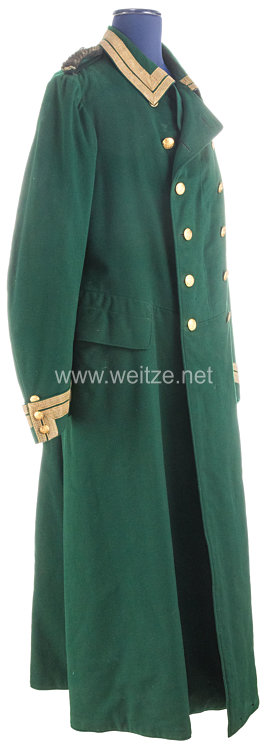
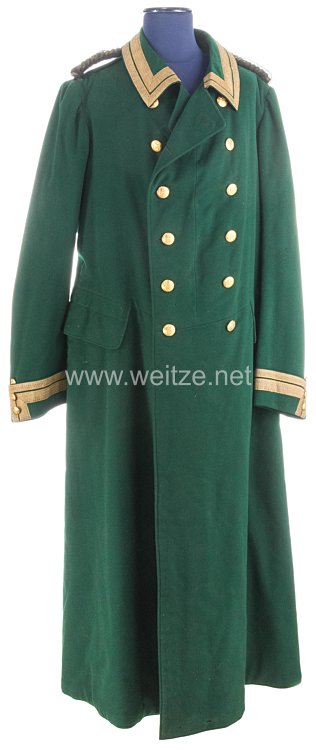
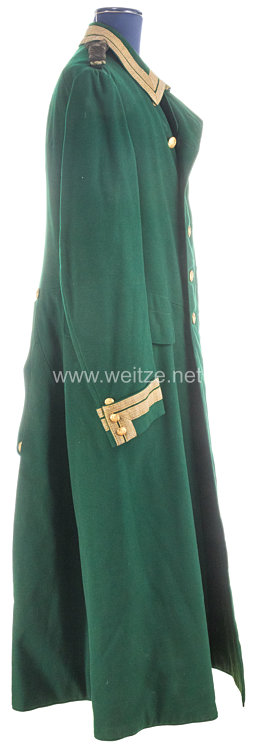
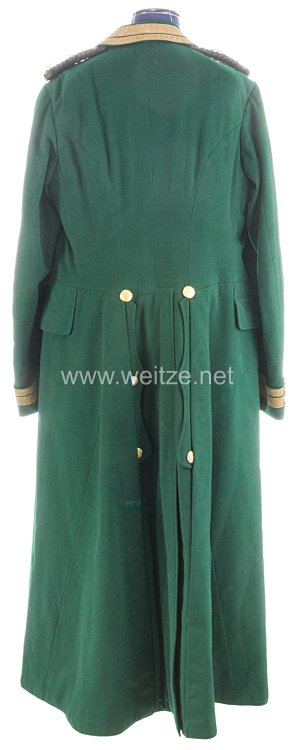
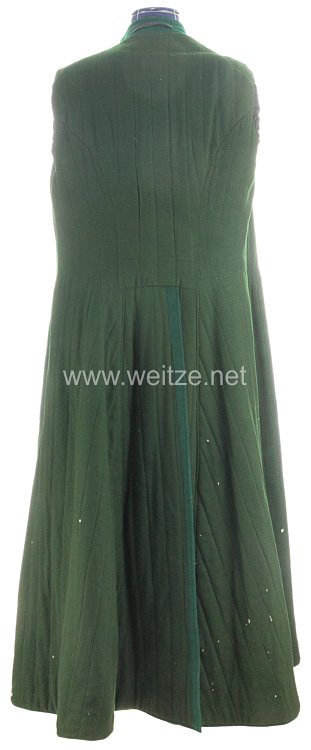
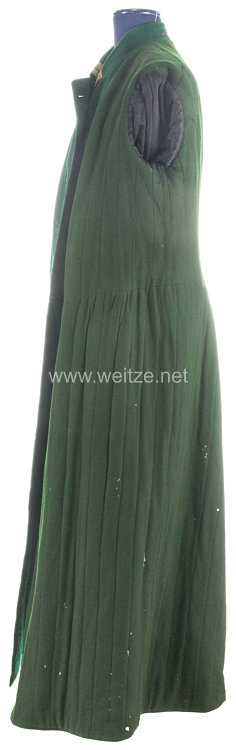
Kingdom of Hanover Court Master Huntsman Coat

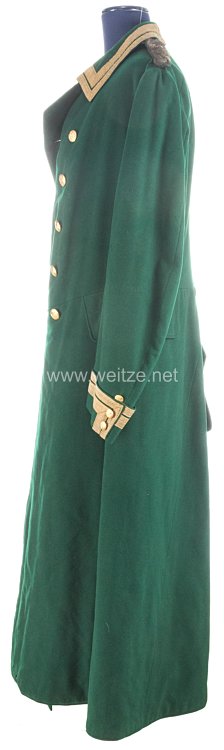
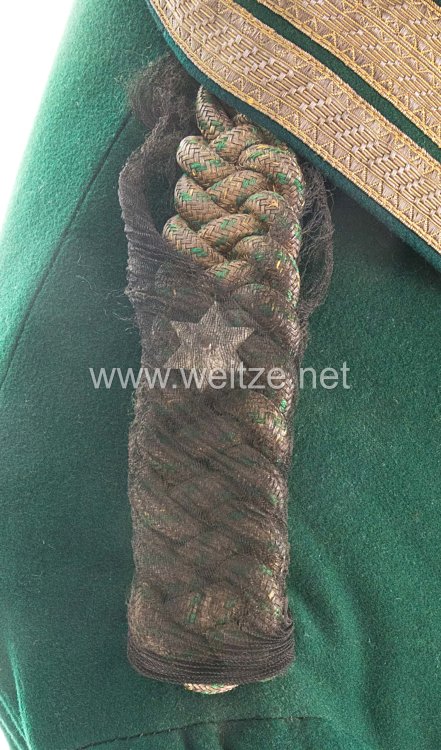
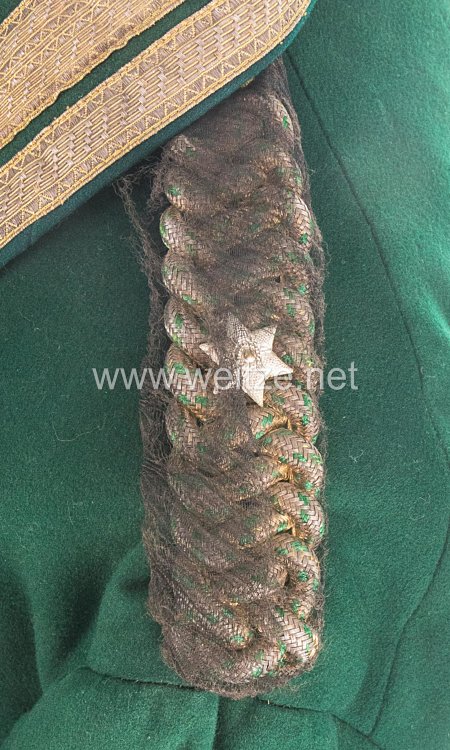
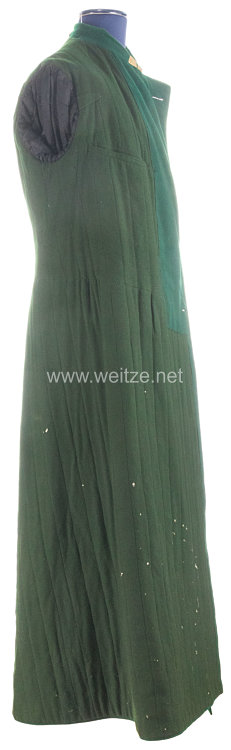
circa 1860. Heavy dark green coat, double row of buttons, gilt buttons bearing the Hanoverian coat of arms, one button missing on the back. Collar and cuff flaps with wide double gold lace trim. The shoulder boards with applied rank star are covered with mourning crepe. Lightly worn in good condition.

This piece comes from Marienburg Castle from the Sotheby’s auction of the Royal House of Hanover 2005.
411499
850,00

Kingdom of Hanover Court Master Huntsman Coat

This coat of a Master of the Royal Hunt (Hofjägermeister) of the Kingdom of Hanover, dating from around 1860, represents a significant testament to courtly hunting culture and royal ceremonial in a German principality during the mid-19th century. This exceptional garment, verifiably originating from Marienburg Castle and auctioned at Sotheby's in 2005, embodies the tradition-conscious and rank-aware court culture of the Hanoverian Welfens.

The Kingdom of Hanover existed from 1814 to 1866 as an independent German federal state and was united in personal union with the British royal house. After the death of King William IV of Great Britain in 1837, this connection ended due to different succession rules, and Ernest Augustus I became King of Hanover. His son George V, who reigned from 1851 to 1866, was the last King of Hanover before the kingdom was annexed by Prussia following the Austro-Prussian War.

The position of Master of the Royal Hunt was among the most prestigious court offices and was deeply rooted in princely tradition. Hunting was not merely an aristocratic pastime but a complex social and political ritual that demonstrated power, prestige, and courtly hierarchies. The Master of the Royal Hunt bore responsibility for organizing and conducting royal hunts, managing hunting grounds, and supervising hunting personnel. This position required not only hunting expertise but also diplomatic skill, as court hunts were frequently occasions for official encounters and diplomatic contacts.

The dark green coat corresponds to the traditional coloring of hunting attire, which had been established for centuries in European court culture. Green symbolized the connection to nature and the forest and was the characteristic color of the hunting profession. The double row of buttons and heavy fabric quality demonstrate the garment's functionality for outdoor use in all weather conditions.

Particularly noteworthy are the gilded buttons bearing the Hanoverian coat of arms. The coat of arms of the Kingdom of Hanover displayed a quartered shield with the symbols of Brunswick (two striding lions), Lüneburg (lion), Westphalia (leaping white horse), and the Electoral dignity (crown). These armorial buttons were not merely decorative but served as immediate identification of royal affiliation and the high rank of the wearer.

The broad double gold braid on collar and cuffs was a clear rank insignia. The use of gold embroidery and braiding on court uniforms followed strict hierarchical rules, with the width, number, and arrangement of braids precisely indicating rank and position at court. The double gold braid indicates a higher court service grade and distinguished the Master of the Royal Hunt from lower-ranking hunting servants.

Of particular historical interest are the shoulder pieces with applied rank star, covered with mourning crepe. This mourning indication could refer to several historical events. The death of King Ernest Augustus I in 1851 or other deaths in the royal house led to extended mourning periods during which court servants wore corresponding mourning badges. Court mourning etiquette was strictly regulated and extended over months, sometimes years.

Marienburg Castle, from which this coat originates, was built from 1858 by King George V as a gift for his consort Queen Marie. The castle, built in neo-Gothic style, was intended as both a sign of love and a monument to Hanoverian sovereignty. After the annexation of Hanover in 1866, it became the exile and symbol of the exiled dynasty. The fact that this coat was kept there underscores its significance as a personal heirloom of the royal family.

The auction at Sotheby's in 2005 was a significant event at which numerous objects from the possession of the House of Hanover were sold. This auction made it possible for historical objects long held in private family possession to become accessible to the public and collectors, contributing to research into Hanoverian history.

The coat is in good, lightly worn condition, suggesting that it was actually used in service and was not merely ceremonial in character. The absence of one button on the back is typical of historical textiles that have survived over a century and a half and does not diminish the historical value of the piece.

As material evidence of Hanoverian court culture and specialized courtly hunting organization, this coat represents an important document of 19th-century German history and vividly conveys the magnificence and strict hierarchy of the vanished princely world.

r